

Korean Static Residential IP Pricing: Seoul Plans & Costs



Clean IP picks: Static IPs from $1.5 each, Dynamic IPs from $0.5/GB


For users who need long-term access to Korean platforms, a stable network connection is an important factor in overall performance.
Compared with rotating proxies that frequently change IP addresses, Korean static residential IPs are better suited for consistent logins, localized page checks, and IP allowlisting.
This guide answers three questions: How much does a Korean static residential IP cost? Why do prices vary between providers? And how much should you budget for multiple IPs?
How Much Does a Korean Static Residential IP Cost per Month?
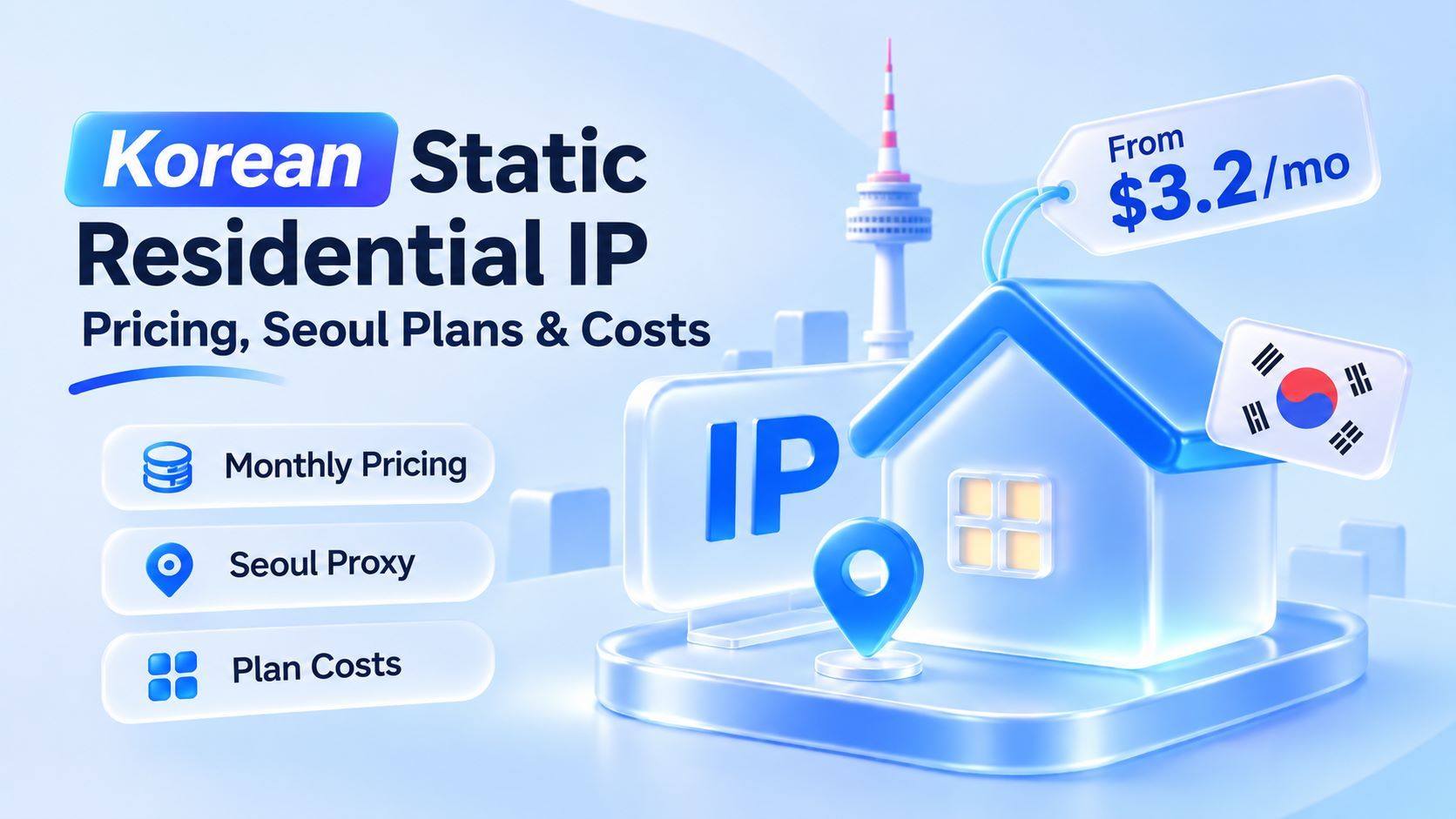
According to IPDEEP's published promotional pricing, a dedicated static residential IP in Seoul, South Korea, starts at $3.20 per IP per month, with a regular reference price of $5.90 per IP per month. Customizable bandwidth is available, up to 50 Mbps.
Static residential proxies are generally priced by IP quantity and rental period rather than traffic usage or bandwidth consumption. Your total cost therefore depends mainly on how many fixed IP addresses you need and how long you rent them.
Some providers also vary their pricing based on order volume, bandwidth, supported protocols, and subscription length. Comparing monthly prices alone may not reflect the actual cost of using the service.
Static residential proxies and residential VPS services are also different products.
A VPS typically includes CPU, memory, storage, and a remote computing environment, while a proxy IP primarily provides a network exit point. Their prices are not directly comparable because they deliver different resources.
If you only need a fixed Korean IP address, a proxy is usually the simpler option. If you need to run applications or a graphical desktop remotely, a VPS may be more appropriate.
Why Do Korean Static Residential IP Prices Vary?
Monthly prices can differ significantly even among products marketed as Korean static residential IPs. The main factors include the following.
1. ISP and ASN Ownership
Network ownership is an important consideration when choosing a Korean static residential IP.
Major Korean internet service providers include KT, SK Broadband, and LG U+. Some proxy IPs may also belong to other local networks, such as Sejong Telecom (AS9848).
You can check network ownership using ASN records, ISP information, and IP classification databases. However, an ISP name alone does not prove that an IP address comes from a residential broadband connection.
For long-term use, also verify whether the IP is dedicated, whether it has a history of abuse, and whether you can retain the same address when renewing.
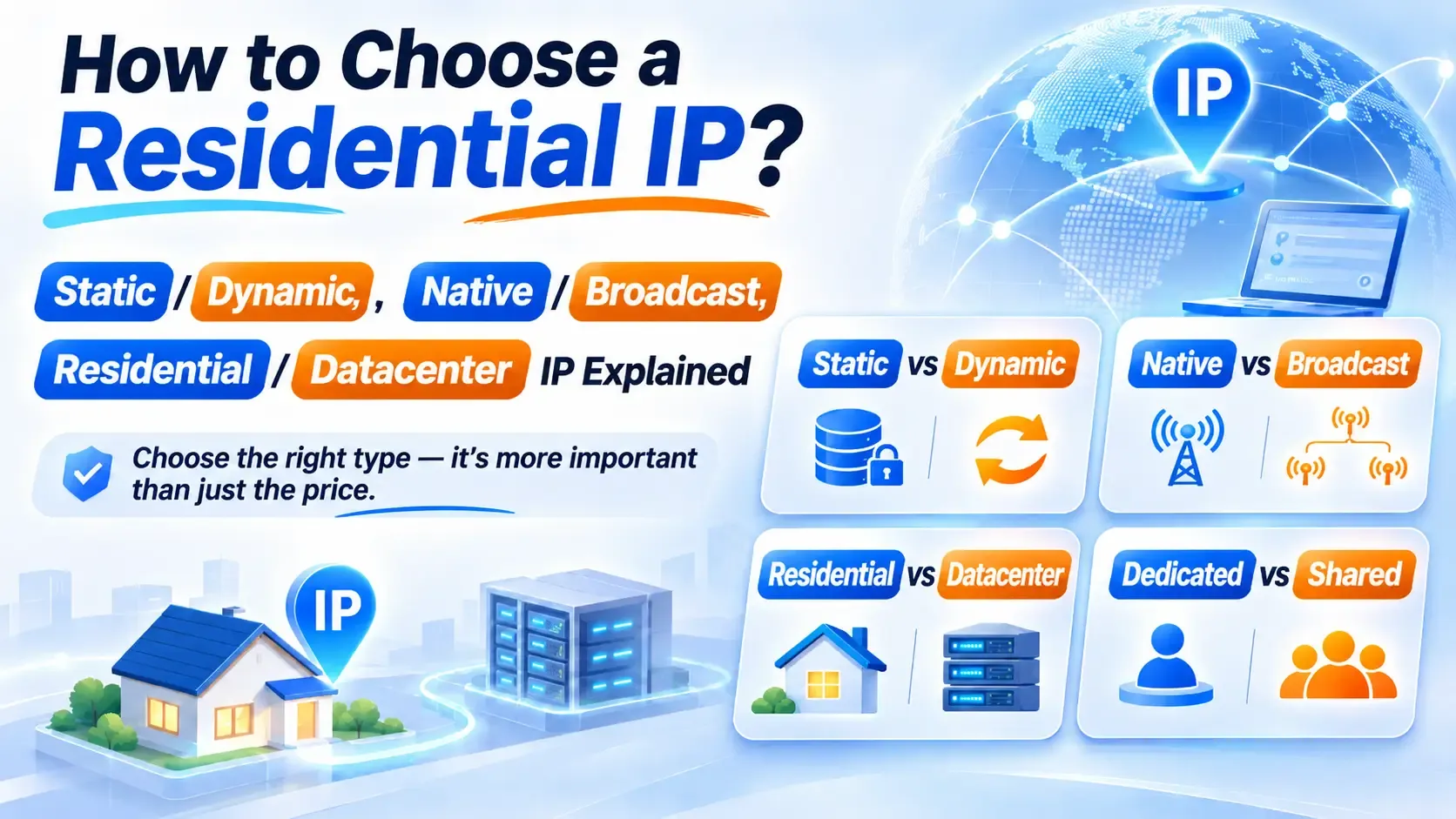
2. Dedicated vs. Shared IPs
A dedicated IP is assigned to one customer, while a shared IP is used by multiple customers.
Dedicated IPs generally cost more but are better suited to applications requiring a consistent network exit or IP allowlisting. Always confirm whether an IP is dedicated or shared rather than relying solely on the "residential" label.
3. Bandwidth and Protocols
Bandwidth limits can affect pricing. Some providers offer fixed bandwidth tiers, while others allow custom configurations. Common static residential proxy protocols include HTTP, HTTPS, and SOCKS5.
Note that UDP support over SOCKS5 depends on the provider's server implementation. Not every SOCKS5 proxy supports UDP.
4. IP Reputation and Renewal Policies
Even an IP address belonging to a local ISP may be flagged by third-party databases because of its previous usage history.
For long-term operations, check the IP's reputation before committing to a purchase. You should also confirm whether renewals preserve the original IP and how the provider handles replacements when a node fails.
The main benefit of a static residential IP is a consistent network exit, not guaranteed success with account registration or platform verification.
How to Choose a Static Residential IP in Seoul
Seoul is a common location for users who need a fixed Korean IP address. Consider the following factors before purchasing.
First, determine whether you need city-level targeting. Some providers offer only country-level locations and cannot guarantee that an IP will be identified as being in Seoul. If your use case requires a specific city, confirm its availability before buying.
Next, verify the IP's network ownership. After purchase, use tools such as IPinfo to check the country, city, ASN, and ISP. Cross-check residential and hosting classifications with other IP databases. If the results differ significantly, contact the provider to clarify the IP's network attributes.
Finally, decide between static and rotating residential proxies. If you need occasional access or multiple changing IPs, traffic-based rotating residential proxies may offer more flexibility.
If you need to maintain the same IP over time for regular dashboard access or IP allowlisting, a static residential IP is generally more suitable. The key question is how long you need to keep the same network exit.
IPDEEP Korean Static Residential IP Plans and Costs
IPDEEP offers dedicated static residential IPs in Seoul, South Korea. They are suitable for users who need a consistent Korean network exit for e-commerce dashboard access, localized page checks, or IP allowlisting.
The following estimates use the promotional rate of $3.20 and the regular reference rate of $5.90 per IP per month to help you plan your budget.
The table covers proxy IP costs only and excludes software, taxes, and additional service fees. Promotional purchase limits, availability, and final checkout prices are subject to the purchase page.
Visit IPDEEP's Static Residential IP Deals to check available Seoul nodes. After purchasing, retrieve the proxy host, port, and authentication credentials from your dashboard and configure them in your browser or application.
IPDEEP proxy services require an overseas network environment, which users must set up themselves.
After your first connection, check the exit IP's country, ASN, ISP, and actual connection speed to confirm that the node meets your requirements. For more information on choosing Korean proxies, see our Korean Residential Proxy Guide.
Frequently Asked Questions (FAQ)
Q1: What's the Difference Between Promotional and Regular Korean Static Residential IP Plans?
These plans may differ in price, availability, bandwidth options, and purchase conditions. Check the product specifications before buying to confirm dedicated access, renewal options, and available bandwidth. Price alone does not determine IP quality.
Q2: Can a Korean Static Residential IP Stay the Same Long Term?
A static residential IP generally remains unchanged during its rental period. Whether you can retain the same IP after renewal, or whether a node failure requires replacement, depends on the provider's policies. Confirm these details before purchasing.
Q3: Why Can a Korean Static Residential IP Still Trigger Platform Verification?
IP addresses are only one factor. Platforms may also consider IP reputation, device environment, account status, and access behavior. Residential IPs do not guarantee that verification checks will be avoided, and not every verification issue is caused by the network exit.
Q4: What Do I Need Before Purchasing an IPDEEP Korean Static Residential IP?
You must arrange your own overseas network environment to connect to IPDEEP's proxy services. After purchasing, obtain the proxy host, port, and authentication credentials, then configure them in your browser or application.
On your first connection, check the exit IP's country, ASN, ISP, and actual connection speed.