

Vietnam Static Residential IPs: ISP Types & Buying Guide



Clean IP picks: Static IPs from $1.5 each, Dynamic IPs from $0.5/GB


Static residential IPs are available in Vietnam, with some proxy providers offering fixed IP addresses associated with local Vietnamese ISPs.
These proxies are suitable for businesses that need to maintain the same Vietnamese IP over time, such as accessing Shopee Vietnam seller accounts, checking local ad displays, testing region-specific services, and accessing systems that require a fixed source IP.
Compared with dynamic residential IPs, static residential IPs offer the advantage of keeping the same exit IP throughout the rental period. Beyond price, buyers should also consider node location, ISP ownership, IP classification, renewal policies, and actual connection quality.
This guide covers the characteristics of Vietnamese static residential IPs, how they differ from dynamic residential IPs, and what to verify before purchasing.

Are Static Residential IPs Available in Vietnam?
Yes, they are.
A Vietnam static residential IP generally refers to a proxy IP associated with a local Vietnamese internet service provider (ISP) that maintains a fixed exit address throughout the agreed rental period. These products are also commonly marketed as static ISP proxies.
Vietnam's major fixed broadband providers include Viettel, VNPT, and FPT Telecom. Each operates its own network infrastructure and autonomous system numbers (ASNs), which can help identify an IP address's network ownership.
The table lists common ASNs, not a complete list of all ASNs operated by these providers.
An IP address belonging to a Vietnamese ISP does not necessarily mean the proxy server is hosted on a residential broadband connection. Some static ISP proxies use IP ranges assigned to local operators but rely on different hosting or network arrangements.
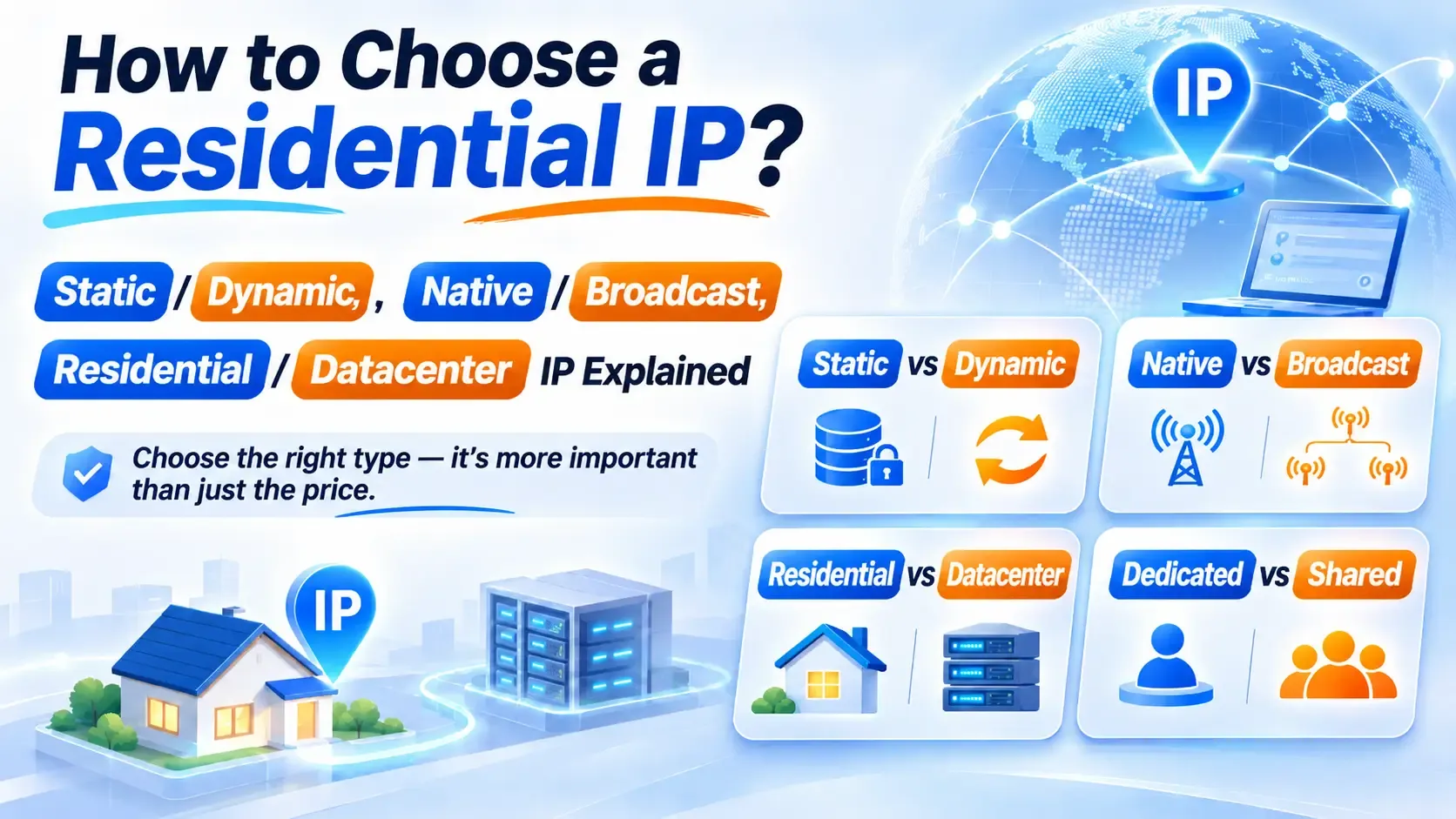
Static and dedicated are also different concepts. Static means the IP address remains fixed during the rental period, while dedicated means the IP is assigned exclusively to one customer. Both should be verified before purchasing.
For businesses requiring a fixed Vietnamese exit IP, network ownership, exclusive allocation, and long-term availability matter more than whether a product is simply labeled "residential" or "native."
Vietnam Static vs. Dynamic Residential IPs: What's the Difference?
Vietnamese residential proxies generally fall into two categories: static and dynamic residential IPs. Both provide Vietnamese network exits, but they differ in IP rotation, pricing, and suitable use cases.
If you need to use the same Vietnamese IP over an extended period, such as accessing local business dashboards, maintaining connections from a consistent source, or configuring IP allowlists, a static residential IP is generally the better choice.
Dynamic residential IPs are better suited to tasks requiring multiple exit addresses, such as monitoring product prices on Vietnamese e-commerce platforms, collecting publicly available web data, and checking search results from different locations.
Some dynamic residential proxies also support sticky sessions, allowing users to reuse the same exit IP for a specified period. However, sticky sessions have time limits, and underlying nodes may disconnect unexpectedly. They are therefore not a complete substitute for long-term static residential IPs.
In terms of cost, static residential proxies charged per IP and rental period make budgeting easier when a consistent exit address is required. For tasks involving frequent IP rotation, dynamic residential proxy costs should be evaluated based on actual traffic and concurrency requirements.
What Should You Check Before Buying a Vietnam Static Residential IP?
When choosing a Vietnam static residential IP, focus on three questions: Does the IP belong to the intended network? Can it remain fixed over time? And does its actual performance meet your needs?
1. Does the IP Belong to a Local Vietnamese ISP?
Before purchasing, check the exit IP's country, city, ASN, and ISP information.
Major Vietnamese broadband providers include Viettel, VNPT, and FPT Telecom. If the lookup results match one of these local networks, you can make an initial assessment of the IP's network ownership.
If your business requires a specific city, also confirm whether the provider supports city-level targeting.
Common target locations in Vietnam include Hanoi and Ho Chi Minh City. Some proxy providers offer only country-level targeting and cannot guarantee an exit IP in a particular city.
Therefore, when purchasing a Hanoi static residential IP, confirm that the provider offers Hanoi nodes and verify the exit IP's reported geolocation.
2. Will the IP Remain Fixed Throughout the Rental Period?
The main value of a static residential IP is maintaining the same exit address over time. However, renewal and replacement policies vary between providers.
Before purchasing, confirm whether the IP is dedicated, whether it remains fixed during the rental period, whether renewals preserve the same address, and what happens if a node fails.
These details are especially important for businesses using IP allowlists. If a provider assigns a replacement IP after a node failure, users may need to update their allowlists or network configurations.
Beyond the monthly price, it is worth reviewing long-term renewal terms and fault-handling policies.
3. Does the Connection Quality Meet Your Needs?
Even if an IP belongs to a local Vietnamese ISP, that does not automatically guarantee reliable connectivity or a low risk of access restrictions. After purchasing, consider testing the following:
▸ IP Reputation: Check for known abuse records or high-risk classifications.
▸ Connection Stability: Test for frequent timeouts or disconnections at different times.
▸ Actual Latency: Measure response times when accessing target websites from your operating location.
▸ Bandwidth Performance: Check whether actual speeds meet your browsing and data transfer requirements.
▸ Network Environment: Check whether DNS and WebRTC information matches your intended proxy configuration.
Keep in mind that a static residential IP does not guarantee that websites will never identify it as a proxy. Websites may evaluate IP reputation, historical activity, account status, and access behavior.
For long-term business use, a stable, verifiable exit IP is more valuable than chasing promotional reputation scores.
Where to Buy Vietnam Static Residential IPs: IPDEEP Setup Guide
If you need a fixed Vietnamese network exit for long-term use, choose a proxy provider that offers static residential nodes in Vietnam.
IPDEEP offers dedicated static residential IPs in Hanoi, Vietnam, with support for HTTP, HTTPS, and SOCKS5 protocols.
IPDEEP's promotional listings currently show Hanoi static residential IPs starting at $2.7/IP/month, compared with a regular listed price of $5.9/IP/month.
Customizable bandwidth options are available, up to 50 Mbps. Actual pricing, bandwidth options, and node availability are subject to the purchase page.
For users accessing Shopee Vietnam, checking local ad displays, conducting region-specific business tests, or configuring fixed IP allowlists, static residential IPs reduce the configuration work associated with frequent changes in exit addresses.
How to Set Up an IPDEEP Vietnam Static Residential IP
1. Check Available Vietnam Nodes. Visit the IPDEEP Static Residential Proxy Page to review available Hanoi plans, pricing, and bandwidth options.
2. Purchase and Retrieve Your Proxy Details. Select the number of IPs, rental period, and bandwidth that suit your needs. After purchasing, retrieve the proxy server address, port, and authentication credentials from your dashboard.
3. Configure the Proxy Connection. Enter the proxy details into your browser, proxy client, or compatible business application, and select HTTP, HTTPS, or SOCKS5 as appropriate. IPDEEP proxies require an overseas network environment, which users must arrange themselves.
4. Verify the Exit IP. Once connected, use an IP lookup tool to check the exit country, city, ASN, ISP, and IP classification. Test the actual connection speed and stability as well.
If you plan to keep the same Vietnamese exit IP over the long term, confirm whether the address can be retained when renewing. For more information on choosing and using Vietnamese proxies, see the Vietnam Proxy IP Guide.
Frequently Asked Questions (FAQ)
Q1: Can a Vietnam Static Residential IP Stay the Same Permanently?
It generally remains fixed throughout the agreed rental period, but not necessarily forever. Whether you can retain the same IP after renewal or node failure depends on the provider's policies.
Q2: How Much Does a Vietnam Static Residential IP Cost per Month?
IPDEEP's promotional listings show Hanoi static residential IPs at $2.7/IP/month, with a regular listed price of $5.9/IP/month. Actual pricing, bandwidth, and availability are subject to the purchase page.
Q3: Can I Choose a Static Residential IP in Hanoi or Ho Chi Minh City?
City-level targeting depends on the provider's network coverage. IPDEEP's public promotional listings include Hanoi nodes. If you need an IP in Ho Chi Minh City or another location, confirm availability before purchasing.
Q4: Are Vietnam Static Residential IPs Suitable for Shopee Vietnam?
Yes, they are suitable for seller dashboard access and business management tasks that require a consistent network exit.
A static residential IP reduces changes in the source IP address, but it does not guarantee account approval or platform access, nor does it replace required identity verification and compliance with platform policies.