




Forward Proxy vs Reverse Proxy: Principles, Differences & Use Cases



Clean IP picks: Static IPs from $1.5 each, Dynamic IPs from $0.5/GB


When building complex network applications or performing large-scale data collection, proxies are an essential concept you cannot ignore. “Forward proxies” and “reverse proxies” may sound similar, but their functions are fundamentally different.
Understanding the differences between them not only helps optimize network architecture, but also enables you to choose the most suitable solution for real-world scenarios such as web scraping, global access, and data security.
Forward Proxy
1. What is a forward proxy?
A forward proxy, often simply called a “proxy,” is an intermediary server located between the client and the target (origin) server.
2. Core Principle
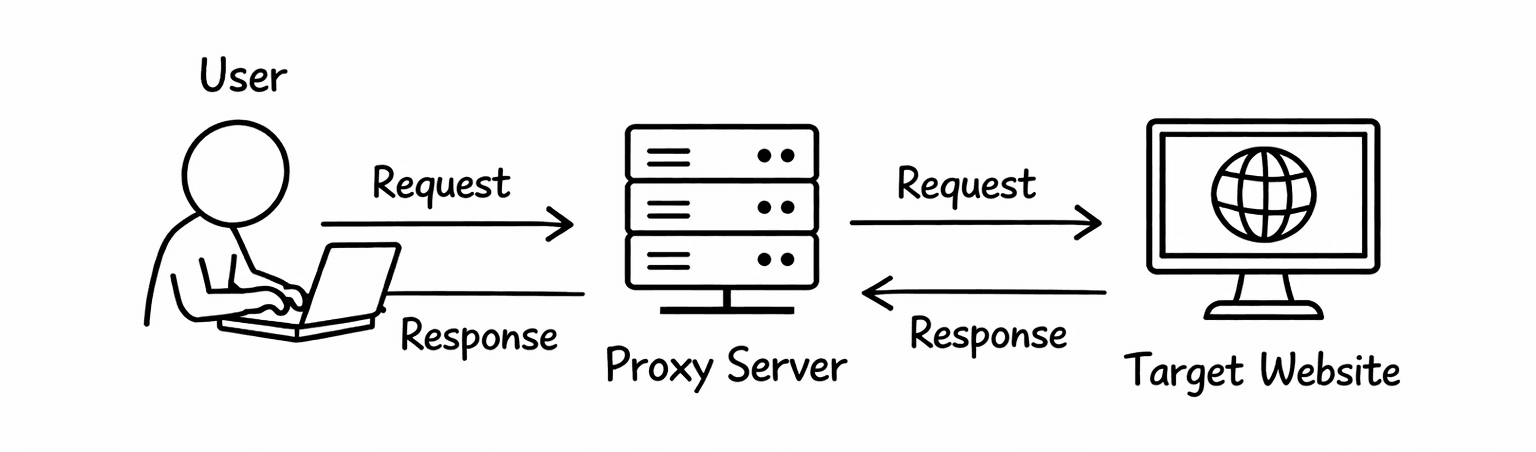
When you visit a website, the request is not sent directly from your device to the destination server. Instead, it is first sent to the proxy server, which forwards the request and returns the response. In this process, the target server only sees the proxy server’s IP address and cannot identify the real client.
3. Key Use Cases of Forward Proxy
For users of proxy IP services, the value of forward proxies is mainly reflected in the following aspects:
Hide real identity and protect IP: When performing web scraping or competitor research, forward proxies effectively conceal your real data center or residential IP, reducing the risk of being blocked.
Bypass access restrictions: Many cross-border e-commerce operators use residential proxies to simulate local users in specific countries or regions, bypassing geo-restrictions.
Internal auditing and filtering: Enterprises often use forward proxies to restrict access to certain websites and monitor network traffic for security purposes.
Improve access speed: By leveraging caching on proxy servers, repeated requests for the same content can significantly reduce latency.
💡 Practical Insight: While the concept of forward proxies is simple, high-quality IP resources are extremely hard to obtain. IPDeep provides over 90 million real residential IPs, tailored for web scraping and cross-border e-commerce.
Explore IPDeep’s residential proxy advantages →
Reverse Proxy
1. What is a reverse proxy?
A reverse proxy is designed to protect servers. It sits in front of a group of backend servers and represents them when handling incoming requests from the internet.
For end users, a reverse proxy is transparent. When you visit www.example.com, you are actually communicating with the reverse proxy, even though it appears as if you are directly connected to the origin server.
2. Core Principle
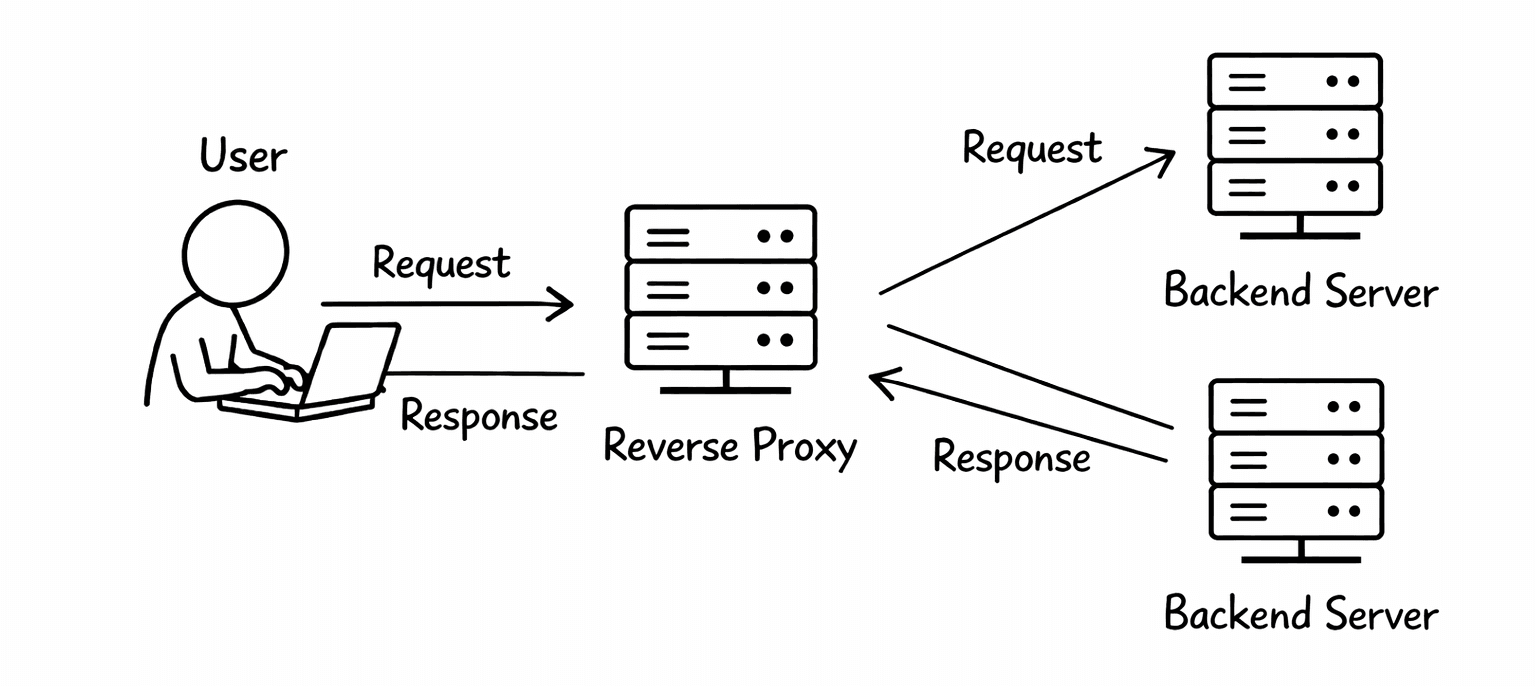
Common reverse proxy solutions include Nginx, HAProxy, and load balancers provided by cloud service providers.
3. Key Use Cases of Reverse Proxy
Load balancing: When a website experiences high traffic, the reverse proxy distributes requests across multiple backend servers to prevent overload.
SSL termination: The reverse proxy handles HTTPS encryption, reducing the computational burden on backend servers.
Security layer: It hides the real IP addresses of backend servers, protecting them from direct attacks such as DDoS.
Static content caching: Caches static assets like images and CSS at the proxy layer, significantly improving global access speed.
Deep Comparison: Forward vs Reverse
Key Difference: A forward proxy operates on behalf of the client to initiate requests, while a reverse proxy operates on behalf of servers to receive and distribute requests.
| Dimension | Forward Proxy | Reverse Proxy |
|---|---|---|
| Proxy Target | Client | Server |
| Transparency | Users are aware and must configure it | Typically invisible to users |
| IP Visibility | Server cannot see the real client IP | Client cannot see the real backend server IP |
| Typical Use Cases | Web scraping, privacy protection | Load balancing, CDN acceleration, security |
| Core Purpose | Initiate outbound requests | Receive and distribute requests |
Which Service Should You Choose?
In real-world scenarios, choosing between a forward proxy and a reverse proxy depends entirely on the problem you are trying to solve.
1. When Do You Need a Forward Proxy IP?
If your goal is to access external networks from a local environment, a forward proxy is the right choice:
Web scraping and data collection: Requires thousands of different IP addresses to bypass anti-scraping mechanisms and collect data from global e-commerce platforms or social media.
Multi-account management (anti-association): Cross-border e-commerce operators need to assign independent IPs to each account to prevent bans caused by IP linkage.
Ad verification and SEO monitoring: Check how your ads appear in different countries or regions.
Privacy and security protection: Hide your real IP when using public networks to prevent personal data exposure.
If you need a forward proxy to solve issues like scraping blocks or account linking, IPDeep's dynamic IP rotation technology can help you achieve up to a 99% request success rate.
2. When Do You Need a Reverse Proxy?
If you are a website owner serving external users, a reverse proxy is the appropriate solution:
Handling high traffic: When a single server cannot handle large volumes of requests, a reverse proxy distributes traffic across multiple backend servers.
Enhancing website security: Hide the origin server IP and block attacks (such as DDoS) at the proxy layer to protect critical data.
Accelerating global access: Combined with a CDN (Content Delivery Network), reverse proxies can be deployed closer to users, enabling near-instant load times.
Conclusion
In simple terms, a forward proxy hides the client’s identity and initiates outbound requests, while a reverse proxy protects servers and receives and distributes incoming requests.
For most users who need proxy IP services, forward proxies—especially high-anonymity residential proxies—are essential tools for data collection, marketing, and cross-border operations.
As a leading proxy service provider, IPDeep offers:
· Proxy IPs across 200+ countries worldwide, helping you avoid frequent CAPTCHA challenges.
· High-anonymity SOCKS5/HTTP protocol support, fully compatible with various scraping tools and anti-detect browsers.
· Exceptional stability to ensure uninterrupted large-scale data collection.
Instead of struggling with complex configurations, start with a reliable IP resource.