




Beginner's Guide to Proxy IPs: What is LTE Proxy?



Clean IP picks: Static IPs from $1.5 each, Dynamic IPs from $0.5/GB


In today's highly digital world, whether engaged in cross-border e-commerce, social media marketing, or simple web scraping development, proxy IP is an unavoidable term. Among various types of proxies, LTE proxies (also known as 4G/mobile proxies) are hailed as the "Rolls Royce" of the proxy world.
For beginners, understanding LTE proxies can help you avoid account bans and significantly increase your business success rate. Today, let's thoroughly discuss: What is an LTE proxy? Why is it so powerful? And how should you choose one?
What is an LTE Proxy?
1. What is LTE
LTE (Long Term Evolution) is a high-speed wireless communication standard used in telecommunications for mobile phones and data terminals.
From a technical standard perspective, LTE was initially regarded as a "transitional" 4G technology, also known as 3.95G. Although it far exceeds 3G in capacity and speed, it only officially reached the "true 4G" standard with the advent of LTE Advanced (LTE+). Furthermore, the successor to LTE is 5G NR, and the two are different in terms of technological generations.
2. What is an LTE Proxy
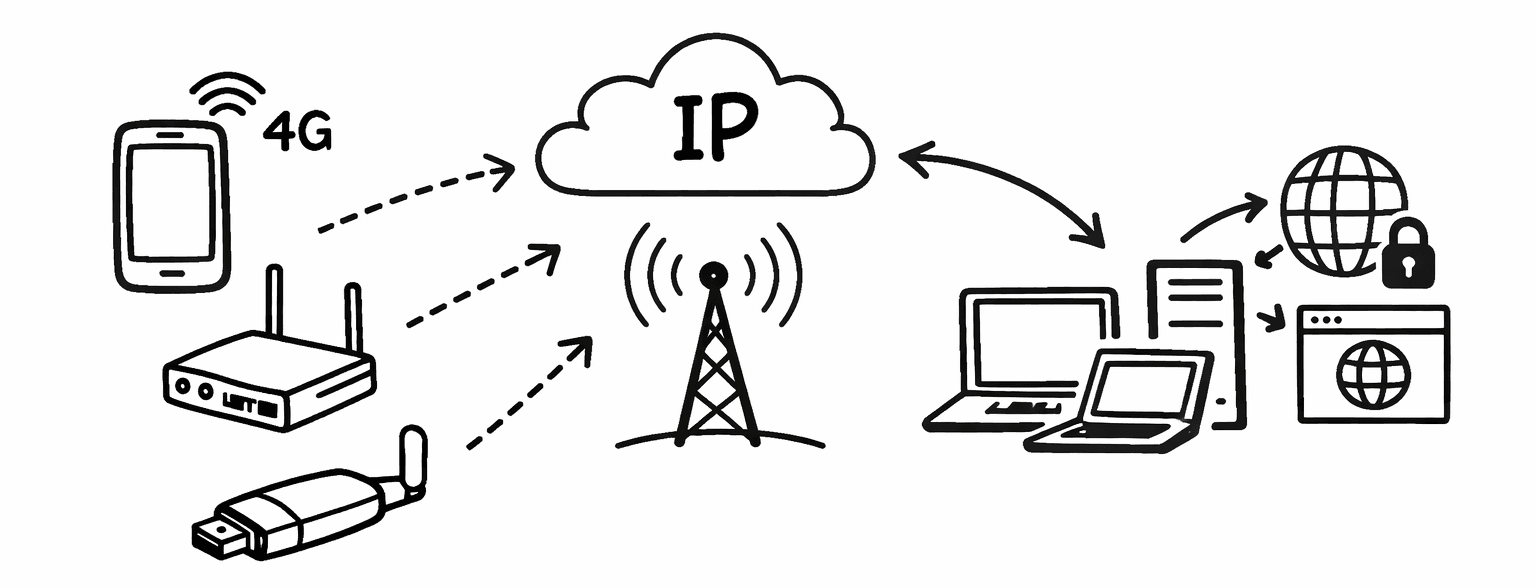
An LTE proxy, simply put, is an IP address obtained through a 4G mobile communication network, also known as a 4G proxy or 4G LTE proxy, which falls under what we generally refer to as mobile proxies.
When you browse the internet using mobile data, the carrier (such as AT&T or Verizon) temporarily assigns you an IP address. An LTE proxy uses similar mobile devices (such as smartphones, industrial-grade routers with SIM cards, or dongles) as intermediaries, allowing you to access the internet through these mobile network IPs.
· Although called "LTE proxy," the actual access experience and IP source are typically from LTE-A level mobile networks, as carriers have almost universally upgraded to LTE-A, with basic LTE coverage being very limited.
Why is LTE Proxy Hard to Ban?
The reason LTE proxies are called "anti-ban artifacts" lies in the CGNAT (Carrier-Grade Network Address Translation) technology behind them.
1. IP Sharing Mechanism
In mobile networks, due to the extreme scarcity of IPv4 resources, carriers cannot assign a unique public IP to every mobile user. Therefore, thousands of real mobile users actually share the same public IP to access the internet.
2. Website’s Cautious IP-Blocking Principle
If you are a system administrator for Facebook or Amazon, would you dare to directly ban an IP if you notice unusual behavior from that mobile IP?
The answer is: No.
Banning an LTE IP could prevent thousands of legitimate mobile users (potential real paying customers) in the same area from accessing your website. To avoid collateral damage, target websites have very lenient restrictions on LTE proxies, which is the secret behind the anti-ban capability of LTE proxies.
Core Advantages of LTE Proxies
1. Extremely High Purity and Trust Level
LTE IPs are provided by real telecom operators. From the perspective of the target server, you appear as an ordinary real user browsing the web on the street with a smartphone. This attribute allows it to easily pass the detection of most anti-scraping systems.
2. Dynamic Rotation and Session Persistence
High-quality LTE proxies typically support:
Change with each request: You can change the IP with every access, completely avoiding CAPTCHA issues caused by frequent requests from a single IP.
Session persistence with on-demand changes: If you need to log in and perform actions, LTE proxies can ensure that your IP remains unchanged for a period, maintaining the stability of your login status.
3. No Fear of Geolocation Restrictions
For users needing localized advertising, local search engine optimization (Local SEO), LTE proxies are an irreplaceable tool.
Application Scenarios of LTE Proxies
Due to the obvious advantages of LTE proxies, their prices are usually relatively high. So what are people using them for?
1. Social Media Multi-Account Management
When nurturing accounts on TikTok, Instagram, and Facebook, platforms have strict environmental checks. Using LTE proxies can simulate real mobile logins, significantly reducing the risk of "associated account bans."
2. Purchase and Sneaker Monitoring
When limited edition sneakers or electronic products are released, websites conduct strict checks on scripts. The high response speed and authenticity of LTE proxies are key to successful purchases.
3. Ad Verification
Brands need to check whether their ads are displayed normally in mobile apps in specific regions. Using local LTE proxies allows them to see the most authentic ad display effects.
4. Mobile Data Scraping
Many app data interfaces only allow access from mobile IPs. LTE proxies are the only channel for scraping this type of data.
Selection and Usage
Although LTE proxies are very powerful, there are still a few points to pay attention to when selecting and using them:
Identify potential limitations: LTE proxies may sometimes face bandwidth limitations or data caps, which can lead to slower speeds or connection interruptions.
Focus on stability: It is recommended to choose well-known providers (like IPDeep) with reliable infrastructure that can guarantee high uptime.
Utilize API integration: For professional users, using API interfaces can automate IP rotation, access control, and traffic monitoring more efficiently.
Conclusion
LTE proxies are not only an evolution of network proxy technology but also a key to coping with today's highly sensitive security defense systems. Although their prices are relatively high, the high success rate, low ban rate, and excellent stability they provide often yield a higher return on investment (ROI) for businesses.
For beginners, if you are handling tasks with extremely high security requirements (such as account operations), LTE proxies are definitely your top choice.
IPDeep offers high-quality 4G/5G mobile proxies, perfectly suited for social media management, ad effectiveness verification, high-precision data collection, and other business scenarios that require a high level of real identity.
Suggestion: Before making large-scale purchases, it is recommended to first buy a small amount of data packages or basic usage plans for stress testing to confirm their compatibility with your business goals.