

Which Businesses Need Singapore Static Residential IPs?



Clean IP picks: Static IPs from $1.5 each, Dynamic IPs from $0.5/GB


Singapore is a major internet and financial hub in Southeast Asia. Many cross-border businesses use a fixed Singapore-based network exit to manage accounts, monitor local markets, or access business services.
Before choosing a Singapore static residential IP, it is worth asking one key question: Does your business really need a Singapore-based IP address that remains unchanged over time?
This article explains the technical characteristics of static residential IPs, explores the cross-border business scenarios they are suited for, and outlines the key factors to check before purchasing.

What Is a Singapore Static Residential IP?
1. How Static Residential IPs Work
A static residential IP generally refers to a proxy IP address associated with a residential ISP network that remains fixed throughout the rental period. It is also commonly known as an ISP proxy. Its key characteristics are its network provider affiliation and address stability.
Note that an IP address's ISP registration information does not necessarily reflect the physical location of the proxy server. An ISP name alone cannot prove that the IP originates from an actual home broadband connection.
Residential ISP affiliation distinguishes these IPs from ordinary data center IP ranges at the network registration level. However, how a target platform identifies an IP still depends on its risk control policies and the IP's usage history.
Under normal service conditions, a static residential IP generally retains the same exit address throughout the rental period. However, the address may change due to node failures, resource adjustments, or provider-initiated replacements. Actual terms depend on the provider's service policies.
2. How Singapore IPs Support Cross-Border Business
E-commerce platforms and online services in Singapore may display different products, prices, inventory, and promotions depending on the visitor's location, account settings, and delivery address.
Using a local Singapore IP can help businesses test how pages and services appear to users in the Singapore market.
For businesses that regularly monitor local market data, a fixed Singapore IP also helps reduce inconsistencies caused by frequently changing testing environments.
Which Cross-Border Businesses Can Benefit from Singapore Static Residential IPs?
Static residential IPs are best suited to scenarios that require long-term use of the same network exit. The following sections explain how they can support different types of business operations.
1. Cross-Border E-Commerce Store Management
Teams managing multiple online stores can configure separate network environments based on their accounts and business entities, while maintaining consistent login locations and usage patterns.
A fixed Singapore static residential IP helps reduce network environment fluctuations caused by frequent changes in an account's exit IP address.
However, account compliance, business entity information, and platform policies remain essential aspects of store management. Network configuration is only one part of the equation. Teams that need a fixed IP can visit the Static Residential IP product page to explore available locations and plans.
2. Long-Term Social Media Account Management
For social media accounts targeting Singapore audiences, a stable Singapore exit IP helps maintain a consistent login location and reduces network environment changes caused by frequently switching IP addresses.
However, an IP address does not directly determine content recommendation regions or account traffic distribution. Actual reach also depends on content language, audience engagement, and each platform's recommendation algorithms.
3. E-Commerce Website Administration and Business Access
When managing an online store, sellers may need to log in to their dashboards to process orders, adjust settings, or handle financial operations. Frequent changes in exit IP addresses may trigger additional verification from payment gateways or platforms.
Using a fixed Singapore exit IP to access administrative dashboards and payment interfaces helps maintain a consistent network environment and may reduce verification interruptions caused by changing IP addresses.
Whether additional verification is required still depends on the platform's risk control policies and account status.
4. Accessing AI Tools and Managing API IP Whitelists
For teams that regularly access overseas AI tools, a fixed Singapore exit IP can reduce inconsistencies caused by frequent changes in network location.
During API development and integration testing, a fixed IP can also support network access management when a service offers IP whitelisting or source address restrictions. However, a proxy IP cannot replace account authentication, API keys, or platform-specific regional requirements.
5. Local Advertising Tests and Market Research
A fixed Singapore exit IP is useful for validating localized content and services, including:
▸ Testing how Google search results appear to users in Singapore.
▸ Monitoring prices, inventory, and promotions on Singapore e-commerce platforms.
▸ Verifying how Facebook and Instagram ads are displayed in Singapore.
▸ Comparing how the same webpage appears to users in different regions.
These tests benefit from a consistent local network exit. The fixed nature of static residential IPs makes them suitable for this type of work.
Static vs. Dynamic Residential IPs: Which Should You Choose?
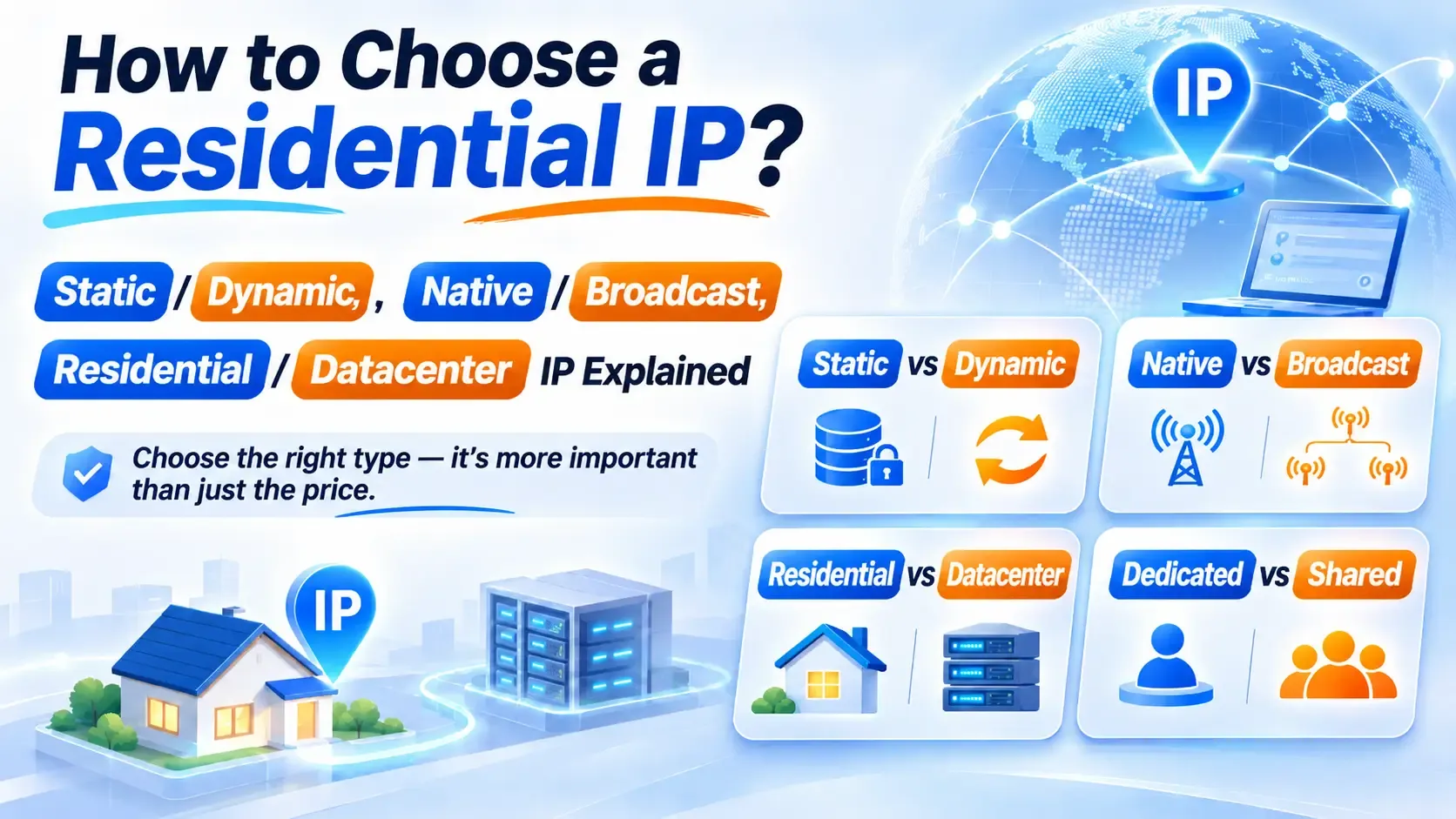
The main differences between these two proxy types are how long an IP address remains unchanged and how the service is billed.
If your business needs to use the same network exit over an extended period, such as for store management, social media operations, or API IP whitelisting, a static residential IP is generally the better choice.
If your tasks require frequent IP changes, access to multiple regions, or large-scale public web data collection, a dynamic residential IP may be more suitable.
How to Choose a Singapore Static Residential IP Provider
When purchasing a Singapore static residential IP, focus on the following factors rather than relying solely on marketing claims.
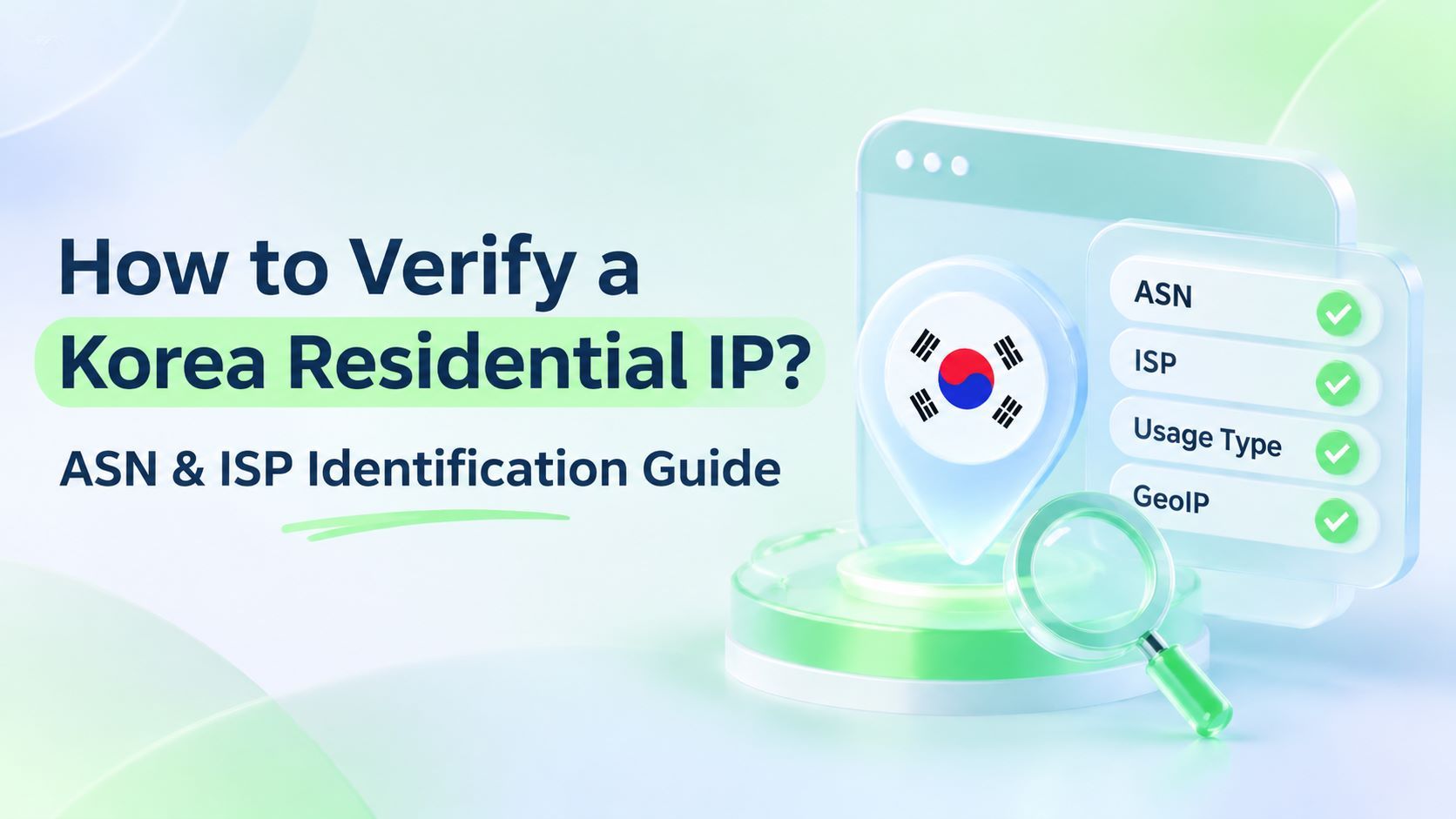
1. Check the ISP, ASN, and IP Geolocation
Before purchasing, check the IP's ASN to verify whether it is associated with a local Singapore network provider. Also confirm its country and city information.
Since ISP registration details may differ from the actual network deployment location, cross-check the results using multiple third-party IP databases.
2. Confirm Exclusive Use and IP Stability
Check whether the IP is exclusively assigned to you, whether it remains fixed throughout the rental period, whether the original address can be retained upon renewal, and how IP replacements are handled in case of node failures.
For accounts that require long-term use, these terms are often more important than choosing a well-known ISP.
3. Check Bandwidth, Latency, and Protocol Support
Confirm which protocols the service supports (HTTP, HTTPS, and SOCKS5) and whether the available bandwidth meets your business requirements.
Although Singapore is a major internet hub in Asia-Pacific, actual connection speeds still depend on the proxy node, network routing, and provider bandwidth configuration. Small-scale testing is recommended before purchasing.
4. IPDEEP Singapore Static Residential IPs
IPDEEP provides Singapore static residential IPs for cross-border businesses that need a fixed network exit in Singapore.
The service offers dedicated, fixed IP addresses and supports HTTP, HTTPS, and SOCKS5 protocols. Available bandwidth configurations and specifications depend on the selected plan.
These IPs can be used for cross-border store management, social media operations, localized testing, and business network access.
The standard reference price for Singapore static residential IPs is $6 per IP per month. Promotional nodes may be available at different prices.
Choose a plan based on your business requirements. Before purchasing, confirm whether the IP is exclusive, whether it remains fixed throughout the rental period, and what bandwidth and IP replacement policies apply.
To compare pricing and selection criteria across providers, see our Singapore Static Residential IP Buying Guide.
Frequently Asked Questions (FAQ)
Q1: What Is the Difference Between a Singapore Static Residential IP and a Data Center IP?
The main difference lies in their network affiliation. Data center IPs come from hosting and data center networks, while static residential IPs are assigned or registered by residential ISPs.
However, ISP affiliation does not necessarily mean the IP comes from an actual home broadband connection. Its deployment location and how platforms identify it also depend on its usage history and the target platform's policies.
Q2: Are Singapore Static Residential IPs Suitable for Shopee and Lazada?
If you need a fixed Singapore exit IP for long-term store management or local market monitoring, a static residential IP can be a suitable network option. It helps maintain a consistent login location but does not replace account compliance or adherence to platform policies.
Q3: Can a Static Residential IP Keep the Same Address Over Time?
Generally, yes, throughout the normal service period. However, the address may change due to node failures, resource adjustments, or provider-initiated replacements. Confirm the IP retention period and replacement policy with your provider before purchasing.
Q4: Can One Singapore Static Residential IP Be Used for Multiple Accounts?
Whether multiple accounts can share one IP depends on platform policies and the actual relationships between those accounts.
For businesses that require account isolation, it is advisable to configure separate network environments based on the accounts and business entities involved. IP sharing alone does not determine whether accounts are considered related.
Conclusion
The key factor when choosing a Singapore static residential IP is whether your business needs a fixed local network exit over an extended period.
Store management, social media operations, e-commerce website administration, API IP whitelisting, and localized market testing are generally better suited to static residential IPs.
For tasks that require frequent IP rotation, multi-region access, or large-scale data collection, dynamic residential IPs may be a better fit.
Before purchasing, check the IP's ISP and ASN affiliation, exclusive-use status, IP stability, bandwidth, and protocol support. Start with a small-scale test before expanding your purchase. Actual prices, available locations, and plan specifications are subject to the IPDEEP product page.