




Prevent Shopify Store Suspension: Use US Residential IPs



Clean IP picks: Static IPs from $1.5 each, Dynamic IPs from $0.5/GB


In cross-border eCommerce, the type of IP address, its stability, and its consistency with account information can directly affect how Shopify evaluates your store’s trust level. As a result, more sellers are using proxy IPs to build a more stable environment that closely resembles real local user behavior.
So, how can US residential proxy IPs improve account stability? And how should you choose the right one? Let’s take a closer look.

1. Why Should You Use US Residential IPs for Shopify Operations?
1. Data Center IPs Carry Higher Risk
Most standard VPNs and low-cost cloud servers (such as AWS and Vultr) provide data center IP addresses.
These IPs are labeled as “data center addresses.” From Shopify’s perspective, a legitimate US-based seller would not normally log in from a server environment every day. Using such IPs can easily trigger a “high-risk” flag, leading to delayed payment reviews or even account suspension.
2. Residential IPs Offer Higher Trust
Residential IPs are assigned by real US internet service providers such as Comcast and AT&T to local households. These are often referred to as native US residential IPs.
In Shopify’s eyes, users operating under residential IPs appear more like genuine local merchants, significantly reducing the risk of false flags.
2. How to Choose High-Quality US Proxy IPs?
1. Static Residential (ISP) IPs vs. Rotating Residential IPs
Rotating Residential Proxies:
These proxies support IP rotation (changing IPs over time or per request). They are suitable for web scraping, but risky for account logins.
Frequent IP changes may lead Shopify to suspect account compromise, triggering security locks.
Static Residential Proxies (ISP Proxies):
These IPs remain fixed over time, combining the speed and stability of data center proxies with the high trust level of residential IPs. They are ideal for long-term login and operation of accounts such as Shopify and PayPal.
2. Cleanliness and Exclusivity
If you use a shared IP that has been abused by thousands of users (e.g., for fake orders), it may already be flagged in fraud databases, making it unreliable for normal use.
It is recommended to purchase a dedicated IP from a provider, ensuring that the IP is exclusively assigned to you during the rental period.
3. Geographic Consistency
Your Shopify store address, tax information, and the geographic location (state/city) of your proxy IP should match.
For example, if your store is registered in California, it’s best to use a California-based IP. A local seller is unlikely to operate from a completely different region.
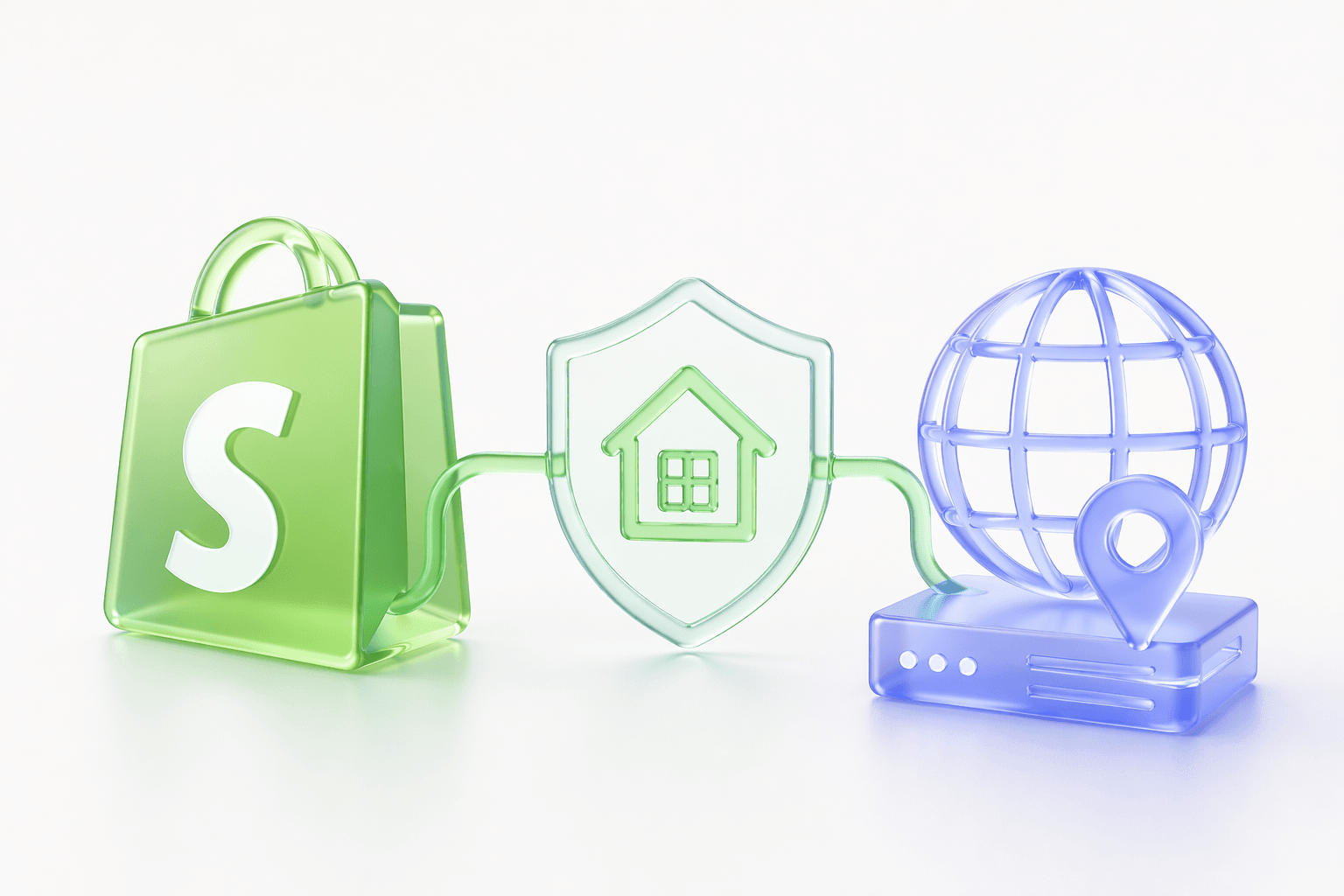
3. Practical Setup: Proxy IP + Fingerprint Browser
To build a reliable operating environment, combining a stable IP setup with browser fingerprint isolation is highly recommended.
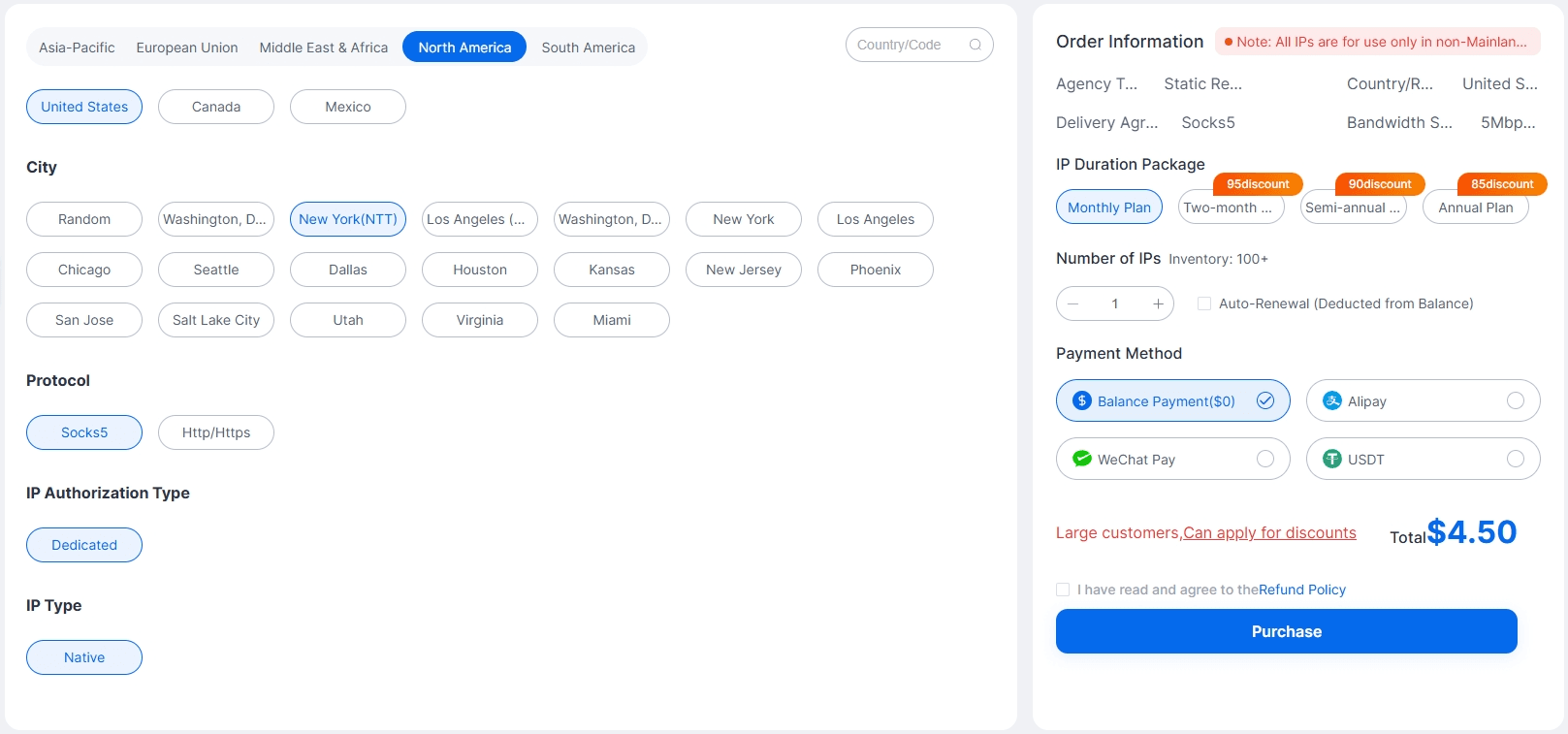
1. Get a clean US ISP proxy
Log in to your proxy provider’s dashboard. Based on your needs, select a static residential proxy → United States → state/city, then purchase and obtain the corresponding IP address, port, username, and password.
For more details, see: Static Residential Proxy Quick Start Guide
2. Configure a Fingerprint Browser
A fingerprint browser is used to isolate your device environment.
· Create a new browser profile and name it “Shopify-US-Store-01”.
· Select HTTP or SOCKS5 protocol in the proxy settings.
· Enter the proxy details obtained from IPDEEP.
To learn more about the setup process, see: How to Use IPDEEP Proxy in AdsPower Fingerprint Browser
3. Environment Consistency Check
Before logging into Shopify, use an IP detection tool to verify your current environment.
· Key point: Ensure the IP location, time zone, and language are consistent. For example, if you are using a New York IP, set your system or browser time zone to US Eastern Time.
4. Common Pitfalls to Avoid
1. Avoid frequently changing proxy providers
Keep your login environment stable. Once you select a fixed IP, try to use it consistently over time instead of switching frequently.
2. Do not mix multiple accounts in the same environment
Avoid logging into multiple Shopify accounts within the same environment. Even with residential IPs, shared environments can still lead to account association risks.
Final Thoughts
A clean, stable, and long-term US residential IP environment can significantly reduce the risk of triggering fraud detection, while improving payment success rates and overall account trust.
IPDEEP offers high-quality dedicated static residential ISP proxies, ideal for long-term use. These proxies provide consistent IP identity and environment stability, helping minimize unnecessary system interference and account risks.
FAQ
1. Does a stable IP environment guarantee that my account won’t be suspended?
No. IP is just one factor in risk control. Account behavior, order patterns, and payment methods also play a role. A stable IP can reduce risk, but it cannot eliminate it completely.
2. How can I tell if a proxy IP is suitable for Shopify?
Focus on three key aspects: whether the IP is residential, whether it is clean and not shared or abused, and whether its location matches your store’s registration details.
3. When should I use rotating residential proxies?
They are mainly used for tasks such as competitor data scraping, social media account warming, and simulating users from different locations to test ad performance.