




US Residential Proxy IP Selection Guide: Rotating vs Static IPs



Clean IP picks: Static IPs from $1.5 each, Dynamic IPs from $0.5/GB


In the fields of cross-border eCommerce, social media marketing, and large-scale data collection, US Residential Proxies are often regarded as a powerful tool for bypassing platform risk control systems and enabling global business expansion.
However, in reality, many users are not clear about whether to choose rotating (dynamic) proxies or static proxies, often wasting both time and money due to incorrect selection.
This article will explain the differences between these two types of proxies in detail and provide practical guidance to help you make the right choice. Let’s get started!
What Exactly Is a US Residential IP?
Before comparing dynamic and static proxies, it’s important to understand what residential proxies actually are.
Unlike data center IPs, US residential IPs are assigned by local Internet Service Providers (ISPs) in the United States to real household users.
· View the US ISP directory → List of All Internet Companies in the US
For platforms such as Amazon, TikTok, and Google, residential IPs appear as real local users, which generally makes them more trustworthy in the eyes of the platform.
Rotating Residential Proxies
1. How They Work
Rotating residential proxies are based on a large IP pool. During use, the system randomly assigns an IP address from the pool to your request.
You can also configure IP rotation rules, such as changing IP on every request or maintaining the same IP for a fixed period of time (sticky sessions).

2. Advantages
High anonymity: Since IPs constantly change, it is difficult for websites to track user behavior.
Large IP pool: Typically offers millions or even tens of millions of IPs covering cities across the United States.
High concurrency: Ideal for sending a large number of requests in a short period of time without worrying about IP bans.
3. Pricing Model
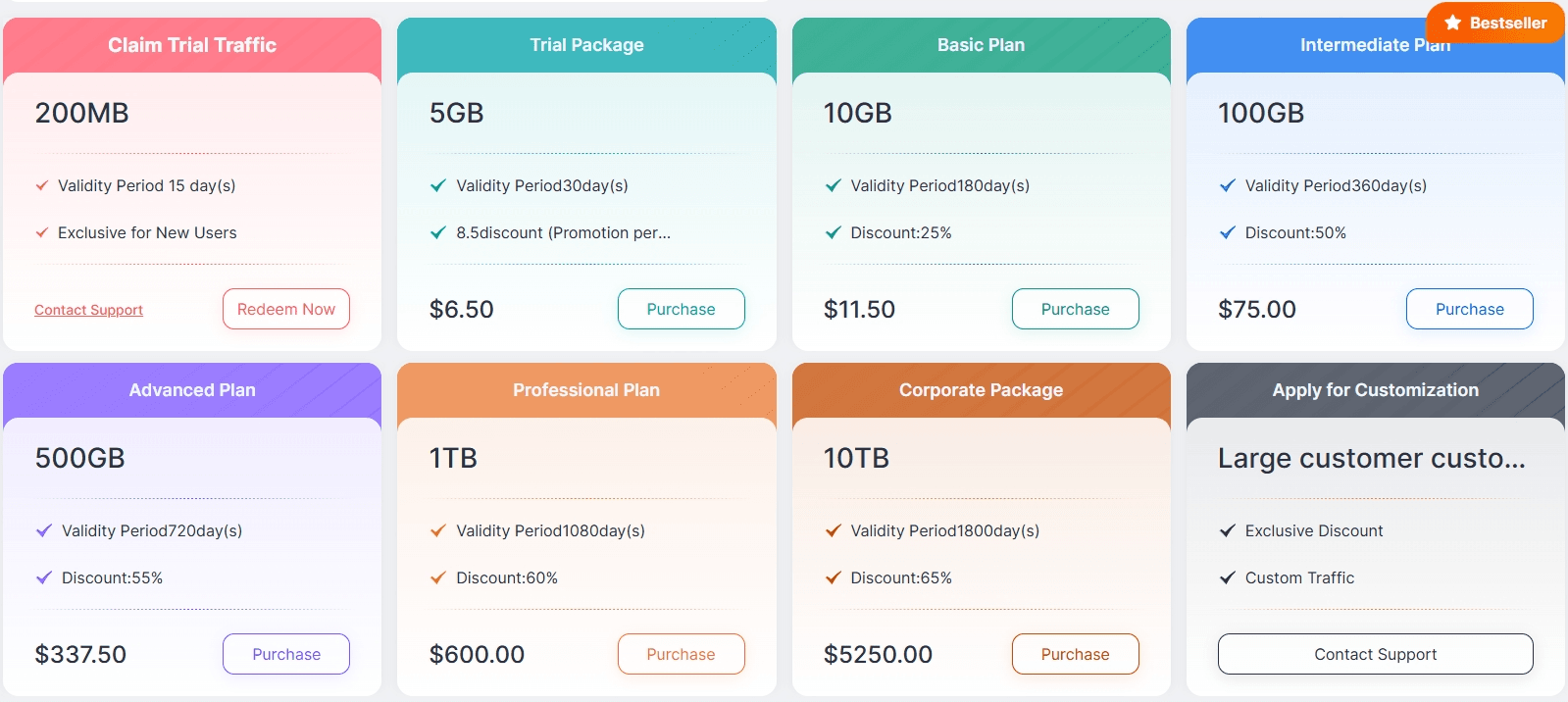
Usually billed based on traffic usage (e.g., $X per GB). You only pay for the data consumed, and there is no restriction on the number of IPs you can access.
Static Residential Proxies
1. How They Work
Static residential proxies (also known as ISP proxies) combine the speed of data center proxies with the authenticity of residential IPs. They are real IPs assigned by ISPs and remain fixed for a long period of time.
As long as you keep renewing the service, the IP remains exclusively yours.
2. Core Advantages
Consistent environment: The IP remains unchanged, simulating a stable and long-term residential usage environment, ideal for account operations.
Faster response: Compared to rotating proxies with multiple routing layers, static proxies generally have lower latency.
High stability: No unexpected session interruptions, ensuring reliable connections.
3. Pricing Model
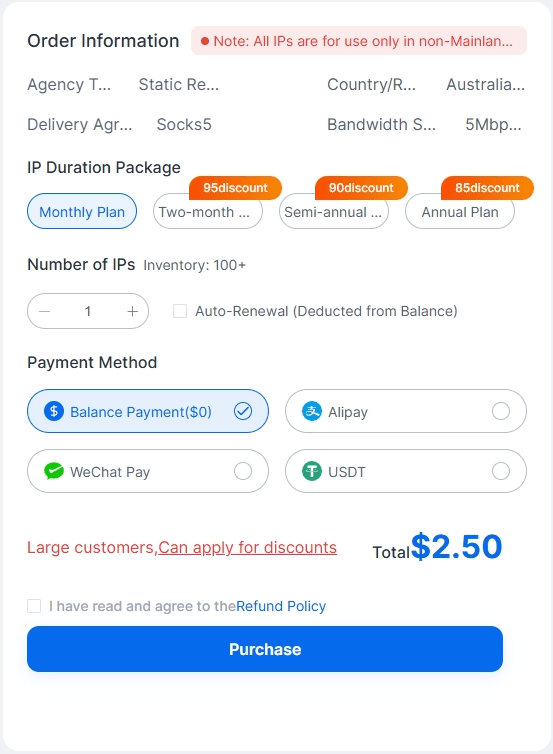
Usually billed per IP (e.g., $X per IP per month). Traffic is often unlimited, but you pay for each dedicated IP address.
How to Choose the Right One?
Now that you understand the fundamentals and pricing of both rotating and static residential proxies, let’s look at how to choose the right option for your needs.
1. Use Cases
2. Cost Efficiency
Choose rotating residential proxies: If your business needs to access thousands of pages where each request involves small amounts of data (e.g., web scraping), traffic-based pricing offers the best cost efficiency.
Choose static residential proxies: If you need 24/7 automated operations or frequently upload/download large files (e.g., TikTok video publishing), unlimited traffic static IPs can help reduce bandwidth costs.
3. Risk of Account Blocking
Risks of rotating proxies: Frequent IP changes may trigger “suspicious login” or “abnormal activity” detection on some platforms.
Risks of static proxies: If a static IP is flagged or blacklisted due to improper usage, it becomes unusable and must be replaced.
How to Find a High-Quality Proxy Provider?
If you are looking to purchase and use US residential IPs, here are three key selection criteria:
1. IP purity: Many low-cost residential IPs are actually simulated data center IPs (virtual ISPs). It is recommended to use an IP detection tool to check the ASN information of the proxy IP.
2. Geolocation accuracy: A qualified proxy provider should support precise IP geolocation. As shown in the example, you should be able to select specific US states or cities.
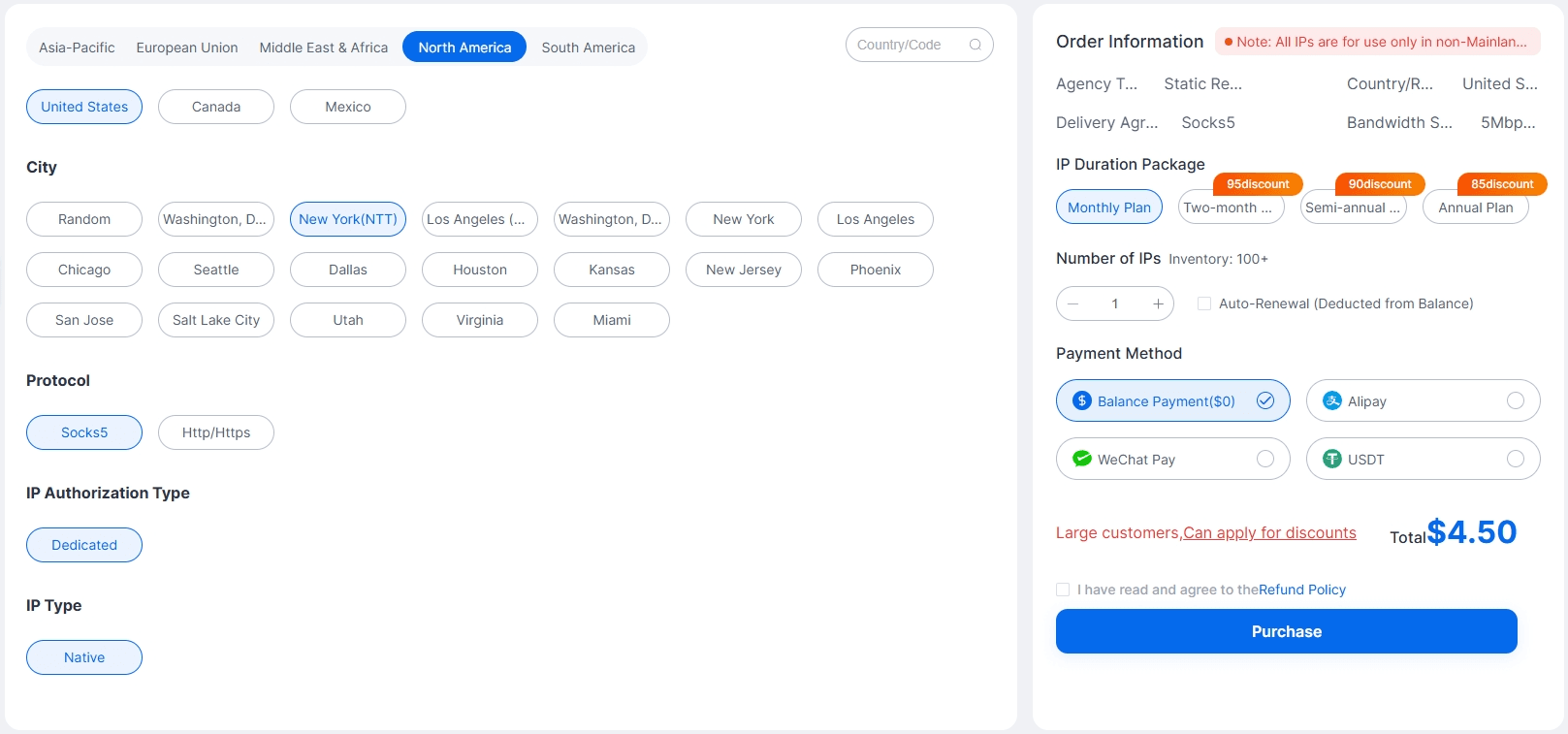
3. Technical support & API: For rotating proxies, focus on the convenience of API access; for static proxies, check whether SOCKS5 protocol is supported for better compatibility.
Frequently Asked Questions
1. How can I get US residential proxies?
You can choose a provider that offers US static or rotating residential IPs, such as IPDeep, which ensures real, dedicated IPs with accurate geolocation.
2. How do I use US residential proxies?
They can be configured with anti-detect browsers, browser extensions (such as SwitchyOmega), proxy management tools (such as Proxifier), or directly within local applications and specific software.