




How to Buy Japanese Mobile Proxy IPs? Recommendations and Tips



Clean IP picks: Static IPs from $1.5 each, Dynamic IPs from $0.5/GB


Many people think that just buying any Japanese mobile proxy IP is enough, but once they start using it, they realize—accounts can easily get banned, and access is unstable.
The problem is quite simple: you haven't chosen the right IP node. Currently, the quality of IP proxy providers varies widely, with prices ranging from dozens to thousands, making it easy for beginners to fall into traps.
Today, we will clarify the question of "how to buy Japanese mobile proxy IPs," covering IP node selection, how to judge IP proxy providers, and how to choose native IP nodes step by step, helping you avoid detours.

1.What is Japanese Mobile Proxy IP?Is it worth buying?
Japanese mobile proxy IPs are mobile network IPs from local Japanese carriers (like SoftBank, Docomo, AU). The biggest difference between these IPs and regular datacenter IPs is that they are more authentic and harder to identify as proxies.
Why do many people prefer Japanese mobile proxy IPs?
• Suitable for account registration (high success rate)
• More stable for advertising
• Smoother access to restricted content
• Less likely to get banned when web scraping
Especially in scenarios like TikTok, Amazon, and local Japanese platforms (such as Mercari, Yahoo Japan), mobile proxy IPs are almost a necessity.
2. How to Buy Japanese Mobile Proxy IPs? A Beginner's Guide to Avoiding Pitfalls
Many people fall into traps when buying IPs for the first time. Here's a simple purchasing thought process:
1. Clarify the Purpose (Very Important)
Different purposes have different requirements for IP node selection:
• Account registration/maintenance: needs to be stable and high purity
• Web scraping: needs a large IP pool and fast switching
• Advertising: needs precise geographical location and low latency
👉 Don't just choose the most expensive option right away; first clarify what you want to do.
2. Choose a Reliable IP Proxy Provider
There are many IP proxy providers on the market, but the quality varies. Focus on these points when choosing:
• Do they provide native Japanese mobile IPs?
• Do they specify the carrier (Docomo / SoftBank, etc.)?
• Is the IP genuinely rotating (not pseudo-mobile)?
• Do they support API or one-click switching?
• Is their customer service responsive?
Providers like IPDEEP have a good reputation in the Japanese mobile proxy IP space, with stable node quality, suitable for beginners and long-term use.
3. Look at IP Node Quality, Not Just Price
A common mistake is to only look at whether the price is cheap. But the reality is:
• Cheap IP → likely to be heavily shared
• Overused IP → easy to get banned during registration/access
• High latency → poor user experience
Core indicators for IP node selection: whether it is native (not datacenter), whether it is mobile network, size of the IP pool, whether it supports dedicated/dynamic switching, latency, and success rate.
3.Recommended Approach for Japanese Native IP Nodes(Key Points)
When it comes to "recommended native IP nodes," it's not about a specific IP, but rather the method of selecting nodes.
△ Recommended to prioritize:
• IP ranges from Japan's three major carriers (Docomo / SoftBank / AU)
• Mobile proxy IPs that support dynamic IP rotation
• Geolocated IPs (Tokyo/Osaka, etc.)
△ Not recommended:
• Cheap shared IPs (used by multiple people)
• IPs labeled as "Japanese," but are actually datacenter exits
• IP proxy providers whose sources cannot be verified
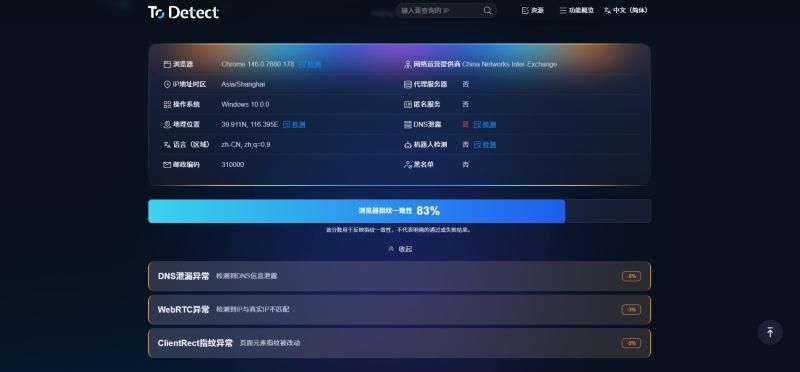
If you're unsure, you can use tools to detect IP ownership, like ToDetect.
4. Actual Experience Sharing of Proxy Services like IPDEEP
Taking IPDEEP as an example, Japanese mobile proxy IP nodes are relatively stable, support API calls, suitable for automation, and have fast IP switching speeds (ideal for web scraping), with a certain threshold, but not overly complex.
• Suitable for users engaged in cross-border business, needing long-term stable IPs, and having high IP quality requirements.
• Of course, it's also recommended to try it out first before deciding on long-term purchases.
5. Five Tips for Purchasing Japanese Mobile Proxy IPs (Recommended to Save)
1. Quick Reference Table for Purchasing Japanese Mobile Proxy IPs
Key Dimensions | Quality Performance | Common Issues | Suggested Practices
| Key Dimension | Quality Performance | Common Issues | Suggested Practices |
|---|---|---|---|
| IP Type | Native Japanese Mobile Proxy IP (Carrier IP) | Datacenter IP masquerading as mobile IP | Use tools to detect IP ownership |
| IP Purity | Not abused, clean history | Banned, blacklisted IPs | Prioritize IP proxy providers that support testing |
| IP Pool Size | Sufficient number of IPs, can dynamically rotate | Few IPs, high duplication rate | Choose services that support automatic switching |
| Connection Stability | Low latency, high success rate | Frequent disconnections, access failures | Prioritize local Japanese nodes |
| Proxy Protocol Support | Supports HTTP / HTTPS / SOCKS5 | Single protocol, poor compatibility | Confirm in advance based on tool requirements |
2. Don't blindly trust "unlimited IPs"; truly high-quality mobile proxy IPs are not cheap, and unlimited use is basically unrealistic.
3. Prioritize IP proxy providers that support testing; only buy from those you can try.
4. Check if they support protocols (HTTP / SOCKS5); different tools have different protocol requirements, confirm in advance.
5. Pay attention to the IP switching mechanism; is it time-based? Or request-based? This will directly affect the usage effect.
Conclusion
Ultimately, using Japanese mobile proxy IPs is not just about "buying and using well," but a process of selection + testing + adjustment.
If you want to use it more stably, it's recommended to pair with a reliable IP proxy provider (like IPDEEP) and optimize usage strategies based on actual scenarios.
Lastly, it's worth mentioning that regardless of the type of mobile proxy IP, it's advisable to test before scaling up. Spending a little more time on screening upfront can save a lot of costs and effort later.