




Proxy Beginner's Guide: Mobile Proxies



Clean IP picks: Static IPs from $1.5 each, Dynamic IPs from $0.5/GB


Today, many businesses place a high value on real user traffic. Traditional static proxy IPs are no longer sufficient to meet all needs. To better simulate real user behavior and more effectively deal with platform risk-control systems, mobile proxies have rapidly gained popularity in recent years and become the preferred choice for many professionals.
I. What Are Mobile Proxies?
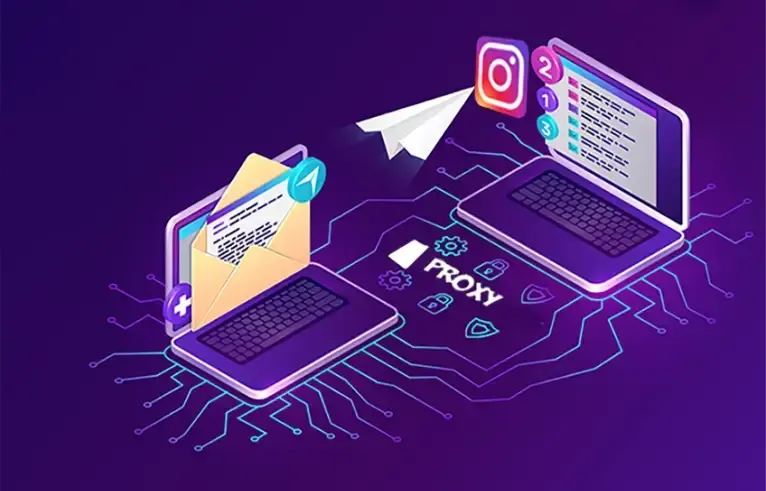
A mobile proxy is a proxy service that routes your network requests through real mobile networks (4G/5G cellular base stations). It makes your traffic appear as if it comes from a real mobile device, rather than a fixed broadband connection or a data center server.
Mobile proxies come with several major benefits, including:
1. Hard to Detect as Proxies
Platform risk-control systems usually focus on detecting data center IPs, which are commonly used for crawling and mass registrations. Mobile IPs are dynamically assigned by carriers and represent highly trusted, natural traffic, making them extremely difficult to block.
2. Realistic Simulation of User Network Behavior
When accessing a platform through a mobile proxy, the behavior is almost identical to that of a real user browsing on a smartphone. This is especially critical for social media account management and mobile testing scenarios.
3. Multi-Region, Multi-Carrier, Flexible Targeting
High-quality mobile proxies allow you to target IPs by country, city, and even carrier, making them ideal for global operations.
II. Common Use Cases for Mobile Proxies
1. Social Media Multi-Account Management
Platforms like TikTok, Facebook, Instagram, and Twitter are highly sensitive to multiple accounts logging in from the same IP. Because mobile IPs are real and trusted, mobile proxies significantly reduce the risk of account linking, throttling, or bans.
2. Cross-Border E-Commerce Operations
Whether it's Amazon, Shopify, eBay, or Temu, platforms monitor access sources closely. Mobile proxies let you switch regional perspectives, view local shopping experiences, and operate multiple stores more stably with lower association risk.
3. SEO and Global Data Collection
For scraping SERPs, monitoring rankings, or viewing Google/Bing results from different regions, mobile IPs are more stable than standard proxies and less likely to trigger CAPTCHAs.
4. Ad Verification and Risk-Control Analysis
After launching ads, you may need to check whether ads are actually displayed in target regions. Mobile proxies can simulate real local users visiting ad landing pages.
5. Mobile App Testing
Developers can use mobile proxies to simulate access from mobile users in different countries, making them an essential tool for mobile QA testing.
III. Types of Mobile Proxies and How to Choose
Although they all fall under mobile proxies, different providers offer different models. You should understand these three key types:
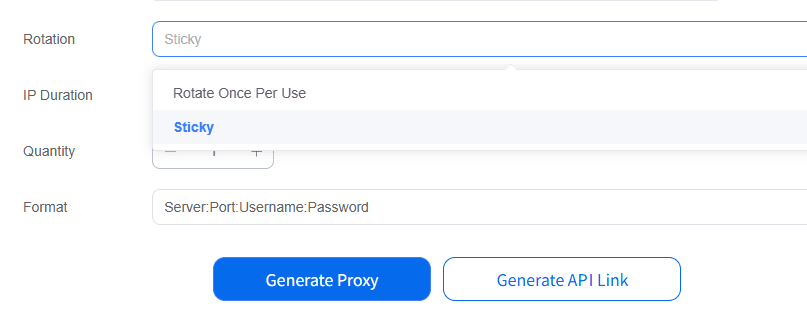
1. Rotating Mobile Proxies
The system automatically switches IPs on every request, at fixed intervals, or when triggered manually.
Best for data scraping, ad verification, and multi-region access.
2. Sticky Mobile Proxies
Allow an IP to remain unchanged for several minutes to several hours.
Ideal for account logins, content uploads, and tasks requiring stable sessions.
3. Manual Switch / API-Controlled Mobile Proxies
Users can freely change IPs via an API or dashboard.
Suitable for technical teams, automation scripts, and bulk operations.
IP Deep supports both rotating and sticky IPs, and provides flexible IP management and switching via API.
IV. What to Consider When Choosing a Mobile Proxy
1. IP Pool Size and Geographic Coverage
The larger the IP pool and the broader the coverage, the lower the chance of IP reuse or access anomalies.
2. Protocol Compatibility (HTTP / SOCKS5)
If you run automation scripts or crawlers, multi-protocol support will be much more convenient.
3. Ease of Use of the Provider's Dashboard
Traffic statistics, one-click IP switching, API documentation, session management, and support response speed all directly affect your efficiency and overall experience.
FAQ
1. Can mobile proxies be used for web scraping?
Yes. In scenarios like SERPs, social media, and e-commerce websites, mobile IPs usually achieve a higher success rate than data center IPs because they are more trusted and less likely to trigger CAPTCHAs or bans.
2. Will using mobile proxies cause account issues?
As long as you choose a stable provider and keep one account mapped to one dedicated mobile IP, issues are unlikely. However, avoid excessively frequent IP switching, as it may still trigger risk controls.
3. Do mobile proxies affect local network performance?
No. Mobile proxies only change the outbound IP of your connection and do not affect local network speed or system settings. Once the proxy is turned off, your network returns to normal.