

Dynamic Home IP vs. Residential Proxies: Key Differences



Clean IP picks: Static IPs from $1.5 each, Dynamic IPs from $0.5/GB


Proxies are widely used in cross-border e-commerce, data collection, and international market research.
However, terms such as "home residential IP," "dynamic residential proxy," and "datacenter IP" are often used interchangeably, making them difficult to distinguish.
This article explains what a dynamic home residential IP is, how it relates to dynamic residential proxies, and what to consider when choosing a provider.

What Is a Dynamic Home Residential IP?
The term "dynamic home residential IP" is primarily used to describe a specific combination of features. It is not a standardized, standalone product category in the proxy industry.
A residential IP is an IP address assigned by an Internet Service Provider (ISP) to a home broadband subscriber.
Unlike IP addresses used by data center servers, residential IPs are typically assigned by ISPs to home broadband users and are associated with residential internet connections.
A dynamic home residential IP combines two characteristics:
▸ Home broadband origin: The IP comes from a residential network and is associated with the corresponding ISP's ASN and geographic location.
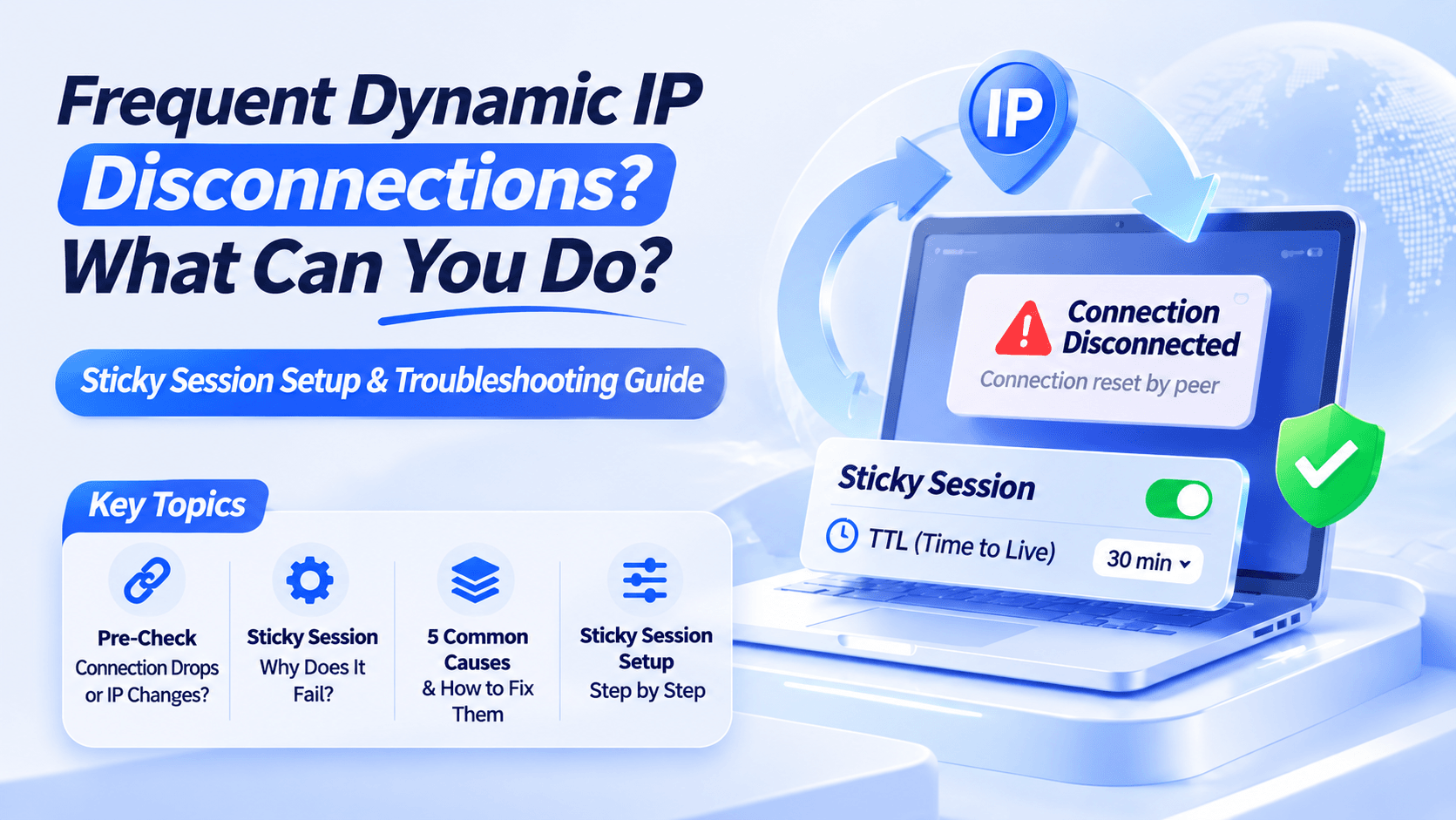
▸ Dynamic rotation: The proxy system changes its exit IPs according to configured rules. Common methods include per-request rotation, time-based rotation, and Sticky Sessions, which keep the same exit IP for a specified period whenever possible.
One important point to clarify is that dynamic residential proxies can also use home broadband connections as their exit networks.
Therefore, "dynamic home residential IP" is not a new product category separate from dynamic residential proxies. It simply emphasizes the combination of a home broadband origin and dynamic IP rotation.
How Does a Dynamic Home Residential IP Differ from Regular Dynamic Residential Proxies?
Strictly speaking, the two concepts overlap considerably and should not be treated as opposing product categories. The more meaningful differences involve three aspects: IP sources, IP pool quality, and rotation and session management.
1. IP Sources and Resource Types
Proxy IPs are generally classified along two dimensions: their source (residential, datacenter, or mobile) and how they are used (rotating, sticky, or static). These categories are not mutually exclusive.
Residential proxy providers may differ in their IP sources, resource acquisition methods, exit network quality, and IP pool management.
Some providers may also include ISP proxies or other network types in their resource pools. Therefore, a product name alone cannot confirm whether an IP comes from a home broadband connection.
2. Residential IPs Can Still Be Detected as Proxies
Using a residential IP does not guarantee that a website will never flag it. Some IPs may be restricted due to a history of unusual activity, shared usage, or poor reputation.
Websites may also evaluate multiple signals, including request frequency, browser fingerprints, cookies, and account activity.
Therefore, evaluating residential proxy quality requires more than checking the IP source. You should also consider its reputation history, resource-sharing practices, and actual performance.
3. Dynamic Residential Proxies Do Not Always Change IPs on Every Request
Many beginners assume that dynamic residential proxies automatically assign a new IP for every request. In reality, they typically support several rotation methods: per-request rotation, time-based rotation, and Sticky Sessions.
Frequent rotation can work well for independent web scraping tasks, while tasks involving logins or continuous operations benefit from maintaining the same session to avoid frequent changes in the exit IP.
4. Rotation Methods and Connection Stability
Proxy providers use centralized gateways to manage exit IPs and assign residential nodes based on request rules or session parameters.
Actual rotation speed depends on gateway scheduling, exit node availability, and network conditions. Instant switching cannot be guaranteed in every situation. When choosing a provider, test geographic accuracy and session stability rather than relying solely on marketing claims.
Dynamic Residential, Static Residential, and Datacenter IPs: What's the Difference?
In short, choose a static residential IP when you need a consistent exit IP over time, and a dynamic residential IP when you need rotating IPs across multiple locations.
How to Choose a High-Quality Dynamic Residential Proxy
Verify the IP Source and Network Type
Once you obtain a proxy exit IP, you can verify it in several steps:
1. Check the ASN and ISP information to confirm whether the IP belongs to an ISP network in the target region.
2. Check fields such as Usage Type, Hosting, and Proxy in IP intelligence databases.
3. Compare results from multiple databases to cross-check the findings.
4. Test the actual exit IP, geographic location, and connection stability.
Keep in mind that classification results may vary across third-party databases. A Residential label from a single IP lookup service does not guarantee that an IP is completely clean.
Evaluate IP Pool Size, Geolocation, and Connection Quality
If your business operates across multiple regions, look for a proxy pool with broad geographic coverage and support for targeting specific countries, cities, or even ISPs.
Before choosing a provider, test location accuracy, Sticky Session stability, and latency to make sure the service meets your requirements.
Choose a Plan Based on Your Traffic and Bandwidth Needs
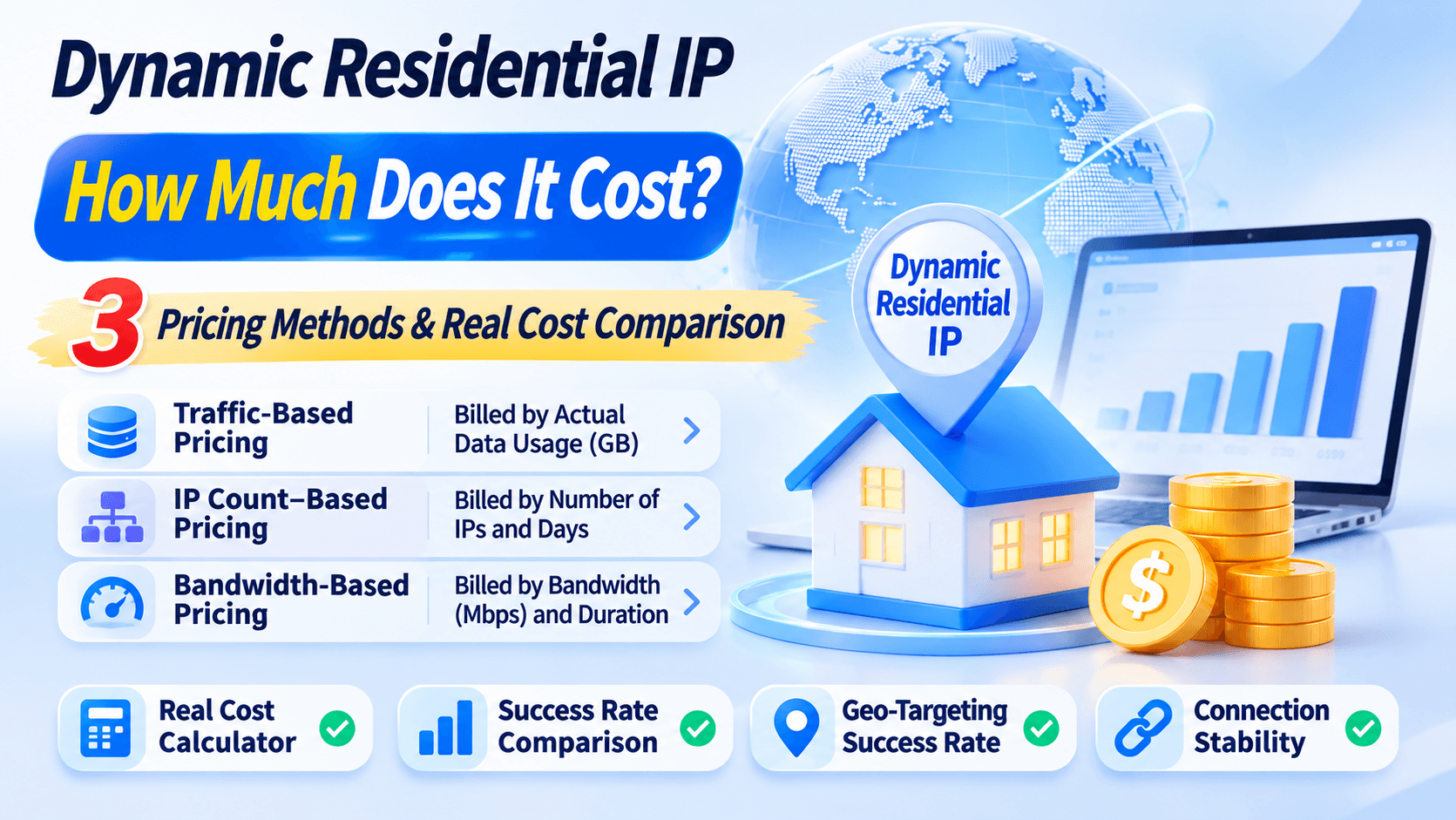
Choose a billing model that matches your workload:
▸ Traffic-based billing: Charges are based on actual data usage in GB. This is suitable for tasks with relatively low request volumes and small data transfers, such as price monitoring and account registration.
▸ Bandwidth-based billing: Charges are based on bandwidth and usage duration. This is suitable for continuous operations and workloads with higher data throughput requirements.
IPDEEP offers two separate products: Dynamic Residential Proxies and Unlimited Residential Proxies.
Dynamic Residential Proxies are billed based on actual traffic usage, making them suitable for multi-region web scraping, price monitoring, and SEO rank tracking.
Unlimited Residential Proxies are billed based on bandwidth and usage duration, making them a better fit for continuous operations and bandwidth-intensive workloads.
The two products differ in resource specifications and usage options, so choose according to your actual requirements. If you need rotating IPs across multiple locations, explore IPDEEP Dynamic Residential Proxies, with coverage in more than 200 countries and regions.
If your business requires continuous connections and higher data throughput, consider IPDEEP Unlimited Residential Proxies.
When comparing plans, start by selecting the locations you need, then review the available packages and actual prices. Refer to the official website for the latest pricing.
Frequently Asked Questions
Q1: Can a Dynamic Home Residential IP Prevent CAPTCHA Challenges?
No. CAPTCHA challenges depend on several factors, including the target website's security policies, IP reputation history, request frequency, browser fingerprints, and account status.
A residential IP provides a residential network exit, but it cannot guarantee that every request will pass verification.
Q2: Are Dynamic Residential Proxies Suitable for Long-Term Account Logins?
If you need to maintain the same exit IP over an extended period, a static residential IP is generally a better choice.
Dynamic residential proxies can also maintain the same IP for a specified period through Sticky Sessions. However, session duration and stability depend on the provider's configuration, so they are not a direct substitute for a long-term fixed IP.
Dynamic residential proxies are better suited to tasks such as public data collection and multi-region access that do not require a permanently fixed exit IP.
Q3: How Can You Tell Whether a Proxy IP Comes from a Real Home Network?
Check the ASN and ISP information, then cross-reference fields such as Usage Type and Proxy in IP intelligence databases.
However, an ISP classification does not necessarily prove that an IP is being used by an actual home broadband subscriber. You should also consider connection tests and the provider's explanation of its resource sources.
Q4: How Often Should You Rotate Dynamic Residential IPs?
There is no universal rule. Rotation frequency should depend on the task, the target website's access restrictions, and the need to maintain session continuity.
Per-request rotation can work well for independent web scraping tasks. For tasks involving logins or continuous operations, Sticky Sessions are recommended to avoid frequent exit IP changes. Always follow the target website's access policies.
Conclusion
A dynamic home residential IP emphasizes two characteristics: a home broadband origin and dynamic rotation. Its concept overlaps with that of dynamic residential proxies, so the two should not be treated as separate or opposing product categories.
When choosing a proxy, focus on whether the IP source is genuine, the quality of the IP pool, whether rotation and session management meet your business needs, and whether the billing model fits your usage.
If you need rotating IPs across multiple locations, consider IPDEEP Dynamic Residential Proxies. If you need a long-term fixed exit IP, explore IPDEEP Static Residential IPs. Refer to the official website for the latest plans and pricing.