




Are UK Static Residential IPs Worth It? 3 Reasons to Buy—and 3 to Skip



Clean IP picks: Static IPs from $1.5 each, Dynamic IPs from $0.5/GB


Here’s the short answer: if you’re collecting data at scale, UK static residential IPs could be one of your most expensive—and least necessary—purchases this year.
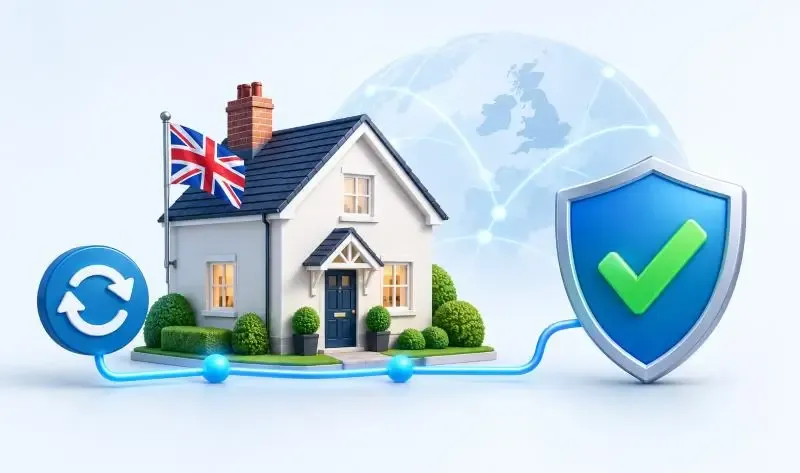
First, let’s clarify what you’re buying. These IP ranges are registered to UK internet service providers such as BT, Sky Broadband, and Virgin Media, with ASN records identifying the ISP. They are typically dedicated to one customer and stay the same over time. To a platform’s risk systems, they present a consistent UK network identity—a very different setup from residential IPs that keep rotating.
You’re probably trying to answer three questions: static or rotating, how many IPs, and how much should you pay? Almost every provider tells you static residential IPs are the best choice. Far fewer explain when they’re a waste of money. This guide starts with when to skip them, then walks you through an IP checklist you can complete yourself in about ten minutes.
Key Takeaways
- A simple rule of thumb: use static IPs for a consistent identity and rotating IPs for high-volume requests.
- September 2026 reference pricing: CNY 45–160 per IP per month, with a median of around CNY 80. Rotating residential IPs start at approximately CNY 36 per GB.
- Check an IP in four steps: verify its ASN, check its fraud score, confirm location consistency, and test for DNS leaks.
- Avoid IPs with a Fraud Score above 60, more than five blocklist listings, or ASN details indicating Hosting / Data Center.
When to Use UK Static Residential IPs: 3 Reasons to Buy and 3 Reasons to Skip
Start with one question: are you maintaining an identity or sending requests? If you need a consistent identity, choose static IPs. If you mainly need request volume, look elsewhere.
3 Situations Where Static IPs Are Worth the Cost
1. Long-term account management and everyday seller dashboard access. Frequent changes in login location can cause problems for Amazon UK and TikTok Shop UK seller accounts. Using the same IP for six months helps establish a consistent login history.
2. Advertising and payment accounts. If Facebook Business Manager, Google Ads, PayPal, or Stripe triggers additional verification, recovering access can cost far more than the IP itself.
3. IP allowlisting and other fixed-address requirements. If an admin system requires a fixed outbound IP, or a partner only permits access from approved addresses, a static IP is effectively essential.
3 Situations Where You Should Save Your Money
1. High-concurrency data collection. When you’re sending tens or hundreds of thousands of requests at a time, paying for static IPs individually can cost dozens of times more than rotating residential IPs billed by bandwidth, while offering less flexibility to rotate addresses.
2. Short, one-off projects. A monthly subscription is poor value for a project you’ll finish in a week.
3. Budget-sensitive bulk account creation. This activity already attracts significant scrutiny. Buying the most expensive IPs won’t make it risk-free.
I’ve seen more than 20 stores share a single IP and get flagged as linked the next day. I’ve also seen data collection projects spend five figures in CNY on static IPs, then bring monthly costs down to a few dozen yuan for the same data volume by switching to bandwidth-based billing.
UK Static Residential vs. Rotating Residential vs. Static Datacenter IPs
The main differences come down to where the IPs originate, whether they stay fixed, and how you’re billed. Here’s a side-by-side comparison:
| Type | IP Source | Fixed Address? | IP Reputation | Typical Cost | Common Uses | Long-Term Accounts |
|---|---|---|---|---|---|---|
| UK Static Residential IP | Registered to ISPs such as BT, Sky, or Virgin Media | Fixed over the long term | Generally strong; typically dedicated | CNY 45–160 per IP/month | Seller dashboards, advertising accounts, IP allowlisting | ✓ Suitable |
| UK Rotating Residential IP | Real household broadband connections with automatic rotation | Changes per request or at set intervals | Generally strong, but an IP may have been used by multiple customers | From CNY 36 per GB | Data collection, price comparison, SEO monitoring | ✕ Not suitable |
| UK Static Datacenter IP | Datacenters / cloud servers | Fixed | Moderate to low; easily identified as a datacenter address | CNY 35–50 per IP/month | Internal system allowlisting, tasks with less restrictive checks | ✕ Not suitable |
A quick way to remember it: static residential IPs for long-term accounts, rotating residential IPs for high-volume requests, and static datacenter IPs when you simply need an address to allowlist.
How Much Do UK Static Residential IPs Cost?
As of September 2026, UK static residential IPs typically cost CNY 45–160 per IP per month, approximately US$6–22, with a median of around CNY 80. Static datacenter IPs cost CNY 35–50 per IP per month, while rotating residential IPs start at roughly CNY 36 per GB. These are September 2026 reference prices; check each provider’s website for current rates before ordering.
Here’s a simple example. Give each of 10 UK stores its own static residential IP, and at the median price of CNY 80, you’re looking at roughly CNY 800 a month. Handling the same request volume through rotating residential IPs could cost less than CNY 50.
Four factors drive most of the price difference: city availability (London IPs typically cost more than Manchester or Birmingham IPs), dedicated versus shared access (shared IPs are cheaper but carry more risk), ISP (BT and Sky ranges command a premium), and subscription length and order size (annual plans or orders of 10 or more IPs often leave room for negotiation).
One easy mistake is comparing prices that use different billing units. Static IPs are billed by the number of addresses and subscription length; rotating IPs are billed by GB of traffic. Before you jump at a “from CNY 36” offer, check what that price actually covers. For specific plans, see UK static residential IP plans and pricing.
Why an EU IP Is No Substitute for a UK IP
Following Brexit, Amazon UK and EU marketplaces such as Amazon.de and Amazon.fr operate as fully separate marketplaces, with different pricing, Prime delivery timelines, and product availability. Access Amazon UK through a German or Dutch IP, and you’ll see pricing and listings tailored to cross-border delivery, which can skew your collected data.
TikTok Shop UK is stricter still, cross-checking four details: where the registered business is based, the location of its usual login IP, the payment recipient, and the physical location of livestreams. Mismatches can lead to anything from reduced visibility to store closure.
When choosing a native UK IP, look for major UK residential providers in the ASN’s org field: BT, Sky Broadband, Virgin Media, TalkTalk, EE, Plusnet, or Vodafone. Vodafone and EE are primarily mobile operators with smaller fixed-line shares, so they appear less often in residential ASN results. That doesn’t make them unusable, but they carry less weight here than established fixed-line providers such as BT and Sky.
Common city options include London, Manchester, Birmingham, Glasgow, Liverpool, Edinburgh, and Cardiff. See UK residential IP locations and city coverage for availability.
How to Check a UK Static Residential IP: A 10-Minute, 4-Step Checklist
Don’t take a provider’s “99% clean” claim at face value. You can run the following four checks with publicly available tools, without installing anything.
Step 1: Verify the ASN.
Open ipinfo.io or todetect.net. The org field should identify a UK residential broadband provider such as BT, Sky Broadband, Virgin Media, TalkTalk, EE, or Plusnet. If you see Cloud, Hosting, Data Center, or Server, reject the IP. That indicates a datacenter IP being sold as residential—the fundamental distinction this check is intended to catch. Keep in mind that an ISP name in the ASN record only tells you who the IP range belongs to. It doesn’t prove that the connection physically runs through someone’s home, but that distinction doesn’t change this assessment.
Step 2: Check Blocklists and Fraud Scores.
Run the IP through ToDetect, Spamhaus, AbuseIPDB, and IPQualityScore. Use these working thresholds: a Fraud Score of 0–30 is usable, 30–60 calls for caution, and above 60 means reject it. Avoid IPs appearing on more than five blocklists. The proxy / vpn / tor flags returned by IPQS are an even stronger filter: if any is true, skip the IP regardless of its score.
Step 3: Cross-Check the Location and ISP.
The reported city should match the location you purchased. Residential IP geolocation is usually only accurate to the local area, so a discrepancy of 20–30 kilometers isn’t unusual. A more concerning mismatch is an IP reported as being in the UK while its ISP belongs to an overseas entity—that points to an IP being presented as something it isn’t.
Step 4: Test for DNS and WebRTC Leaks.
Open todetect.net and check that your exit IP and DNS location match. If DNS requests still go through your home-country connection or a third-party resolver, you’re undermining the setup you paid for.
Two details deserve clarification. These three Fraud Score bands are practical rules of thumb, not official categories published by IPQS. Different tools use different algorithms, so don’t treat the cutoffs as universal rules. Also, a Spamhaus PBL listing is normal for residential broadband: the PBL includes residential and dynamic IP ranges by design. Pay attention to SBL and XBL listings instead.
Getting Started: Setup and Account Environment Isolation
A clean IP is only the starting point. A poorly configured environment can still undermine it.
• Use one IP and one separate environment per account. Don’t reuse them across accounts.
• Keep activity light during the first 3–7 days with a new IP. Start with normal browsing and logins instead of jumping straight into bulk actions.
• Align your time zone, language, and browser fingerprint settings with the IP’s location.
• Avoid switching cities. Logging into the same account from London in the morning and Manchester in the afternoon can look unusual to risk systems.
• Don’t share the IP across devices. Using it on your phone and computer at the same time also introduces risk.
• Recheck it every month. A static IP’s reputation isn’t permanent. Repeat steps 1 and 2 above rather than assuming one check will cover you for a year.
Provider-level considerations—dedicated port allocation, HTTP/HTTPS/SOCKS5 support, IP replacement policies, and binding rules—are beyond the scope of this article. For those, see our 2026 Guide to Choosing UK Static Residential Proxies.
UK Static Residential IPs: Frequently Asked Questions
1. Should I choose UK static or rotating residential IPs?
It depends on whether you need a consistent identity. Choose static IPs for long-term accounts such as seller accounts and advertising accounts. For high-volume requests—data collection, price comparison, and SEO monitoring—rotating IPs billed by GB are much cheaper. If you do both, use separate solutions.
2. How can I check whether a “native UK residential IP” is actually a datacenter IP?
Check the ASN. A native UK IP should show a UK broadband provider such as BT, Sky Broadband, or Virgin Media in its org field. Hosting, Data Center, or Cloud indicates a datacenter range. Then check its Fraud Score with IPQualityScore and avoid scores above 60.
3. Can I use one UK static residential IP for multiple accounts?
It’s not recommended. One IP per account is the baseline, especially for multiple accounts on the same platform, such as Amazon or TikTok Shop. A shared IP is one of the clearest signals that accounts may be linked.
4. What does a UK static residential IP cost, and why do prices range from CNY 50 to CNY 160?
The September 2026 reference range is CNY 45–160 per IP per month. Pricing mainly depends on the city (London usually costs more), whether the IP is dedicated, the ISP (BT and Sky carry a premium), and order size. Offers well below this range are likely to be shared IPs or datacenter addresses.
5. Can I use these IPs from mainland China, and what should I check if I can’t connect?
Yes. If you can’t connect, check three things first: whether your local network blocks the protocol or port, whether you accidentally copied spaces into your username or password, and whether a system-wide proxy setting is creating a routing loop. If none of those explains it, try another network to rule out a local connection issue, then contact the provider.
6. Are static or rotating IPs more cost-effective for collecting UK website data?
Rotating IPs. Data collection needs IP rotation and request capacity. Repeatedly sending requests from a single static address makes rate limits more likely, and the setup can cost dozens of times more.
7. Will a static residential IP’s reputation stay the same?
No. Ongoing usage and a previous user’s history can affect its risk score. Recheck ASN details and blocklist status every month rather than assuming an initial check will remain valid all year.
Final Thoughts
Whether a UK static residential IP is worth the money comes down to what you need: a long-term account identity or high-volume requests. For the former, a good static residential IP is worth considering. For the latter, put your budget toward a bandwidth-based plan. If you’re still unsure, start with one IP, run the four checks above, and decide whether to scale up from there.