




Malaysian residential IPs for cross-border e-commerce: a multi-store IP setup and selection guide



Clean IP picks: Static IPs from $1.5 each, Dynamic IPs from $0.5/GB


Are Malaysian residential IPs a good fit for cross-border e-commerce? Yes — with one qualifier: it depends on what you actually run. If your main work is operating a Shopee Malaysia or TikTok Shop Malaysia store, or you need long-term access to local marketplaces, a stable Malaysian residential IP can smooth out the connection and cut the friction that comes with switching networks all the time.
That said, not every product labelled "Malaysia IP" comes from a genuine residential network. Before you buy, it pays to pin down the IP type, the carrier behind it and how steady the connection is — more so than comparing prices alone.

1. Why Malaysian residential IPs are worth a look
Malaysia is one of Southeast Asia's more significant e-commerce markets, with active Shopee and TikTok Shop user bases. For merchants selling into Malaysia, the network environment you work in every day is part of the operating foundation, alongside product, logistics and customer service.
Malaysian residential IPs usually come from local internet service providers such as Telekom Malaysia, Maxis and TIME. Coverage, network quality and routing differ from one carrier to the next, so a country label on its own tells you very little about the real experience.
One thing worth keeping in mind: residential does not mean faster, and using a residential network does not earn you any extra credit from a platform. Sellers still have to meet the platform's store management requirements.
2. How do residential and data center IPs differ?
The main difference comes down to where the network resource originates. Data center IPs typically belong to cloud providers or data centers, come with flexible bandwidth allocation, and suit server access and routine data processing. Residential IPs come from address blocks that ISPs assign to households, so the network ownership sits much closer to an ordinary home broadband setup.
For e-commerce teams that need a consistent network exit over the long run, residential IPs are a reasonable option. IP type alone does not determine connection quality, though — real-world performance also depends on line load, the provider's resources and what you are connecting to.
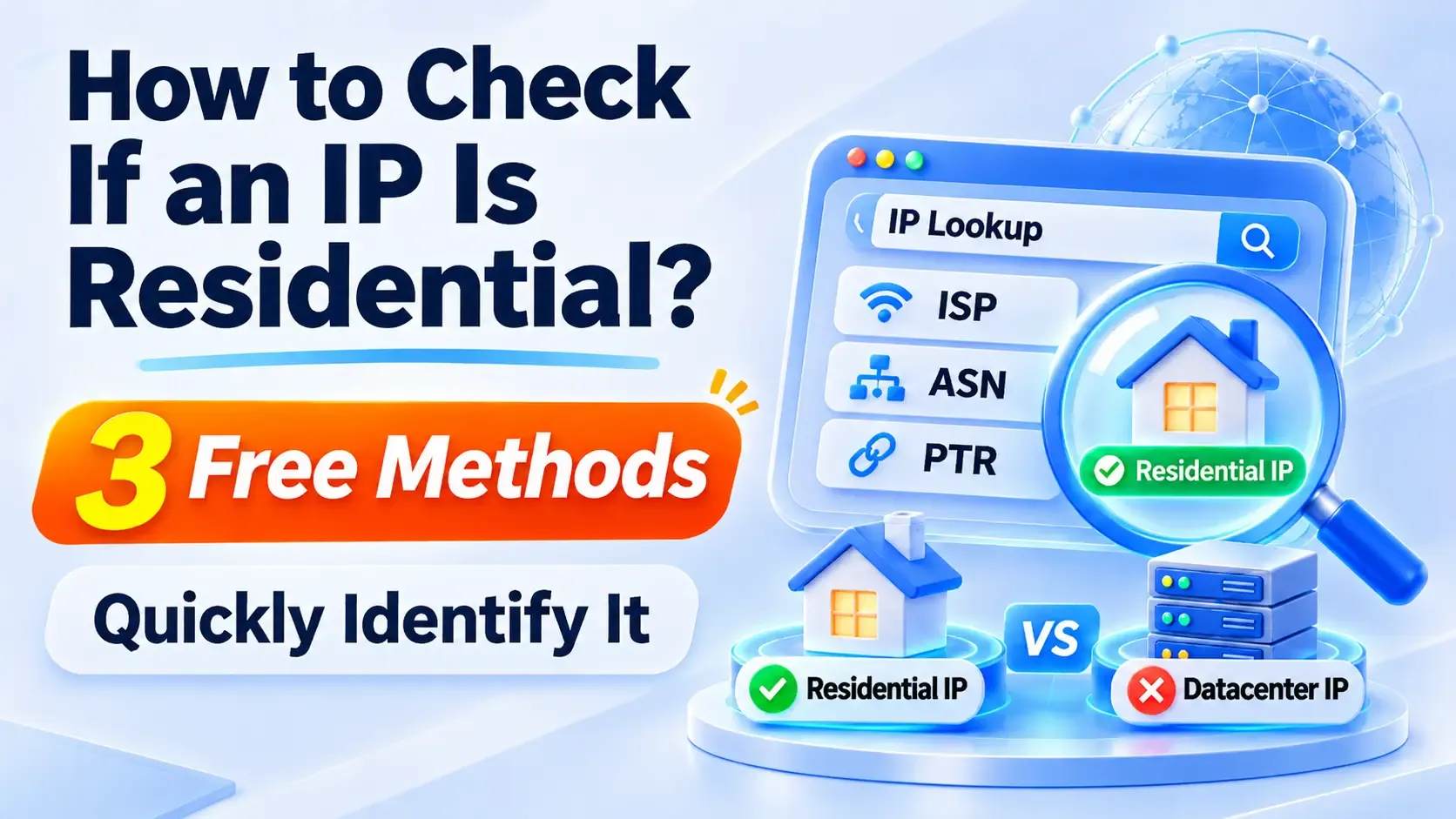
When choosing, check ASN, ISP, geolocation and connection success rate together. Chasing the lowest latency is not the goal here.
3. Static residential IPs or rotating ones — which should you pick?
If the work is mostly store backend management, product listing, order handling and day-to-day customer service, a Malaysian static residential IP is usually the better fit.
A static IP keeps the same exit address over time, which makes a fixed working network easier to maintain. For teams logging into the backend every day, that removes a lot of the extra steps that come with an address that keeps changing.
Rotating residential IPs suit market research, price comparison and viewing public pages. The address changes according to the provider's rules, which makes them more flexible, but they are not right for every operation that needs a long-lived connection.
If budget is tight, work out the use case first and then decide whether you need dedicated static resources, rather than buying a large batch of IPs up front.
4. How should multi-store operations set up their network?
When you run several Malaysian stores, plan your IP resources around store count, team size and daily workload, keep the network environment stable, and make future maintenance straightforward.
| Operating scenario | Suggested IP setup | Usage notes |
|---|---|---|
| Single store, day-to-day operations | 1 Malaysian static residential IP | Fixed network exit, suited to product listing, order handling and customer service |
| 2–3 stores | Separate static residential IPs as needed | Manage each store's login environment separately to reduce mix-ups |
| 4–5 stores | Preferably a dedicated static residential IP per store | Manage IP resources, login devices and account permissions centrally |
| Team collaboration | Stable static IPs plus permission management | Define staff permissions clearly; keep records of devices and logins |
| Market research and competitor analysis | Malaysian rotating residential IPs | Suited to checking public product information, price comparison and market trend research |
Store count and IP count do not follow one mandatory ratio. The right setup depends on platform rules, the business entity and how your team is managed. For stores you plan to run long term, stable networking and clean management practices are worth more than simply adding more IPs.
5. How do you tell whether a Malaysian residential IP is reliable?
Start with the ownership details. Use an IP lookup tool to check the country, city, ASN and ISP, and confirm the results line up with what the provider claims.
Next, look at the IP type. Carrier name and ASN are useful signals, but neither one proves an address is genuine home broadband — pair them with network-type data and the provider's resource documentation.
Last, connection stability. Test the store backend and the business sites you use most, and watch success rate, response time and how performance holds up across a continuous session. No fixed latency benchmark applies to every route, so your own test results are the better reference.
6. How to choose a Malaysian residential IP through IPDEEP?
Start by reviewing the resource types IPDEEP offers, and confirm they cover your target region, a fixed exit and the subscription period you need.
Once you have made a selection, verify the network ownership details with an IP lookup tool and run a connection test before putting the resource into production.
For stores you run long term, prioritise resource stability, support and ongoing maintenance terms; for short-term market research, a more flexible plan sized to your actual traffic makes more sense.
Available regions, line types and purchase terms should be taken from what the IPDEEP website currently shows.
Malaysian residential IP FAQ
Is a Malaysian residential IP always better than a Singaporean one?
Not necessarily. They serve different purposes. If your business targets Malaysia, local resources deserve a closer look first; if your team manages several Southeast Asian markets together, pick the exit based on where you actually work and what you need to reach.
How many stores can one static IP serve?
Technically it can carry multiple connections, but there is no universal number that fits every e-commerce platform. Plan around each platform's store policy, your business scale and team permissions.
Are rotating residential IPs suitable for long-term store operations?
If the work needs a stable exit over time, a static residential IP is usually more convenient. Rotating IPs fit operations that do not depend on a persistent address.
Summary
The value of a Malaysian residential IP is not in the price tag, but in whether it matches what your business actually does. A single store can focus on static resources, multi-store teams should get networking and permissions in order, and market research can lean on rotating resources sized to actual usage.
For merchants getting ready to expand into Malaysia, verifying IP ownership, testing connection quality and then choosing the right IPDEEP residential IP resources will serve you better than simply accumulating more IPs.