




Clean US Static Residential IP Price: 2026 Guide



Clean IP picks: Static IPs from $1.5 each, Dynamic IPs from $0.5/GB


In 2026, prices for US static residential IPs vary depending on whether the IP is dedicated, the number of IPs purchased, the IP type, and the traffic policy.
For long-term account management, cross-border e-commerce, or social media operations, price is only one factor. You should also consider the IP’s ISP, reputation history, location accuracy, and replacement policy.
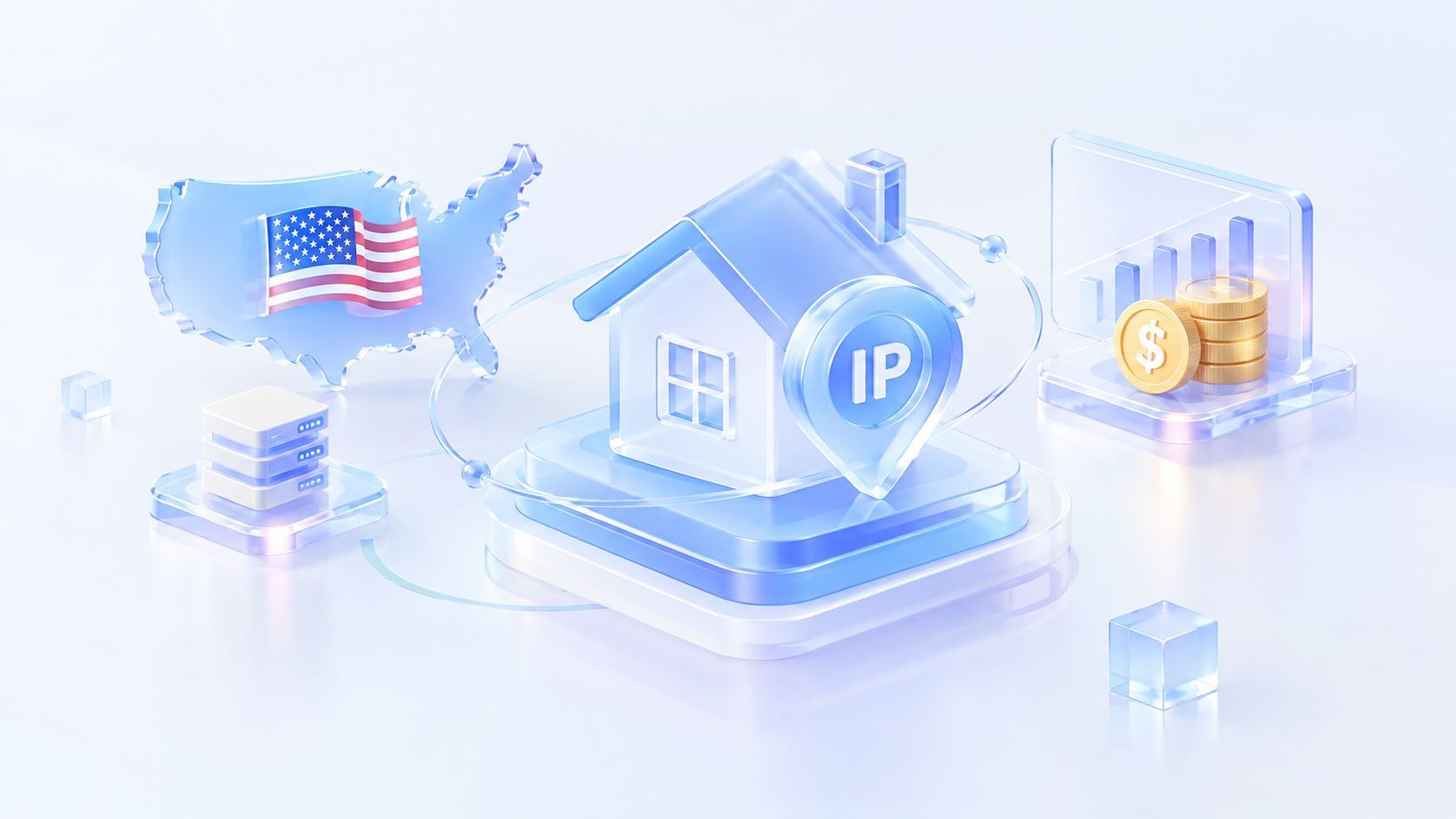
What Is a Clean US Static Residential IP?
“Clean IP” is not a formal technical classification. It is a common term used in the proxy industry and by buyers when evaluating IP quality.
In general, a “clean US static residential IP” refers to a US IP with a clear ISP identity, a fixed address, dedicated use, and relatively few records of past abuse.
For businesses that need a consistent network environment over time, IP cleanliness can be more important than price alone.
A low-cost US IP may be labeled as Residential, but if it has been heavily used, has a history of suspicious activity, or has developed a poor reputation on certain platforms, it may not be suitable for long-term use.
How Much Do US Static Residential IPs Cost in 2026?
Below are reference starting prices for static residential/ISP products from several major providers. The comparison focuses on static or dedicated products priced per IP and excludes products charged by traffic usage ($/GB).
Note: The prices above are based on the minimum IP quantities shown in the providers’ public pricing plans. Actual prices may vary depending on purchase volume, promotions, taxes, and location.
What Is a Reasonable Price?
As a general price range:
▸ Under $2: Often shared IPs, data center IPs, or low-cost products with traffic-based pricing. Check the IP type, sharing model, and traffic limits carefully.
▸ $2.4–$3.5: A common range for static ISP/residential IPs, with many dedicated IPs or bulk plans falling within this range.
▸ $3.5–$5+: Often reflects higher levels of dedicated access, specific ISPs, more precise location targeting, or higher service costs.
Pricing is usually tiered rather than fixed. The more IPs you purchase, the lower the per-IP price tends to be.
What Determines the Price of US Static Residential IPs?
Price differences mainly come down to four factors:
1. Dedicated vs. shared: Dedicated IPs are assigned to a single user, while shared IPs are used by multiple users. Dedicated IPs usually cost more but can reduce potential associations with other users’ activity.
2. ISP/ASN attributes: The ISP under which an IP is registered determines its network affiliation. US ISP address space from providers such as Comcast, AT&T, and Charter/Spectrum is commonly used for long-term fixed-location access.
3. IP reputation and usability: A valid ISP attribute does not necessarily mean an IP has a clean history. Conversely, an IP associated with a residential ASN may still be identified as a proxy by some platforms. Results can vary across detection services, so actual usability matters more than the “Residential” label alone.
4. Location targeting, bandwidth, and traffic limits: The ability to target a specific state or city, available bandwidth, and traffic limits can all affect the price.
Can You Buy a Cheap US Static Residential IP?
Yes, but price should not be the only consideration. A low price does not necessarily mean poor quality, but you should check a few things first:
▸ Is it shared or dedicated?
▸ Does it have ISP attributes or belong to a data center?
▸ Are there traffic or concurrency limits?
▸ Can the IP be replaced for free if it becomes unavailable or gets flagged?
▸ Can you select a state, city, or ISP, and keep the same IP long-term?
A common pitfall: Some low-cost products may use data center IPs announced through BGP and market them as residential IPs.
After purchase, you can use an IP detection tool to check the ASN and ISP fields. If the IP is associated with data center providers such as Choopa, DigitalOcean, or M247, it is not a residential IP.
Why Do US Static Residential IPs Have Such Different Prices?
You are paying for more than just an IP address. Dedicated access, ISP/ASN, location targeting, availability, stability, and replacement services can all affect the price.
Two factors that are often overlooked are state/city targeting and inventory. State- or city-level static residential IP inventory is more limited than country-level inventory, which can make these IPs more expensive.
If your business requires a specific state or a particular ISP, you may need a higher budget.
One more thing to note: In the static residential IP market, “static residential” often refers to ISP proxies, meaning IPs assigned by local ISPs that remain fixed over time.
However, an IP’s ISP registration does not necessarily indicate where it is physically hosted. Some ISP proxies operate on data center infrastructure.
Therefore, when evaluating an IP, do not rely on the “Residential” label alone. Check its ISP attributes, ASN, reputation history, dedicated status, and actual usability.
Frequently Asked Questions
Q1: What is the difference between static and dynamic residential IPs?
A static residential IP remains fixed during the rental period, making it suitable for use cases that require a consistent login environment, such as store management and social media account operations.
Dynamic residential IPs rotate by request or over time, making them more suitable for tasks such as web scraping and price monitoring where a fixed identity is not required.
Q2: Can I buy US IPs that cost only a few cents?
Products priced at just a few cents often involve shared IPs, data center IPs, or low-cost traffic-based plans. Price alone does not tell you what type of IP you are getting. It is better to confirm the ISP attributes, dedicated status, traffic limits, and replacement policy before purchasing.
Q3: Can one US static IP be used for multiple accounts?
If multiple accounts need to maintain relatively separate network environments over time, consider assigning a dedicated IP to each account and managing the browser environment and login behavior accordingly. Always follow the policies of the platform you are using.
Need a Clean, Long-Term US IP?
If you need a fixed US IP for long-term use, IPDeep static residential IPs provide dedicated IPs, 10–50 Mbps bandwidth, and support for HTTP/HTTPS/SOCKS5 protocols. US IPs start at $3.5/IP/month.
Check the IPDeep website for current availability and pricing.