




Cheap Japanese Static Residential IPs: 5 Providers



Clean IP picks: Static IPs from $1.5 each, Dynamic IPs from $0.5/GB


Japanese static residential IPs are suitable for businesses that need a long-term, fixed network exit, such as operating Amazon Japan, Rakuten, and Mercari stores, or managing TikTok, Instagram, and other social media accounts.
When choosing a provider, don't look at price alone. You should also check whether the IP is dedicated, its ISP attributes, supported protocols, and bandwidth.
Below, we cover the IP type, key selection criteria, provider pricing, and other important considerations.
What Is a Japanese Static Residential IP? What Is It Used For?
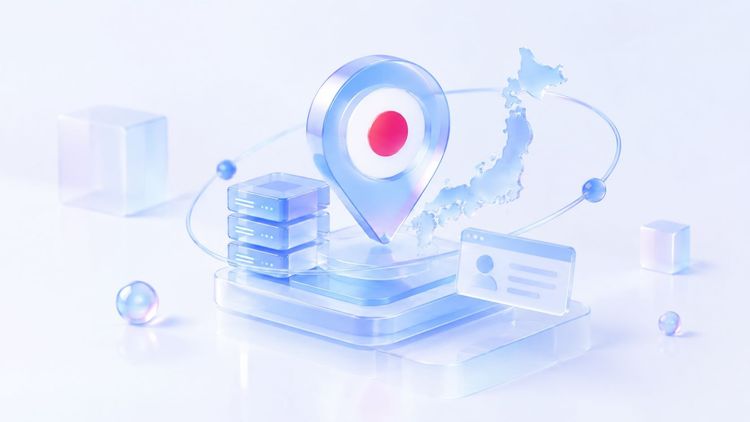
A static residential IP (Static Residential Proxy / ISP Proxy) combines residential ISP attributes with a fixed IP address:
The IP typically has residential ISP registration attributes and remains fixed throughout the usage period, making it suitable for businesses that need to maintain the same network environment over time.
Unlike rotating residential proxies that change IPs by request or time interval, static residential IPs are better suited for the following use cases:
▸ Cross-border e-commerce stores: Long-term operation of Amazon Japan, Rakuten, Mercari, and other stores.
▸ Social media account management: Daily management of TikTok, Instagram, X, and other social media accounts.
▸ Long-term login environments: Use cases such as admin panels, payment systems, and API allowlists that require a fixed network exit.
To evaluate whether a Japanese static residential proxy is suitable, check its ISP (such as NTT, KDDI, or SoftBank) and IP type. However, different detection platforms may return different results, so these checks should be treated as reference points.
How to Choose a Cheap Japanese Static Residential IP?
The cheapest option isn't always the best fit. Focus on four factors when choosing a provider:
1. Dedicated or shared: A dedicated IP is assigned exclusively to you, while a shared IP is used by multiple users. Dedicated IPs usually cost more, but make it easier to maintain an independent network environment.
2. IP type and ISP attributes: Make sure the IP has residential/ISP attributes rather than being a data center IP.
3. Protocols and bandwidth: Check whether HTTP/HTTPS and SOCKS5 are supported and how much bandwidth is available.
4. Price and billing period: If you mainly need a fixed IP for long-term use, paying per IP or by subscription period can make costs easier to manage. If you need a large number of rotating IPs, a traffic-based rotating residential proxy may be more suitable.
5 Providers of Japanese Static Residential IPs
1. IPDeep (Best Overall Value)
IPDeep's Japanese static residential IPs focus on dedicated IPs and competitive pricing.
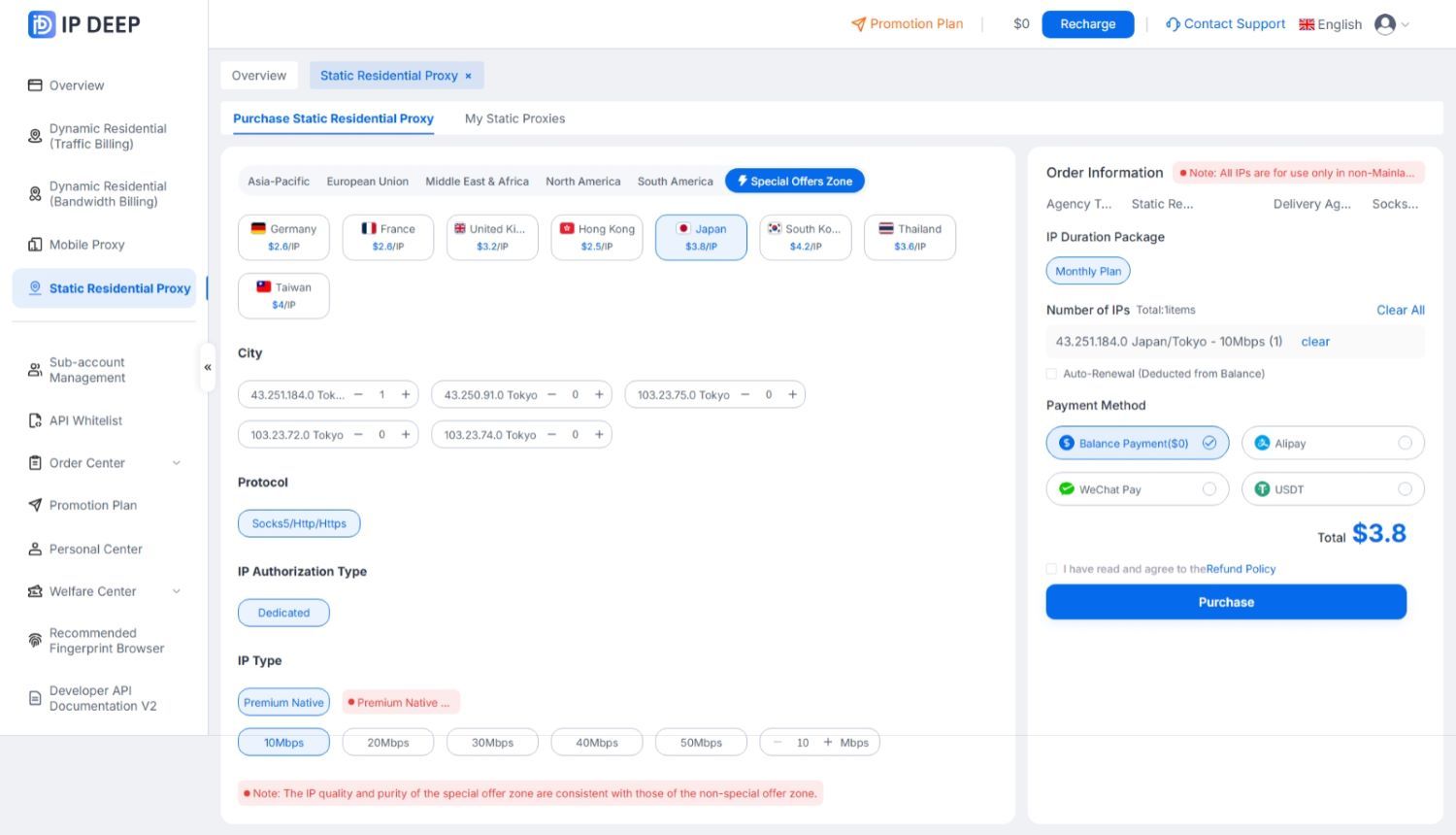
Tokyo nodes are available at a special price of $3.8/month (regularly $5/month), with customizable bandwidth of up to 50 Mbps and support for HTTP/HTTPS/SOCKS5.
They are suitable for Amazon Japan store operations, TikTok Japan accounts, social media account management, and other use cases that require a fixed Japanese network exit.
Availability and pricing may change. Visit the IPDeep website for the latest details.
2. IPFoxy
IPFoxy offers static residential and various data center proxies. Static residential proxies start at around $9.99–12.99/month and support HTTP and SOCKS5.
They are suitable for teams that need dedicated IPs and Chinese-language support.
3. LumiProxy
LumiProxy offers static residential and residential proxies. Japanese nodes start at $6/IP and support HTTP/SOCKS5.
They are suitable for users who prefer to purchase IPs individually and have a moderate budget.
4. IPIPGO
IPIPGO offers several types of Japanese static residential IPs, priced at $10.4/IP/month for shared dual-ISP IPs and $21.5/IP/month for dedicated IPs. It supports username/password authentication and API allowlists.
They are suitable for teams that require technical integration, such as script-based setups.
5. Bright Data
Bright Data is a large global proxy provider. Its pricing varies by product, location, and plan, making it suitable for enterprise-level data collection and market research.
What to Consider When Using a Japanese Static Residential IP
A fixed IP does not guarantee that you will avoid security checks: Account restrictions can also depend on user behavior, device environment, and platform policies.
Keep different accounts on separate network environments when possible: For multi-account operations that require long-term network isolation, consider assigning a separate IP to each account.
Check the IP, ASN, location, and DNS before use: Make sure the IP's ownership and geographic location match your expectations and that there are no DNS leaks.
Frequently Asked Questions
Q1: What is the difference between Japanese static residential IPs and rotating residential IPs?
A static residential IP remains fixed during the subscription period and is suitable for long-term logins, store operations, and account management.
A rotating residential IP changes by request or time interval and is suitable for data collection and price monitoring.
Q2: How much does a Japanese static residential IP cost per month?
Prices vary depending on the location, dedicated or shared setup, bandwidth, and subscription period.
Low-cost options may start at a few dollars per month, while premium products can cost more than $10.
IPDeep currently offers Tokyo static residential IPs for as little as $3.8/month.
Q3: Can one Japanese static residential IP be used for multiple accounts?
If multiple accounts need to maintain separate network environments over the long term, it is recommended to assign a dedicated IP to each account. Whether sharing an IP is appropriate depends on your operational isolation requirements.
Q4: How can I check a Japanese static residential IP after purchasing it?
Use an IP detection tool to check the ASN, ISP, and IP type. Confirm that the IP belongs to a Japanese ISP rather than a data center, then check the geographic location and DNS for leaks.