




Best Residential Proxy Providers in 2026: A Buying Guide



Clean IP picks: Static IPs from $1.5 each, Dynamic IPs from $0.5/GB


Overseas residential proxies are commonly used for data collection and price monitoring, multi-account management for cross-border e-commerce, social media account management, regional ad verification, and AI training data collection.
These use cases have different requirements for outbound IPs. Some need a large pool of IP addresses across multiple regions, while others require a fixed IP that remains unchanged over time.
This guide covers three key areas: proxy types, leading providers, and purchasing considerations, helping you make an informed decision.

What Types of Overseas Residential Proxies Are Available?
1. Rotating Residential Proxies
Rotating residential proxies route requests through residential networks and change the outgoing IP address according to configured settings. Users can choose rotation per request, scheduled rotation, or sticky sessions.
IP rotation frequency does not determine request success rates. Target websites also evaluate factors such as request frequency, account status, and browsing behavior.
There are two main pricing models. Traffic-based plans charge according to actual data consumption in GB and are suitable for tasks with distributed requests and predictable usage.
Bandwidth-based plans charge according to the selected bandwidth and subscription period, without additional traffic charges during that period. They are suitable for continuous operations and high-throughput tasks.
Bandwidth represents the maximum data transfer capacity; it does not mean unlimited speed or unlimited concurrent connections.
2. Static Residential Proxies
Static residential proxies, also known as ISP proxies, use fixed IP addresses registered or assigned by internet service providers (ISPs).
These IPs are typically hosted in data centers or specialized network facilities and remain unchanged throughout the rental period.
They are suitable for fixed outbound connections, long-term sessions, and IP whitelisting.
An ISP designation does not guarantee a clean IP reputation, and a fixed IP does not guarantee that an account will avoid platform security checks.
3. Mobile Proxies
Mobile proxies route traffic through 4G or 5G cellular networks, using IP addresses assigned by mobile carriers. Some mobile networks use Carrier-Grade NAT (CGNAT), allowing multiple devices to share the same public IP address.
Mobile proxies are suitable for mobile app testing, mobile network verification, and tasks requiring carrier-based connections. Their per-unit cost is generally higher than that of residential proxies.
4. Proxy Type Comparison
Datacenter proxies use ASNs associated with hosting facilities rather than consumer ISPs. Websites with stricter access controls can more easily identify these connections, making datacenter proxies better suited to tasks where IP type is less important.
Best Overseas Residential Proxy Providers in 2026
The following five providers are listed without a ranking, with a focus on their product offerings, pricing models, and suitable use cases.
1. IPDeep: Multiple Proxy Types and Static ISP Solutions

IPDeep provides residential and mobile proxy resources across more than 200 countries and regions. Its website lists a pool of over 50 million IP addresses. Its product lineup includes rotating residential, static residential, and mobile proxies, with traffic-based, bandwidth-based, and per-IP pricing options.
▸ Rotating Residential Proxies: Available with traffic-based and bandwidth-based pricing. They support location selection, IP rotation, and sticky sessions, making them suitable for data collection, price monitoring, and accessing content from multiple regions.
▸ Static Residential IPs: Dedicated, fixed ISP connections with configurable bandwidth of up to 50 Mbps, available on a monthly rental basis.
▸ Mobile Proxies: Provide mobile carrier network connections and are suitable for mobile testing.
▸ Protocol Support: HTTP, HTTPS, and SOCKS5.
Static residential proxies are currently available in 21 countries and regions, with prices starting at $3.50 per IP per month in the United States and $3.30 per IP per month in Hong Kong. Selected cities are available at lower prices through the special offers section.
Coverage across more than 200 countries and regions refers to the overall network. The selection of available static residential locations is more limited. Check the static residential product page for current locations, prices, and availability.
2. Bright Data

Bright Data's website lists coverage in 195 countries and regions, with more than 400 million residential IPs per month. It supports targeting by city, ZIP code, and ISP.
In addition to standard proxy services, Bright Data offers a Web Unlocker, Scraping Browser, and SERP API. These tools make it suitable for businesses with technical teams that need a comprehensive data collection toolkit. Pricing is traffic-based, and account registration requires KYC verification.
3. Oxylabs
Oxylabs lists more than 175 million residential IPs on its website. It focuses on high-concurrency data collection and provides Scraper APIs and structured data extraction tools. Its solutions are primarily aimed at enterprise-level projects, with relatively high entry costs and pricing.
Its pay-as-you-go plans offer multiple traffic tiers, with lower per-GB rates at higher usage levels. SOCKS5 connections are supported. If your application requires UDP forwarding, confirm availability with the provider separately.
4. Decodo
Decodo, formerly known as Smartproxy, lists more than 115 million IPs across over 195 locations. Its platform also integrates an antidetect browser and no-code scraping tools.
Decodo offers tiered traffic-based pricing, rotating IPs, sticky sessions, and multi-location targeting. It is suitable for small and medium-sized teams that need flexible session management without a large upfront investment.
5. SOAX
SOAX provides residential and mobile proxies across more than 195 countries and regions. It supports location targeting by country, region, city, ISP, and ASN, making it suitable for data collection and network verification tasks that require precise geographic targeting.
SOAX uses a pricing model that combines subscription allowances with traffic consumption. Traffic rates may vary depending on the target country or region.
6. Comparison of the Five Providers
This table compares pricing structures rather than specific rates. Since plan tiers and promotions change frequently, use current pricing on each provider's website for an accurate comparison.
How to Choose an Overseas Residential Proxy
1. Decide Whether You Need a Fixed or Rotating IP
The key question is how long the same outbound IP needs to remain in use. Choose a static IP for long-term dashboard access and consistent login environments. Choose a rotating IP when you need a large number of IP addresses across different regions and can use a different address for each request.
These options are not mutually exclusive. Many teams use both types of proxies for different tasks.
2. Check ASN Information and IP Reputation
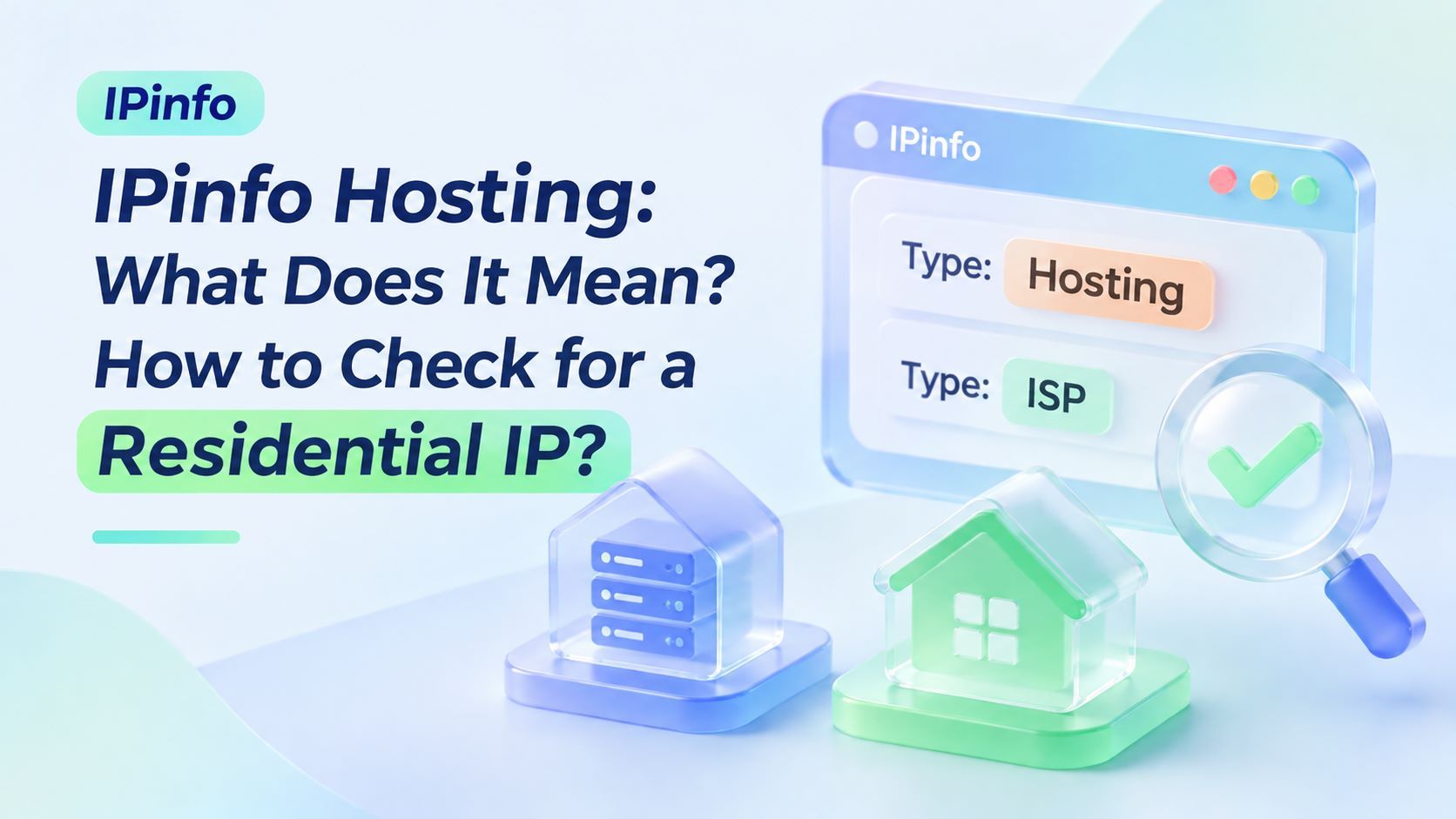
After obtaining an IP, check its ASN and ISP information to determine whether it belongs to a consumer ISP or a hosting provider. Then cross-check its usage classification with two or three IP databases and test it against your target website.
Avoid relying on a single reputation score. IP databases may use overlapping data sources and different classification methods, so it is not unusual for one database to classify an IP as residential while another identifies it as a datacenter address.
3. Compare Location Coverage and Actual Connection Performance
A long list of supported locations does not guarantee availability in your target region. Some providers list coverage at the country level, while the number of available IPs may be much smaller when you select a specific city. Prices may also increase with more precise targeting.
A practical approach is to run a small test against your target website. Check the success rate, timeout rate, and whether the returned content matches the selected region instead of relying solely on the number of locations shown in the control panel.
4. Calculate Costs and Check Renewal and Usage Limits
The three main pricing models have different cost structures:
▸ Traffic-Based Pricing: Cost = Data Used × Price per GB. Suitable for tasks with predictable traffic consumption.
▸ Bandwidth-Based Pricing: Charged according to bandwidth specifications and usage duration. Suitable for continuous tasks with unpredictable data volumes.
▸ Per-IP Pricing: Cost = Number of IPs × Monthly Price per IP × Number of Months. Suitable for businesses that need a fixed number of outbound IPs.
Retry costs are easy to overlook. A high failure rate can increase both traffic consumption and IP rental costs.
If a static residential IP is not renewed before expiration, it may be reclaimed and reassigned. Businesses that rely on the same IP for long periods should renew before the expiration date or confirm the provider's IP retention policy in advance.
Also check whether IPs are dedicated, whether replacements are available, concurrent connection limits, and usage restrictions. These terms are usually listed on the product or pricing page.
Frequently Asked Questions
Q1: Are Rotating or Static Residential Proxies Better for Cross-Border E-Commerce?
It depends on the task. Static residential proxies are more suitable for logging into Amazon or Shopee stores, processing orders, and managing advertising accounts. A fixed outbound IP makes it easier to maintain a consistent connection environment and investigate unusual login activity.
Rotating residential proxies are better suited to competitor price tracking, category ranking monitoring, and checking ad displays across different regions.If you handle both types of tasks, you can use both proxy types.
Q2: Can I Keep the Same Static Residential IP After It Expires?
In most cases, you need to renew the service before the expiration date. Once an IP expires, it may be returned to the provider's pool and reassigned to another customer. Renewing later does not guarantee that you will get the same address back.
If your business depends on a fixed outbound IP, set renewal reminders or consider purchasing a longer subscription.
Q3: Are Residential Proxies Always Safer Than Datacenter Proxies?
No. Residential and datacenter describe the type of network an IP belongs to, not its security level.
Residential IPs can still be flagged by target platforms, and using a fixed IP does not guarantee that you will avoid verification checks. Security depends more on the IP's usage history, whether it is dedicated, and the account's own activity.
Conclusion
When choosing an overseas residential proxy, first determine whether your business needs a fixed outbound IP or rotating addresses. Then evaluate target location availability, IP quality, and pricing models to find a suitable provider.
Teams handling data collection, cross-border operations, and multi-region access can combine different proxy types based on their actual requirements.
IPDeep offers rotating residential, static residential, and mobile proxies across more than 200 countries and regions. Choose a plan based on your business needs. For product specifications, location coverage, and pricing, visit the IPDeep official website.