




Understanding Anonymous Proxies: Protect Your Online Privacy



Clean IP picks: Static IPs from $1.5 each, Dynamic IPs from $0.5/GB


In today's highly developed digital age, every step of our "digital footprint" is being recorded. From browsing history to geographical location, from shopping preferences to social relationships, the internet, while providing convenience, has made personal privacy more vulnerable than ever. In this context, anonymous proxies are gradually moving from the geek toolbox into the public eye as a means of safeguarding online boundaries.
What is an Anonymous Proxy?
Simply put, an anonymous proxy acts as your "stand-in" or "transit station" in the online world. Normally, when you visit a website, your computer sends a request directly to the target server, which exposes your real IP address.
By using an anonymous proxy, this process changes:
Your request is first sent to the proxy server. → The proxy server erases your original information and replaces it with its own "mask." → The proxy server accesses the target website on your behalf and returns the obtained information to you.
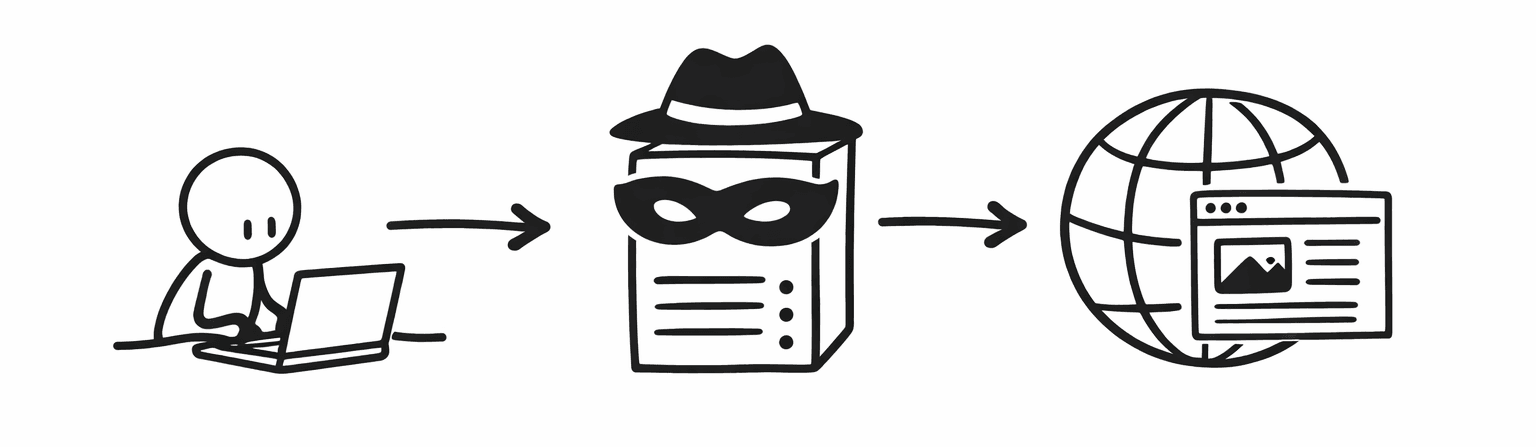
In this process, the target website can only see the proxy server's information, while your true identity is hidden behind the scenes.
Tip: Since proxies act as a transit station between users and websites, all proxies can be referred to as anonymous proxies.
Core Classifications of Anonymous Proxies
Not all proxies provide the same level of protection. Depending on the degree of anonymity, we typically classify them into the following three categories:
1. Transparent Proxy
Although called a proxy, it does not provide privacy protection. It tells the target server: "I am a proxy, my user IP is XXX." This type of proxy is often used for internal caching acceleration in companies or content filtering in schools.
2. Anonymous Proxy
It can hide the user's IP address, but the request may still contain some identifiable information, such as HTTP header information. This largely protects privacy, but some savvy websites can still identify that you are using a proxy tool.
3. Elite Proxy / High Anonymity Proxy
This is the highest level of privacy protection. It not only hides your IP but also disguises itself as a regular user accessing directly, making the target server completely unaware of the intermediate proxy's existence.
What Can Anonymous Proxies Do for You?
1. Hide Your Real IP Address
An IP address is like your "home address" in the online world. Through it, third parties can roughly infer your geographical location and even family information. Anonymous proxies are the first line of defense to cut this association.
2. Bypass Access Restrictions
Many resources (such as certain video streaming services and academic databases) have geographical fences. By connecting to a proxy server in a specific region, you can access this content as if you were a "local".
3. Avoid Big Data Tracking
Advertisers and platforms build your user profile by tracking your IP. Using a proxy can disrupt this tracking logic, reduce the harassment of targeted ads, and prevent personal data from being illegally sold.
4. Enhance Security
In public Wi-Fi environments, a proxy server can act as a buffer. Some advanced proxy protocols also provide data encryption features to prevent hackers from stealing your account passwords through sniffing techniques.
Potential Risks and Challenges
Although anonymous proxies are powerful, they are not a universal "invisibility cloak." Users must be aware of the following risks:
Man-in-the-Middle Risk: If you are using an untrusted free proxy, the owner of the proxy server can theoretically see all unencrypted data you transmit.
Speed Delay: Since data needs to be relayed, network speed may inevitably be affected by physical distance and server bandwidth.
Configuration Complexity: Different protocols (SOCKS5, HTTP/S) and complex client configurations can pose a learning curve for beginners.
FAQs
1. Are Anonymous Proxies Useful?
Yes, anonymous proxies are very useful for protecting online privacy, hiding real IPs, bypassing geographical restrictions, and managing multiple accounts. However, the effectiveness depends on the level of anonymity and service quality of the proxy; high anonymity proxies provide the most reliable privacy protection.
2. Are Anonymous Proxies Safe?
Anonymous proxies can provide a certain level of security protection, such as hiding IPs and blocking request information. However, safety still depends on the reputation of the proxy service provider, the source of the IPs, and the logging policy. Free or unreliable proxies may pose risks of data leakage or malicious behavior, so it is recommended to choose reputable paid services and use them in conjunction with HTTPS encryption or other security measures.
3. If I Already Have a VPN, Do I Still Need to Use an Anonymous Proxy?
VPNs and anonymous proxies have some overlapping functions, but they are not entirely the same. VPNs typically encrypt all network traffic to secure data transmission, while anonymous proxies focus more on hiding IPs and online identities. In high-risk scenarios (such as managing multiple accounts, cross-border e-commerce, and accessing sensitive data), using a combination of VPN and anonymous proxy can create multiple layers of protection, making privacy and account security more robust.
Conclusion
Online privacy should not be a luxury but a right. Anonymous proxies are not meant for illegal activities but to carve out a private space for ordinary users in a transparent internet world. By choosing a reputable proxy service provider and developing good online habits, you can enjoy the convenience of the internet while firmly maintaining control over your data.
IPDeep provides high-quality proxy IPs, including:
and many other types of proxies, with over 10 million high-quality IP resources covering more than 200 countries and regions worldwide. Whether it is to bypass geographical restrictions, ensure data collection, or enhance access speed and security, IPDeep can provide you with stable and reliable support, helping your online operations to be smoother and more efficient.