




South Korea SEO Proxy Guide: 5 Tips to Avoid IP Traps



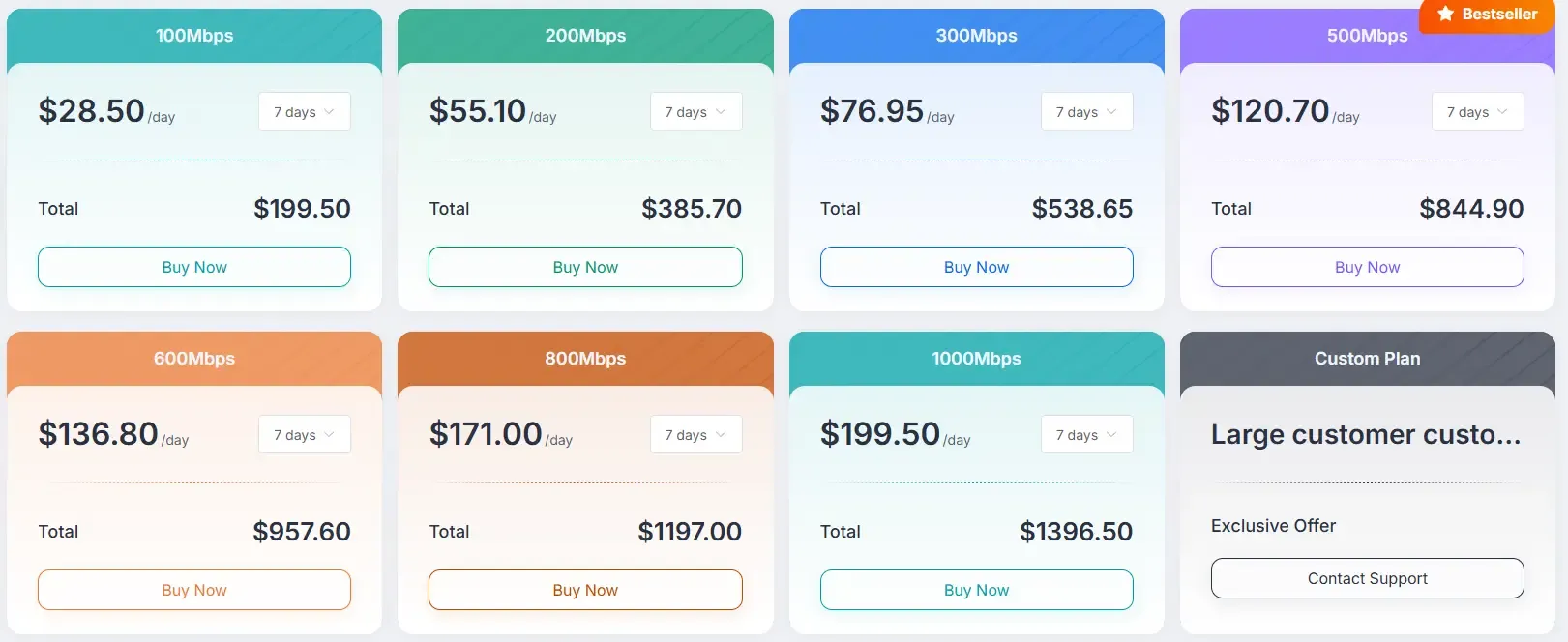
Clean IP picks: Static IPs from $1.5 each, Dynamic IPs from $0.5/GB


Many people believe that as long as they can log into Naver or Google Korea, the SERP results they see are the same as those in Korea. To be honest, you are seriously underestimating South Korea's firewalls.
To get authentic data, you must use Residential IPs assigned by South Korea's "Big Three" ISPs (KT, SK Broadband, and LG Uplus) to local households.

To help your SEO business successfully expand abroad, here are
5 Essential Tips
1. Stop Using Datacenter IPs
Standard Datacenter IPs, especially those from server ranges like AWS, are instantly flagged as bots by major Korean platforms. A single firewall scan can block an entire range.
Expert Advice:
Stick to residential proxies assigned by South Korean ISPs (like KT or SK Broadband) to real users.
These IPs carry natural trust, making it nearly impossible for search engines to distinguish you from a real user, ensuring stable data scraping.
2. Stay Away from Free Proxies
If you don't want to be dragged down by others, you must verify that you are the only one using the IP. Those free or dirt-cheap public proxy lists are usually already blacklisted.
Solution: Look for providers that offer static residential proxies with a "dedicated slot." This ensures you are the sole user for a period, preventing others' bad behavior from sabotaging your SEO project.
3. Pay Attention to City-Level Targeting
Don't assume South Korea is the same everywhere just because it's small. Local search results (SERPs) have significant regional differences.
Precision Strike: If you are auditing a business in Seoul but using a generic Korean IP, the data you pull might be completely off the mark.
Requirement: Your provider must allow you to switch between core cities like Seoul, Busan, or Incheon for true professional-grade depth.
4. Monitor the Rotation Logic of the IP Pool
If you are planning large-scale operations or high-volume scraping, you must use Rotating Proxies, also known as Dynamic Residential Proxies.
The Trap: Many providers claim to support rotation, but their Korean IP pool is tiny. You'll end up cycling back to the same flagged addresses.
The Benchmark: You need a large and diverse local IP pool to ensure every request looks like it's coming from a fresh, local Korean user.
5. Don't Treat "Dirty" IPs as Assets
Not all IPs labeled as "residential" are clean. Some have a history of DDoS attacks or mail spam; using these is digital suicide for your project.
Pro Tip: Before committing to a long-term subscription, test a sample for its Fraud Score.
Selection: Quality providers proactively filter out "bad apples" from their pool, ensuring they aren't selling "burnt" IPs to SEO professionals.
Pro Strategy: How Do I Operate?
To perform precise SEO monitoring, you first need a reliable provider.
Regarding South Korean proxies, I've been focusing on IPDeep. Their local South Korean node pool is massive, and most importantly, these are authentic residential nodes with extremely high trust scores.
The Setup is Simple:
Fingerprint Browser Sync: Use an environment manager to set your browser's timezone, language (Korean), and WebRTC to South Korea mode.
Traffic Routing: Import your South Korea Residential Proxy credentials from IPDeep.
Multi-Point Sampling: Use the advantage of dynamic IPs to simulate the access paths of users in different Korean cities. You'll find that for the same keyword, rankings can vary by 3 to 5 positions depending on the IP.
Recommended South Korea IP Provider
In the South Korean proxy service market, IPDeep is a low-profile powerhouse.
Their residential nodes appear no different from ordinary Korean household users, making them extremely difficult for firewalls to detect.
Furthermore, the connection is incredibly stable, holding up under the pressure of high-frequency SEO audits or massive data scraping.
They have also performed significant optimization for Asian market expansion projects.
FAQ
1. Is using a residential IP a 100% guarantee against getting blocked?
No. If your fingerprint browser isn't configured correctly or your scraping frequency is inhuman, Naver will still catch you.
2. Should I use dynamic or static IPs for large-scale data scraping?
Go with Dynamic Residential IPs. Use the rotation logic to send requests quickly while remaining safe and efficient.
3. Why is the loading speed of a South Korean residential IP slower than a datacenter IP?
Datacenter IPs use dedicated lines—they are fast but have no reputation. Residential IPs simulate the home broadband of local Koreans. This "authentic latency" is actually your shield against firewall detection.
Conclusion
I always tell my SEO friends: When doing business in Korea, your IP reputation is your ticket to entry.
If you're still using cheap, shared IPs, the search data you're seeing might just be "placebo data" fed to you by the engines.
Try IPDeep's South Korea IPs and don't let cheap proxies ruin your big business.