




Will Japanese Dynamic IPs Get Banned? Key Points You Must Know



Clean IP picks: Static IPs from $1.5 each, Dynamic IPs from $0.5/GB


In cross-border business, data collection, and multi-account operations, Japanese dynamic IPs have gained significant attention due to their high network quality, low latency, and strong trust level. At the same time, many users still have the same concerns: Will Japanese dynamic IPs get banned? Is the account suspension risk high?
In fact, the answer largely depends on the usage scenario, how the dynamic IP is operated, and multiple other factors. Below, the IPDEEP editorial team will analyze this topic in detail from several dimensions, including mechanisms, risk sources, and mitigation strategies.
I. What Are Japanese Dynamic IPs and Why Are They So Popular?
1. Basic Concept of Japanese Dynamic IPs
Japanese dynamic IPs refer to IP addresses that change periodically. They are usually assigned by local Japanese ISPs (such as NTT, KDDI, SoftBank, etc.) and are commonly found in:
• Residential broadband
• Mobile networks (4G / 5G)
• Some compliant proxy pools
Compared with static IPs, dynamic IPs are not permanently bound to a single address, but instead “change after being used for a period of time.”
2. Advantages of Japanese Dynamic IPs
The popularity of Japanese dynamic IPs is mainly due to the following reasons:
• High IP reputation: Japan’s overall network environment is clean, with a low historical abuse rate
• Less likely to have entire IPs permanently blacklisted at once
• Suitable for multi-account operations or long-term business rotation
II. Will Japanese Dynamic IPs Definitely Get Banned?
Conclusion first: they will not be inevitably banned, but they are not absolutely safe either.
Whether an IP gets banned does not depend on “whether it is a Japanese IP,” but rather on how you use that IP.
The core logic behind platform IP bans is:
Identifying abnormal behavior, not simply identifying a specific country.
III. Five Key Factors Behind Japanese Dynamic IP Bans
1. Whether the IP Rotation Frequency Is Abnormal
Dynamic IPs are not better just because they rotate more frequently. Common high-risk behaviors include:
• Rotating every few minutes
• A single account frequently switching between multiple IPs in a short period
• The same device switching between different cities and ISPs within a short time
From the platform’s perspective, such behavior does not look like a real user, resulting in a high ban rate.
Recommendations:
• Simulate the browsing rhythm of real Japanese users
• When changing IPs, synchronize the session environment
• Bind one account to one IP for a certain period
2. Whether the Same IP Is Reused by Multiple Users
Another risk with dynamic IPs is:
The IP you receive may have been used by others before.
If that IP:
• Has been used to register a large number of accounts
• Has a history of crawling or bulk request activity
• Has been involved in policy-violating operations
Then even “normal usage” may still be affected.
This is why:
• Low-priced Japanese dynamic IPs are more likely to get banned
• Cleanliness matters more than whether the IP is dynamic
3. IP Type Is More Important Than “Dynamic vs. Static”
Many users focus only on “dynamic IPs” while overlooking the IP source type:
| IP Type | Risk Level |
|---|---|
| Japanese Residential Dynamic IP | Low |
| Japanese Mobile Dynamic IP | Very Low |
| Japanese Data Center Dynamic IP | Medium to High |
| Low-quality Proxy Pools | High |
Key takeaway:
• Residential / mobile dynamic IPs ≠ data center IPs
• Many ban cases are essentially caused by “pseudo-dynamic data center IPs”
If a platform detects that an IP range belongs to a data center, it may be flagged directly even if it is dynamic.
4. Whether the Behavior Pattern Is “Japan-Localized”
Even when using Japanese dynamic IPs, you may still trigger risk controls if your behavior does not match Japanese user habits.
Common issues include:
• Japanese IP + obvious overseas time zone
• Japanese IP + non-Japanese language system
• Access paths and activity times that completely contradict Japanese daily routines
Many platforms rely on behavior profiling combined with IP analysis.
5. Whether the Usage Scenario Itself Is Sensitive
Different scenarios have very different tolerance levels for IP usage:
• General browsing and content access → Low risk
• Data scraping and automation → Closely monitored
• Registration, flash sales, voting → Very likely to trigger restrictions
Even Japanese dynamic IPs are not absolutely safe in high-risk scenarios.
IV. When Are Japanese Dynamic IPs More Likely to Get Banned?
Overall, the ban probability of Japanese dynamic IPs increases significantly in the following situations:
• Multiple accounts operated in the same environment
• Paired with obviously abnormal browser fingerprints
• Severe mismatches between IP, device, and behavior
• Long-term high-frequency requests to the same target
V. How to Reduce the Risk of Japanese Dynamic IP Bans?
If you need to use Japanese dynamic IPs stably over the long term, it is recommended to focus on the following points:
1. Prioritize Japanese residential broadband or mobile IPs
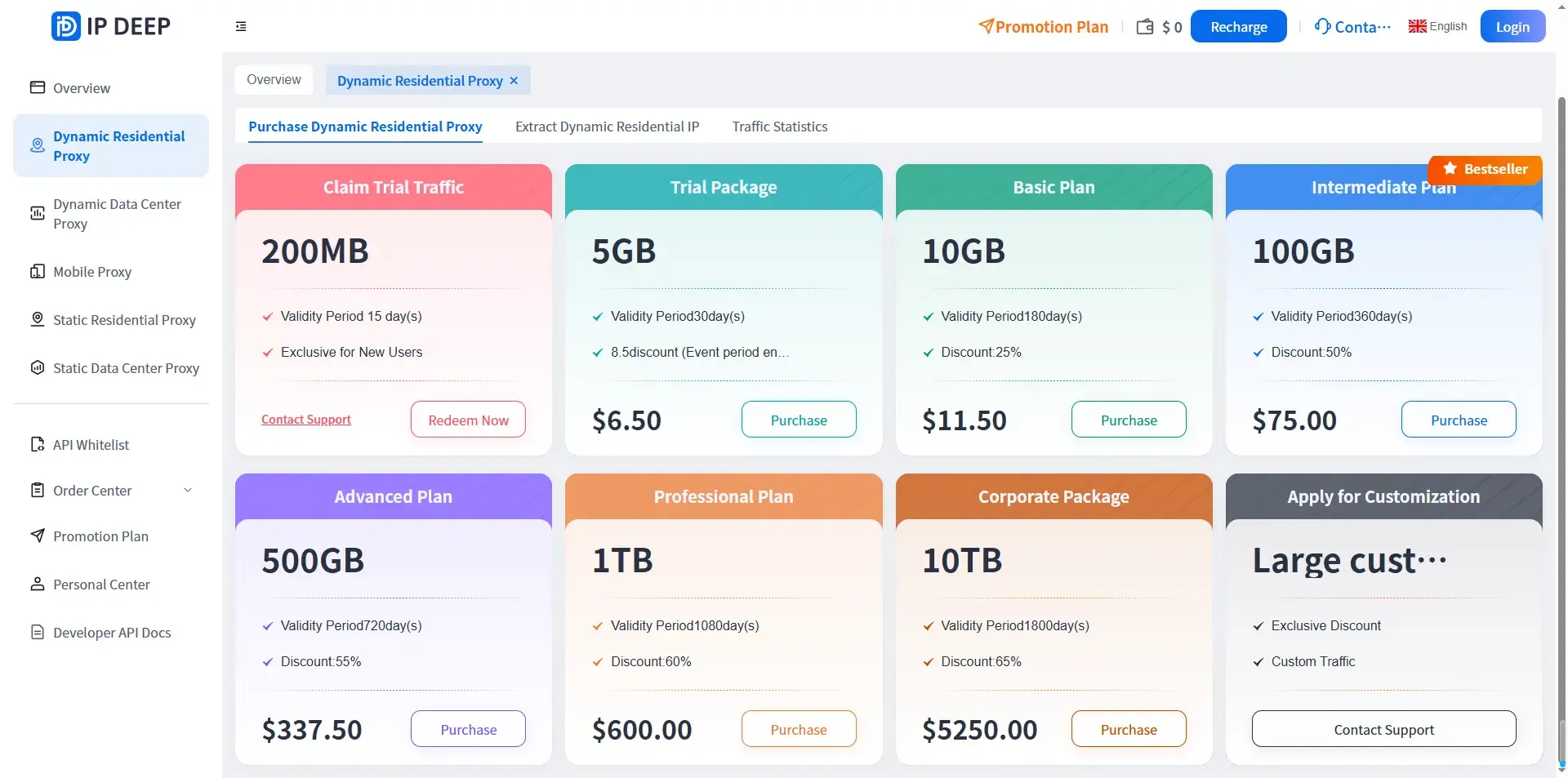
You can purchase Japanese dynamic IPs through IPDEEP to obtain high-quality proxy IPs, minimizing the risk of IP bans.
2. Control IP rotation pace and avoid frequent switching
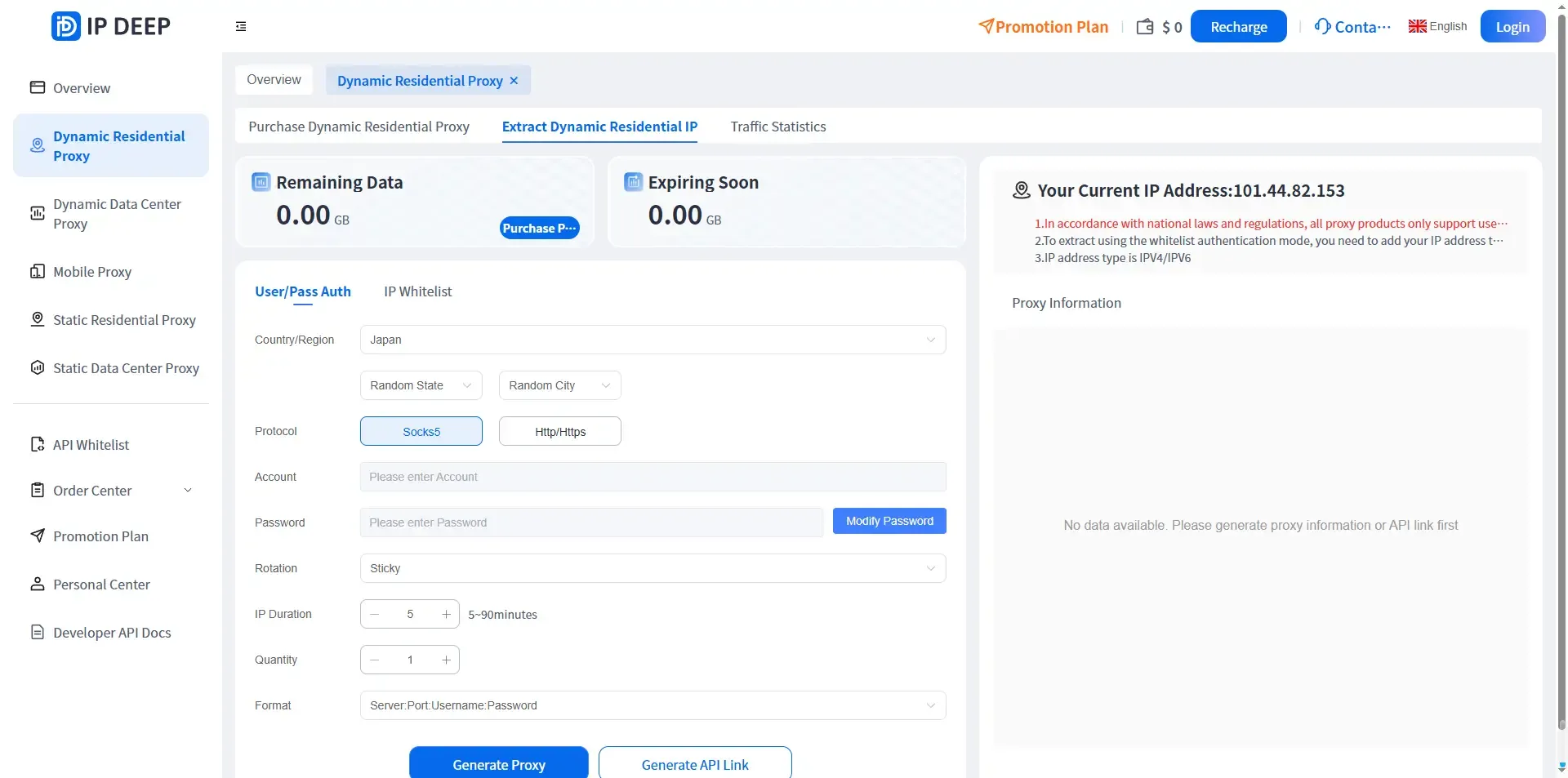
3. Adjust usage strategies reasonably based on business scenarios
4. Maintain consistency across device, fingerprint, language, and time zone
Make your behavior look like that of a “normal Japanese user,” rather than “a program using a Japanese IP.”
VI. Conclusion
Japanese dynamic IPs are not inherently a high-risk choice. On the contrary, when used properly, they are one of the most cost-effective and secure IP solutions available today.
What truly causes bans has never been the words “Japanese dynamic IPs,” but rather:
• Incorrect usage methods
• Mismatched behavioral environments
• Low-quality IP sources
When you plan IPs, devices, and behavior as a unified whole, the stability of Japanese dynamic IPs is far higher than most people imagine.