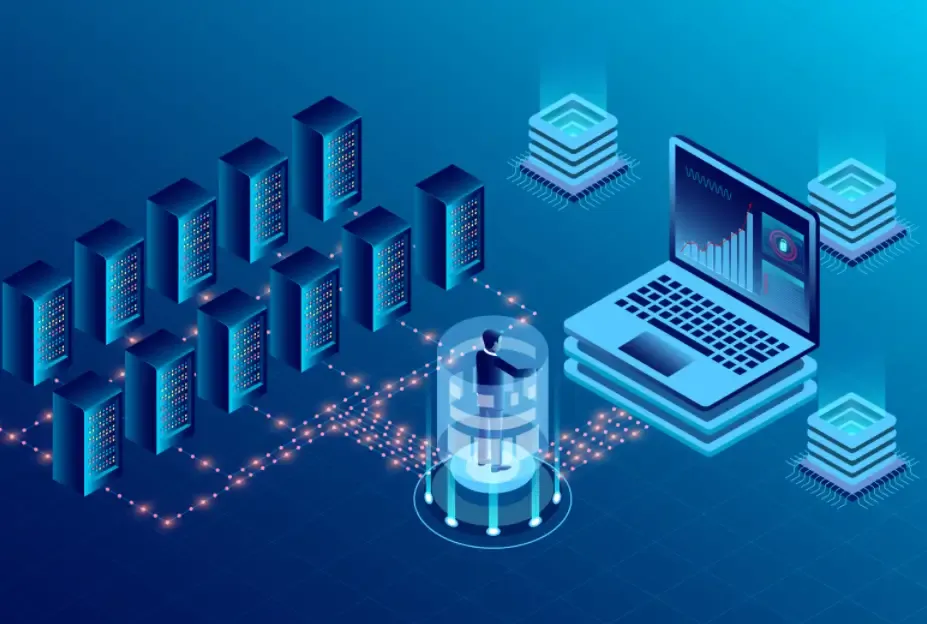





How Much Faster Can US Dynamic Datacenter IPs Make Your Data Collection?



Clean IP picks: Static IPs from $1.5 each, Dynamic IPs from $0.5/GB


When collecting data, have you ever encountered this situation: the crawler runs halfway, and the website suddenly returns a 403 or a captcha, or the access speed is as slow as a snail?
At this time, US dynamic IPs and dynamic datacenter IPs come in handy. They can frequently change addresses, allowing your collection requests to go "incognito," greatly improving collection success rates.
Next, we will share the impact of US dynamic IPs on data collection success rates from principles, practical experience, to tools, helping you quickly understand their value and learn how to implement them in real projects.
1. What is a USDynamic Datacenter IP?
Simply put, a US dynamic datacenter IP is an IP address provided by a US datacenter that can be frequently switched. They are a type of dynamic IP.
Compared with ordinary residential IPs, dynamic datacenter IPs have the following advantages:
• High Speed: Datacenter IPs have sufficient bandwidth and fast collection speeds.
• Strong Stability: They do not easily drop connections, ensuring long-term data collection.
• Low Cost: Compared to buying large amounts of residential IPs, datacenter IPs are more economical.
2. The Impact of US Dynamic IPs on Data Collection Success Rates
1. Reduce the Risk of IP Blocking
• Traditional static IPs are easily detected by websites for consecutive access behavior. If the access frequency is too high, the website will trigger protective mechanisms, returning captchas, 403 Forbidden responses, or even directly blocking the IP.
• US dynamic datacenter IPs can change IPs with every request, effectively "changing identity," greatly reducing the probability of being blocked.
Based on my experience in actual projects: after using dynamic IPs, the data collection success rate increased by at least 40%-60% compared to a single IP. For projects requiring large-scale data collection, this improvement means doubled efficiency and significantly reduced time costs.
2. Improve Bulk Collection Efficiency
• Many data collection tasks involve thousands of data points, not just a few hundred. Using a single IP can easily trigger rate limiting or IP blocking.
• Dynamic IPs can be used with IPDEEP proxies to form a proxy pool. Each request is randomly assigned an IP, allowing many requests to be sent simultaneously, greatly improving bulk collection efficiency.
For example, if you want to collect pricing information from US e-commerce sites, a static IP might only collect a few thousand records per day. With US dynamic IPs and a proxy pool, you can easily collect hundreds of thousands of records per day with high success rates.
3. Reduce Captchas and Verification Interference
• Many websites display captchas when detecting abnormal access, requiring manual verification. Dynamic IPs can alleviate this problem to some extent.
• In practice, using IPDEEP US dynamic IPs, continuous collection over several days rarely encounters captcha interruptions and almost no manual intervention is required, greatly improving the efficiency of automated data collection tools.
4. Improve Access Speed and Stability
• Some may think that dynamic IPs increase the risk of unstable connections, but in fact, US dynamic datacenter IPs are much more stable than low-quality proxies or some residential IPs.
• Datacenter bandwidth is sufficient, access speed is fast, and the likelihood of disconnection is low. This means that even for long-term, large-scale collection tasks, high success rates can be maintained.
3. Why Choose IPDEEP as a Dynamic IP Solution?
Among many providers, IPDEEP is highly recommended for a simple reason:
• Rich Global Nodes: IPDEEP provides not only US dynamic IPs but also IPs in Europe, Asia, and other regions, allowing flexible selection according to needs.
• Flexible Dynamic Switching: Supports frequent IP changes, suitable for high-frequency data collection.
• Stable and Reliable: In practical operations, long-term collection tasks rarely encounter disconnections or blocks.
• API Support: Easily integrates with collection programs, improving efficiency.
Using IPDEEP dynamic datacenter IPs can significantly improve collection success rates, especially for US websites.
4. Dynamic IP Practical Tips
If you plan to use dynamic IPs to improve collection success, here are a few tips to consider:
1. Control Access Frequency Reasonably
Even with dynamic IPs, do not send too many requests at once. Control crawler speed and simulate normal user access.
2. Use with a Proxy Pool
Connect IPDEEP dynamic IPs to a proxy pool and randomly select an IP for each request. This improves collection efficiency and reduces IP block risk.
3. Monitor IP Usage
For long-term collection, monitor whether IPs are blocked or frequently encounter captchas, and replace IPs promptly.
4. Log Analysis
Record the success and failure reasons for each collection, optimizing IP switching strategies and further improving efficiency.
Summary
Overall, US dynamic datacenter IPs significantly improve data collection success rates.
By using dynamic IPs, especially combined with IPDEEP proxies, you can maintain speed and stability while greatly reducing the risk of being blocked.
If you haven’t tried it yet, start with IPDEEP US dynamic IPs. Set up a small proxy pool and experience firsthand how dynamic IPs can significantly aid data collection. You’ll find that data collection can indeed become faster and more stable.