




2026 Unlimited Residential Proxy IPs: 5 Providers Reviewed



Clean IP picks: Static IPs from $1.5 each, Dynamic IPs from $0.5/GB


Large-scale data collection, SEO rank tracking, e-commerce price monitoring, and AI data collection often require long-running tasks.
With pay-per-GB pricing, costs increase as traffic grows. As a result, some businesses and developers are turning to unlimited residential proxies and bandwidth-based plans.
This article compares 5 providers offering unlimited or bandwidth-based residential proxies, covering pricing models, bandwidth, IP pools, geographic coverage, and use cases.
What Are Unlimited Residential Proxies?
Unlimited residential proxies typically refer to proxies that are not billed by data usage (GB), but instead charged based on bandwidth capacity.
For example, you can purchase a fixed bandwidth plan such as 200 Mbps and use it without additional per-GB charges within the plan's limits.
Note: Unlimited does not mean unlimited speed. Unlimited residential proxies generally do not charge by GB, but plans may still have limits on bandwidth, concurrent connections, the number of nodes, and Fair Use Policy restrictions.
Always review the provider's usage policy before purchasing.
What to Look for in Unlimited Residential Proxies
Residential proxies typically come from real household networks, while static residential and ISP proxies focus more on long-term IP stability.
Providers may define product types and IP sources differently, so check the specific product details before purchasing.
5 Unlimited Residential Proxy Providers in 2026
1. IPDeep
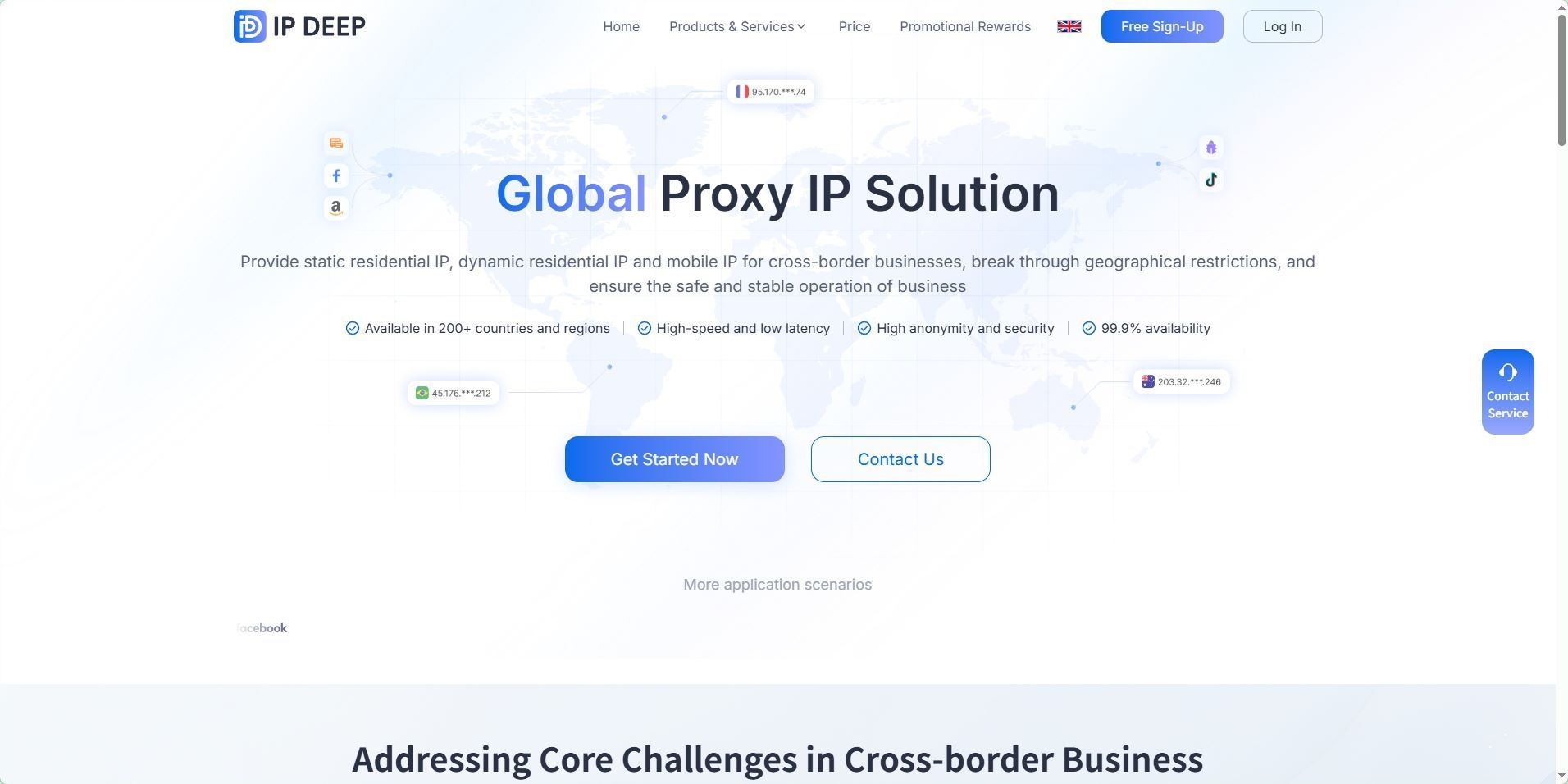
IPDeep is a global enterprise proxy IP provider covering more than 200 countries and regions, with over 30 million high-quality residential IPs.
Its dynamic residential proxies use bandwidth-based pricing with no traffic limits. Available bandwidth options include 100Mbps, 200Mbps, 300Mbps, 500Mbps, 600Mbps, 800Mbps, and 1000Mbps.
Compared with pay-per-GB residential proxies, IPDeep's bandwidth-based pricing is better suited to long-running tasks with high traffic volumes.
IPDeep supports HTTP, HTTPS, and SOCKS5 protocols and can be integrated with various web scrapers and antidetect browsers.
It is suitable for high-frequency tasks such as AI data collection, SERP monitoring, cross-border e-commerce account management, and social media marketing.
Pricing:
100Mbps: $769.50/month
200Mbps: $1,487.70/month
300Mbps: $2,077.65/month
500Mbps: $3,258.90/month
600Mbps: $3,693.60/month
800Mbps: $4,617/month
1000Mbps: $5,386.50/month
2. ProxyEmpire
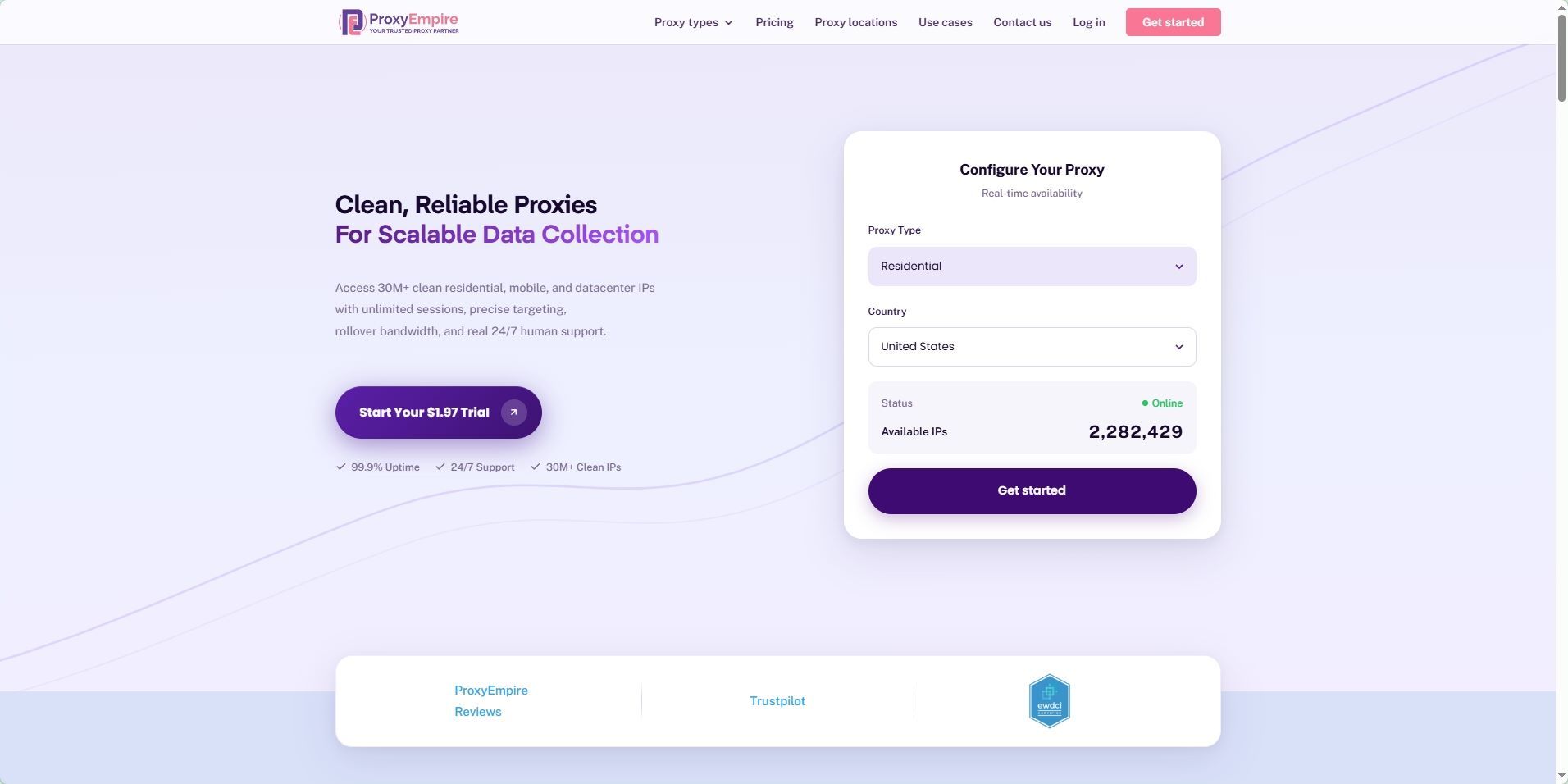
ProxyEmpire has more than 30 million premium residential IPs and 4 million+ mobile IPs across more than 170 countries.
It currently offers both unlimited residential proxies and static residential (ISP) proxies. The unlimited residential plans are mainly designed for continuous, high-volume data collection, while static residential proxies are suited to use cases that require the same IP over a longer period.
Residential proxies support targeting by country, region, city, and ISP.
Pricing:
100Mbps: $1,500/month
200Mbps: $2,400/month
500Mbps: $3,800/month
1000Mbps: $5,400/month
3. ProxyScrape
ProxyScrape offers Unlimited Residential Proxies with bandwidth-based pricing instead of charging by GB.
The current plans start at 100 Mbps and include 4M+ residential IPs with targeting across multiple countries and regions.
It is suitable for large-scale data collection, SERP monitoring, and continuously running data tasks.
Pricing:
100Mbps: $1,425/month
200Mbps: $2,367/month
400Mbps: $3,150/month
600Mbps: $3,933/month
800Mbps: $4,457.70/month
1000Mbps: $4,983.30/month
4. IPWEB
IPWEB offers unlimited dynamic residential proxies with pricing based on bandwidth and service duration.
Its high-bandwidth plans are suitable for continuously running tasks such as large-scale data collection, market research, SEO monitoring, and price tracking.
Pricing:
100Mbps: $900/month
500Mbps: $4,000/month
1000Mbps: $6,000/month
5000Mbps: $27,000/month
10000Mbps: $48,000/month
5. Geonode
Geonode's unlimited residential proxies use rate-based pricing, with plans ranging from 200 Mbps to 1000 Mbps. They are not billed by GB, and monthly prices range from $1,800 to $3,800.
Note that the current unlimited residential product primarily uses US Gateways, making it more suitable for high-throughput workloads focused on US traffic.
Pricing:
200Mbps: $1,800/month
400Mbps: $2,400/month
600Mbps: $3,000/month
800Mbps: $3,400/month
1000Mbps: $3,800/month
Comparison of 5 Providers
What Are Unlimited Residential Proxies Used For?
▸ Large-Scale Data Collection: Continuous, high-traffic scraping tasks where bandwidth-based pricing can make costs more predictable.
▸ SERP Monitoring and E-Commerce Price Tracking: Track search rankings and prices with frequent IP rotation.
▸ Ad Verification: Verify ad displays across multiple regions.
▸ Market Research: Collect localized data from multiple countries and cities.
▸ AI Data Collection: Collect public data for data analysis, model training, and other applications.
Frequently Asked Questions
Q1: Are Unlimited Residential Proxies Really Unlimited?
“Unlimited” usually means that traffic is not billed by GB, but plans may still have limits on bandwidth, concurrent threads, and Fair Use Policy restrictions. Always review the provider's Fair Use Policy before purchasing.
Q2: What's the Difference Between Unlimited Bandwidth-Based and Pay-Per-GB Proxies?
Pay-per-GB pricing charges based on the amount of data used and is suitable for light or irregular tasks;
Bandwidth-based pricing provides a fixed bandwidth channel. Within the plan's bandwidth limit, you are not charged extra for data usage, making it suitable for 24/7 high-concurrency tasks with more predictable costs.
Q3: Should I Choose Unlimited Dynamic Residential or Static Residential Proxies?
For use cases that require the same IP over a longer period, such as store backend access and account management, static residential or ISP proxies may be suitable;
For large-scale data collection that requires frequent IP rotation, unlimited dynamic residential proxies are a better fit.
If your main requirements are continuous, high-volume data collection, SERP monitoring, or AI data collection, you can consider IPDeep's bandwidth-based dynamic residential proxies:
No traffic limits, bandwidth-based pricing, coverage across 200+ countries and regions, support for HTTP/HTTPS/SOCKS5, and millisecond-level IP rotation.
To check available bandwidth options and current locations, visit the IPDeep website.