




Large-Scale Data Collection: Buy Unlimited Residential Proxies



Clean IP picks: Static IPs from $1.5 each, Dynamic IPs from $0.5/GB


When it comes to large-scale web scraping, the biggest challenges are often not the crawler code itself, but IP rotation, request frequency, and proxy costs.
When data collection grows from a few GB per day to hundreds of GB or even TBs, traffic-based residential proxy costs keep rising and can be difficult to predict in advance.
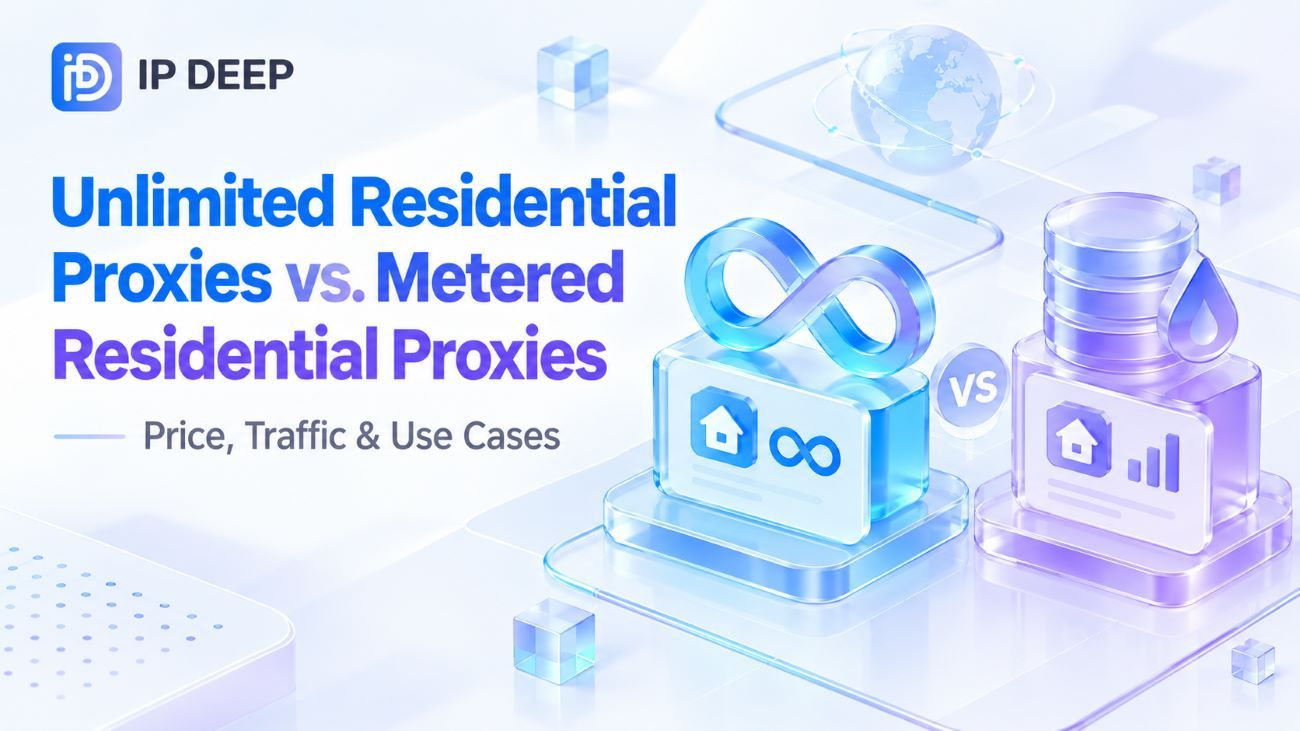
Dynamic residential proxies provide a more distributed pool of residential IPs, while unlimited residential proxies shift the billing model from “how many GB you use” to “how much bandwidth you need.”
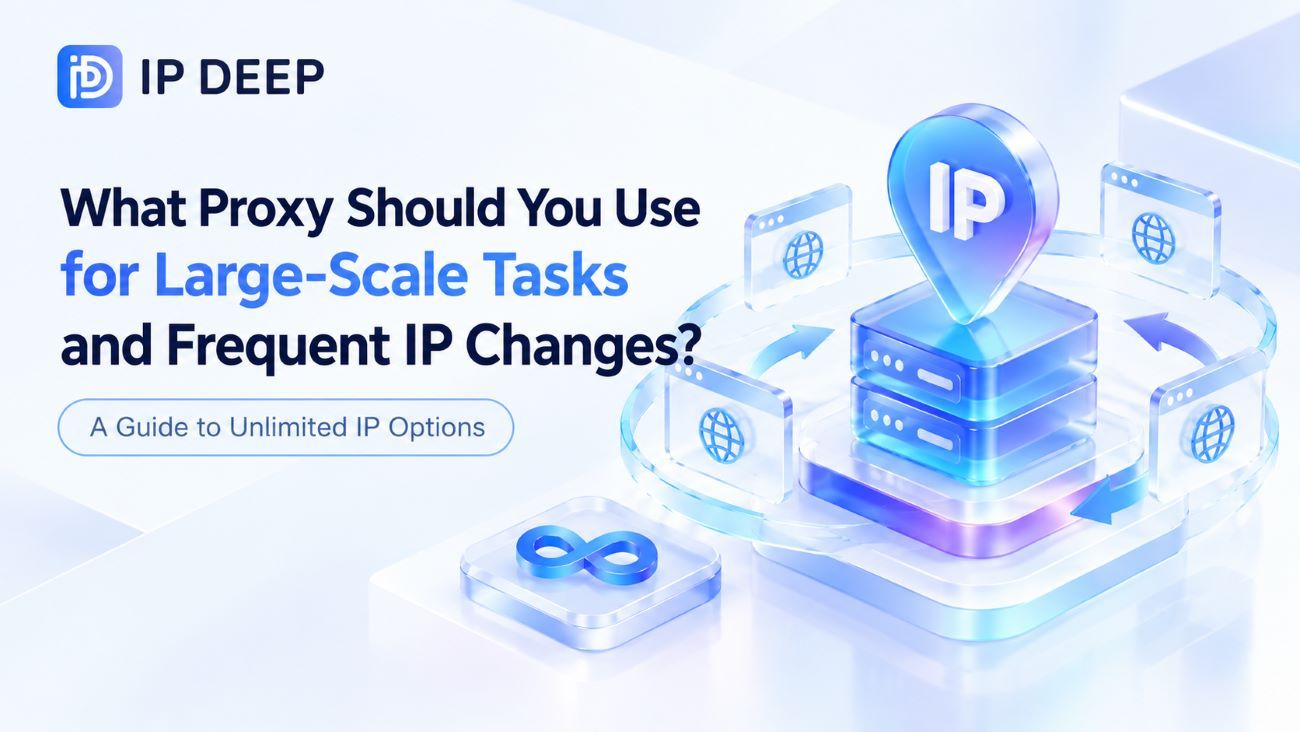
So, which type of proxy IP is best for large-scale data collection? And when should you use unlimited residential proxies?
Which Proxy IP Is Best for Large-Scale Data Collection?
First, no single proxy type works for every data collection task. The right choice depends mainly on the target site's risk controls, how important session continuity is, and your budget.
1. Datacenter Proxies
These IPs come from data center networks. They are fast and cost-effective, but because their ASN belongs to a data center rather than an ISP, sites with strict risk controls may identify them more easily.
They are suitable for public API calls, low-risk web scraping, and internal testing.
2. Static Residential / ISP Proxies
These IPs have residential ISP attributes at the IP and ASN level and are typically hosted on data center networks.
The IP remains fixed, making this type suitable for tasks that require long-term login sessions, such as account maintenance, backend operations, and continuous-session data collection.
3. Dynamic Residential Proxies
These IPs come from real residential networks and can be rotated per request or at set intervals.
Because the exits are more distributed, the traffic load on individual IPs is lower. They are suitable for large-scale web scraping, price monitoring, and search result collection where greater IP diversity is needed.
4. Mobile Proxies
These IPs come from cellular networks and are typically shared by multiple users. They are suitable for mobile app API collection and scenarios where IP reputation is particularly important.
Comparison of Proxy Types
One point is worth adding: for tasks that require frequent IP rotation, location targeting, and greater IP diversity, dynamic residential proxies are a common option, but they are not the default choice for every task.
For ordinary public web pages, datacenter proxies are often enough. For tasks that require long-term session stability, static residential / ISP proxies may be a better fit.
Why Are Unlimited Residential Proxies Suitable for Large-Scale Data Collection?
1. The Problem with GB-Based Billing
With traffic-based residential proxies, your bill is directly tied to data usage. 10GB, 100GB, and 1TB are typically priced at different tiers, so the more you use, the more you pay.
The real issue is not necessarily the unit price, but cost predictability. If a full-page scraping task includes images, CSS, and JavaScript, actual traffic usage can significantly exceed estimates based on “number of pages × average page size.”
As the scale increases, it becomes much harder to lock in your proxy budget in advance.
2. What Are Unlimited Residential Proxies?
Unlimited residential proxies typically use bandwidth-based billing with a fixed usage period: you select a bandwidth tier and generally do not pay separately based on the actual number of GB used during the plan period.
One point needs to be clear: unlimited means you are not charged for additional traffic based on GB usage. It does not mean that every resource is unlimited.
3. Unlimited Does Not Mean Unlimited Speed
This is worth discussing separately. Unlimited / unmetered products are still subject to factors such as:
▸ Bandwidth (Mbps)
▸ Concurrency
▸ Session limits
▸ IP pool size and regional availability
▸ Terms of service
▸ Target website restrictions
So, unlimited billing solves the traffic cost issue, but it does not make bandwidth or concurrency unlimited. If your task requires higher throughput, you still need to move to a higher bandwidth tier.
4. Which Data Collection Tasks Are Suitable for Unlimited Proxies?
▸ High-frequency, continuous web scraping
▸ High-traffic page scraping, including images and static resources
▸ AI public data collection and cleaning
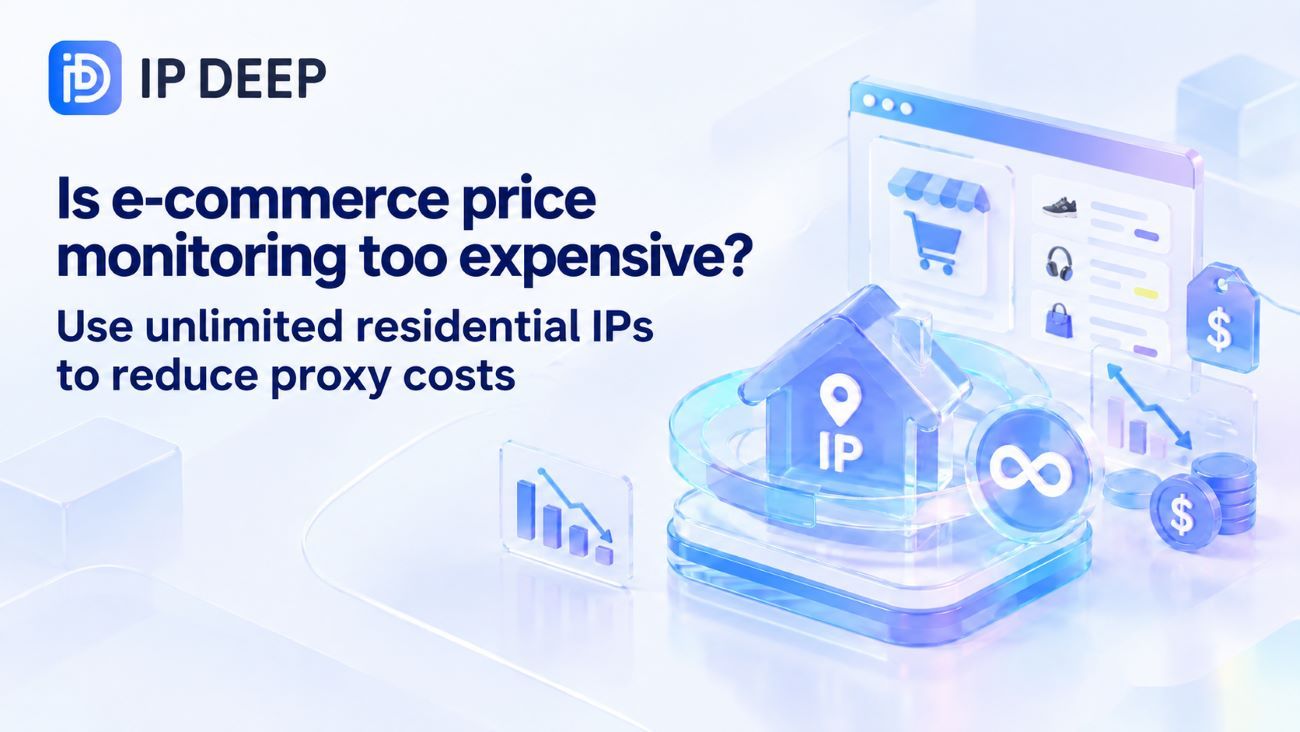
▸ E-commerce price and inventory monitoring
▸ Search engine results collection
▸ Long-term market research and SEO monitoring
On the other hand, if you only run occasional tasks and use a few hundred MB per day, GB-based residential proxies are often more cost-effective. The main value of bandwidth-based billing is predictable budgeting, which may not matter for low-volume tasks.
How to Configure Residential Proxies for Large-Scale Data Collection?
Choosing the right proxy type is only part of the process. Poor configuration can still cause problems.
1. IP Rotation
There are three common approaches:
▸ Rotate IPs per request: Suitable for data collection tasks that require greater IP diversity. However, request frequency, sessions, cookies, and client characteristics still need to be configured together. Changing IPs does not remove other limitations.
▸ Timed rotation: Change the exit IP at fixed intervals. This works well for tasks that need to maintain a session for a period of time without using the same IP for too long.
▸ Exception-triggered rotation: Keep the current IP by default and switch only when encountering errors such as 429, 403, or connection timeouts. Follow the target site's rules and reduce the request rate before retrying.
2. Sticky Sessions
Keeping the same IP for a period of time helps maintain consistency across cookies, session IDs, and the access environment, reducing the impact of frequent IP changes on continuous sessions.
Tasks involving logged-in sessions, form submissions, or continuous shopping flows generally benefit from this approach.
3. Request Frequency
Residential IPs do not mean you can send requests at unlimited speeds. Sending too many requests from the same exit IP in a short period can still trigger rate limits. Controlling concurrency and adding request intervals is often more effective than simply adding more IPs.
4. Browser / Client Environment
One commonly misunderstood point is that proxy providers only control the proxy layer.
If your data collection task uses browser automation, cookies, User-Agent, browser version, and timezone are part of the client environment and do not automatically change when you switch proxy IPs.
Keeping these characteristics consistent requires configuration on the client side.
In other words, an IP is only one part of the access environment. When evaluating requests, target websites may also consider signals such as TLS fingerprints, HTTP headers, and browsing behavior.
Cloudflare's official documentation notes that TLS client fingerprints such as JA3 and JA4 can help identify characteristics of the software initiating a connection and can be used as signals in Bot Management.
So, a proxy IP is not the only solution to every anti-bot challenge.
Where to Buy Unlimited Residential Proxies?
When choosing this type of product, pay attention to:
Bandwidth tiers: Whether they cover your actual throughput requirements
IP pool size: A small pool can lead to frequent IP reuse during long-running tasks
Country / city coverage: Whether you can target the locations you need
IP rotation methods: Whether rotation can be configured by request, time, or session
Protocol support: HTTP, HTTPS, and SOCKS5
Session capabilities: Whether sticky sessions can be configured
API and dashboard: Whitelisting, sub-accounts, and usage details
Billing model and cycle: Bandwidth-based or GB-based, and the billing period
Service stability: Reported availability and actual node performance
Why Choose IPDeep?
IPDeep offers dynamic residential proxies with bandwidth-based billing for this type of unlimited proxy solution. The pricing model combines bandwidth and usage time.
Multiple bandwidth tiers from 100Mbps to 1000Mbps are currently available, along with custom plans for larger customers. Check the official page for current bandwidth tiers, availability, and pricing.
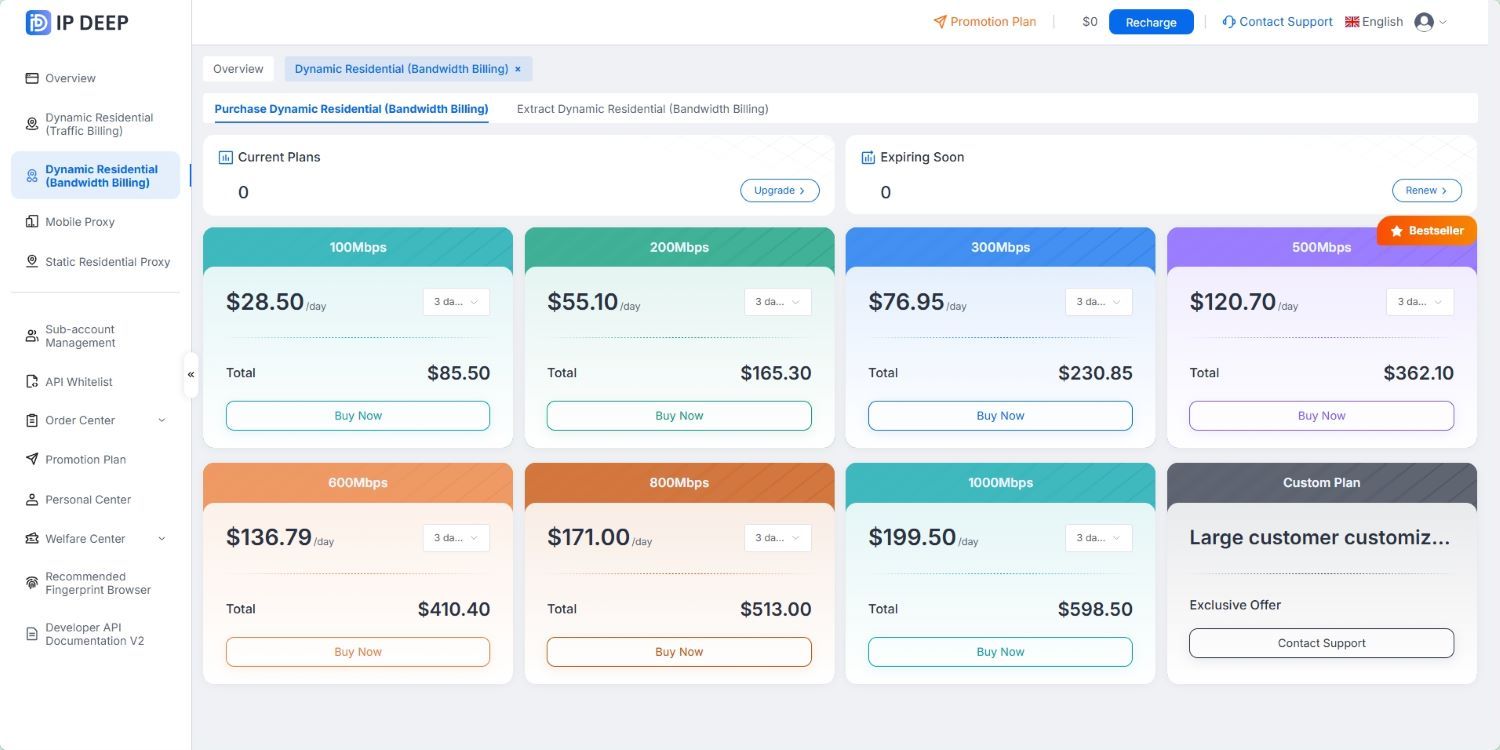
For comparison, the current GB-based dynamic residential plans are 5GB for $6.50, 10GB for $11.50, 100GB for $75, and 1TB for $600 (prices may change based on the current product page).
This model is more flexible for smaller data volumes, while bandwidth-based billing can make budgeting easier as your data volume grows. You can switch between the two models as your business needs change.
Frequently Asked Questions
Q1: Are Unlimited Residential Proxies Really Unlimited?
Unlimited means you are not charged extra based on the actual number of GB used during the plan period. It does not mean that all resources are unlimited.
Bandwidth, concurrency, session limits, IP pool size, and regional availability still have limits. Service terms and restrictions imposed by target websites also apply.
Q2: Unlimited Residential Proxies or GB-Based Proxies?
It depends on your data volume and task type.
For projects that run continuously, generate large amounts of traffic every day, and handle multiple concurrent tasks, bandwidth-based billing can make costs easier to control without having to constantly track your remaining GB.
For low-frequency, low-volume, point-to-point API tasks, GB-based billing is often more economical.
Q3: Should Large-Scale Data Collection Use Dynamic or Static Residential Proxies?
It mainly depends on whether you need a fixed exit IP.
If you need long-term login status and session continuity, choose static residential / ISP proxies.
If you need greater IP diversity and rotation by request or time, choose dynamic residential proxies.
You can also combine both—for example, use static residential proxies to maintain account sessions and dynamic residential proxies for public data collection.