




Top 5 Static Residential IP Providers in 2026: Review Guide



Clean IP picks: Static IPs from $1.5 each, Dynamic IPs from $0.5/GB


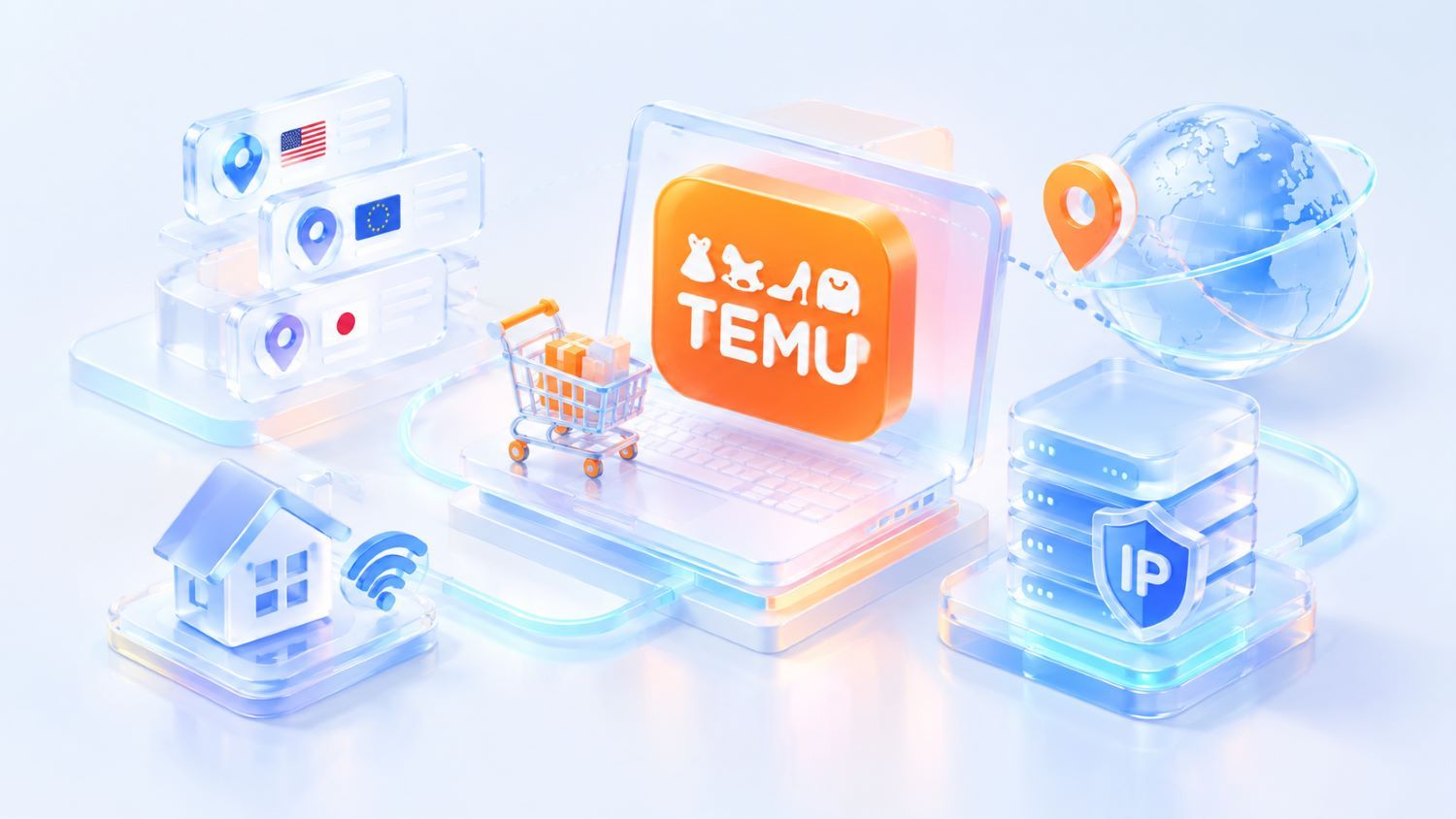
In the digital business environment of 2026, static residential IPs (also known as ISP proxies) have become an important infrastructure for cross-border e-commerce, social media operations, and large-scale data collection.
The core value of this type of proxy lies in: the IP addresses are assigned by Internet Service Providers (ISPs) but hosted in data center environments for long-term dedicated use.
Static residential IPs are different from both regular data center proxies and dynamic residential proxies. They combine the authenticity of ISP-registered IP addresses with the stability of fixed IP addresses.
They allow businesses to maintain a consistent online identity while providing IP reputation characteristics that are closer to those of real user networks, making them popular for scenarios requiring long-term sessions.
Since these IP addresses originate from ISP networks, their network characteristics are generally closer to real user environments than standard data center IPs, which can help reduce some IP reputation-based risk triggers.
For tasks that require maintaining the same network identity over time, such as managing Amazon or TikTok accounts, choosing a reliable static residential IP provider is essential.
This article evaluates five representative providers based on current industry standards and technical considerations, while explaining the key factors to consider when selecting a proxy service.

How to Evaluate and Choose a Static Residential IP Provider?
Choosing a reliable proxy provider should not be based only on pricing or advertised IP pool size. The following factors are also important:
IP Quality and Reputation: High-quality residential exits usually have better IP reputation, helping reduce the likelihood of triggering certain verification and risk detection systems.
Network Stability and Uptime: Professional providers usually offer high availability guarantees (such as 99.9% uptime) to ensure continuous business operations.
Geographic Coverage: The number of supported countries and cities directly affects localization capabilities.
Protocol Support: Check whether HTTP, HTTPS, and SOCKS5 protocols are supported. SOCKS5 can provide better performance for complex connection requirements and privacy-focused scenarios.
Concurrency and Traffic Limits: Different providers use different pricing models for concurrent connections and bandwidth usage, so the right option should be selected based on business requirements.
2026 Comparison of the Top 5 Static Residential IP Providers
Detailed Review of the Five Providers
1. IPDEEP
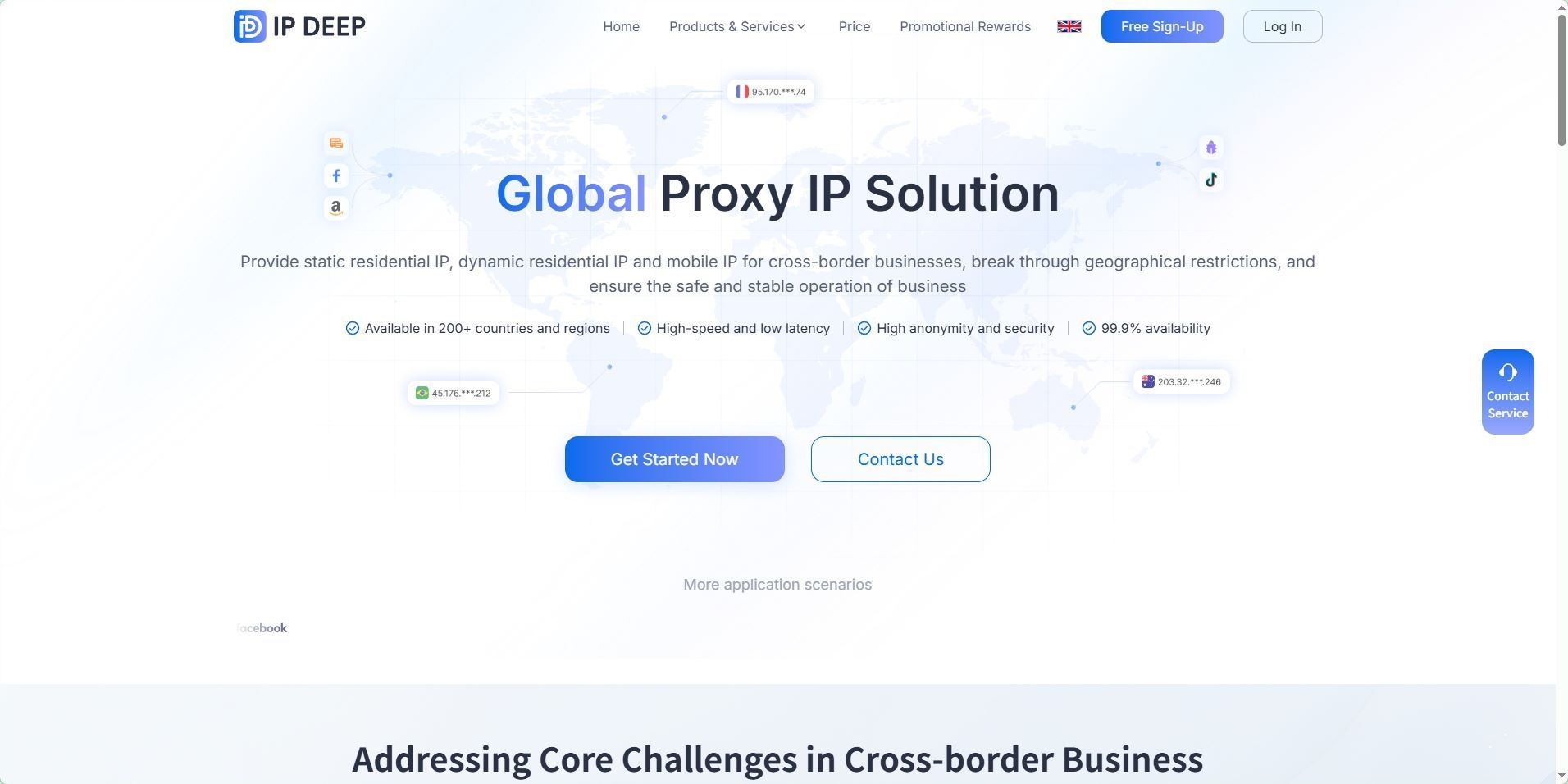
IPDEEP is a professional provider specializing in global proxy IP solutions, with services optimized for cross-border e-commerce and social media operations.
Key Advantages: IPDEEP provides IP resources across more than 200 countries and regions. Its static residential IPs use ISP-sourced resources and offer multiple location options, allowing users to select suitable regions based on their business needs to improve connection stability and access performance.
Static IPs are available through monthly rental plans and are commonly used for e-commerce account management, social media operations, and enterprise network access scenarios.
Recommended Use Cases: Long-term e-commerce account management, multi-account social media operations, enterprise API integration, and more.
Learn More About IPDEEP Static Residential Proxy Solutions
2. Bright Data
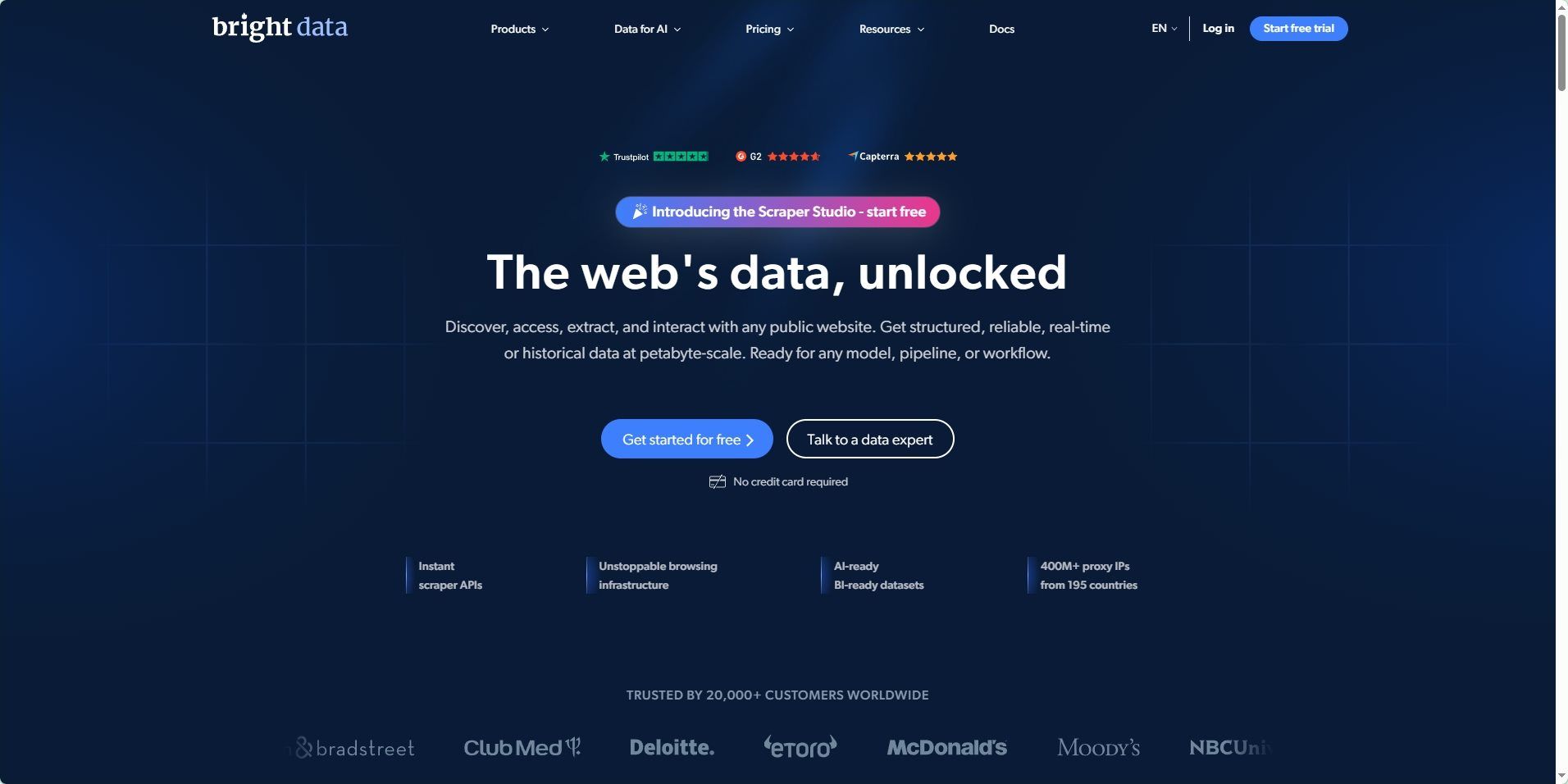
As one of the leading providers in the industry, Bright Data operates a large-scale ISP proxy network covering multiple countries and regions.
Key Advantages: It offers a comprehensive tool ecosystem, including management APIs, browser extensions, and proxy management tools. Its proxy resource management system and compliance capabilities are well-developed, with flexible pay-as-you-go options.
Recommended Use Cases: Large enterprises with strict compliance requirements and complex data collection projects.
3. Oxylabs
Oxylabs is another strong competitor in the premium proxy market, mainly serving enterprise customers. Its ISP proxy solutions perform well in terms of performance and stability.
Key Advantages: It offers large-scale resources, strong infrastructure capabilities, and enterprise-level reliability.
Recommended Use Cases: Large-scale market research, competitor data monitoring, and high-volume deployments.
4. IPRoyal
IPRoyal is known for its flexible pricing options and strong cost-effectiveness among small and medium-sized teams.
Key Advantages: It supports daily and monthly billing options, offers competitive pricing, and provides a user-friendly interface with support for SOCKS5 and HTTP/HTTPS proxy protocols.
Recommended Use Cases: Budget-sensitive projects, initial business testing, and low-frequency access tasks.
5. Decodo (formerly Smartproxy)
As an established provider, Decodo's proxy services are known for stability and ease of use.
Key Advantages: Decodo (formerly Smartproxy) provides residential proxy and ISP proxy solutions, supports both traffic-based and IP-based pricing models, and offers a relatively low entry barrier.
Recommended Use Cases: SEO monitoring, price tracking, and lightweight testing for small and medium-sized teams.
Practical Tips: Network Environment and Account Management
In real-world applications, having a high-quality IP alone is not enough. Account environment stability is influenced by multiple factors, including IP address, browser fingerprint, device patterns, and user behavior.
For enterprise multi-account management scenarios, businesses can adopt independent network environment management strategies while following platform policies and account management requirements, helping reduce operational risks caused by inconsistent environments.
To learn more about customized proxy IP solutions for different business scenarios, visit the IPDEEP website.
Frequently Asked Questions (FAQ)
Q1: What is the difference between static residential IPs and dynamic residential IPs?
Static residential IPs provide long-term fixed addresses and are suitable for applications that require persistent sessions and consistent identity verification, such as account management.
Dynamic residential IPs are rotated periodically and are more suitable for large-scale, high-concurrency data collection tasks.
Q2: Can static residential IPs guarantee that accounts will not be blocked?
High-quality IPs can significantly reduce risks related to IP reputation, but account restrictions may also be affected by factors such as user behavior, browser fingerprints, and device consistency.
It is recommended to maintain a stable network environment and follow standardized account management practices.
Q3: How much do static residential IPs (ISP proxies) usually cost?
Pricing depends on factors such as IP type, location, exclusivity, bandwidth, and billing method.
Static residential IPs are usually priced on a monthly per-IP basis (generally ranging from several dollars to more than ten dollars per IP per month), while dynamic residential proxies are more commonly charged by traffic usage. Larger purchases usually come with lower unit costs.
Q4: How can I verify the quality of a static residential IP?
You can use IP detection tools to check ASN information, proxy type, risk scores, and other indicators to evaluate IP quality.
A high-quality static residential IP should show an ISP-assigned origin rather than a data center source, and its risk score (such as Fraud Score metrics provided by some detection platforms) should remain relatively low.
To learn more about professional proxy technologies and global IP resources, visit the IPDEEP website.