




2026 Static Residential IP Guide: Boost Business Stability



Clean IP picks: Static IPs from $1.5 each, Dynamic IPs from $0.5/GB


In today’s global internet business environment, whether for cross-border e-commerce operations, social media management, or market data collection, the cleanliness and stability of the network environment have become essential foundations for smooth business operations.
Static Residential IP, as a network resource that combines high trustworthiness with long-term fixed characteristics, is increasingly becoming a common choice for enterprise users.
This article provides an in-depth analysis of the technical principles, key advantages, and application scenarios of Static Residential IP, helping you make informed decisions in complex network environments.
What Is a Static Residential IP?
To better understand this concept, we need to break down the two core characteristics: “Residential IP” and “Static”.
Residential IP: Typically originates from real ISP (Internet Service Provider, such as Comcast, AT&T, China Telecom, etc.) networks.
Compared with data center IPs, residential IPs are closer to ordinary user networks from the perspective of website identification, giving them higher network trustworthiness.
Static: Means that the IP address remains unchanged during the service period. It is permanently assigned or bound to the user by the provider and does not frequently change like dynamic IPs due to network reconnections or rotation mechanisms.
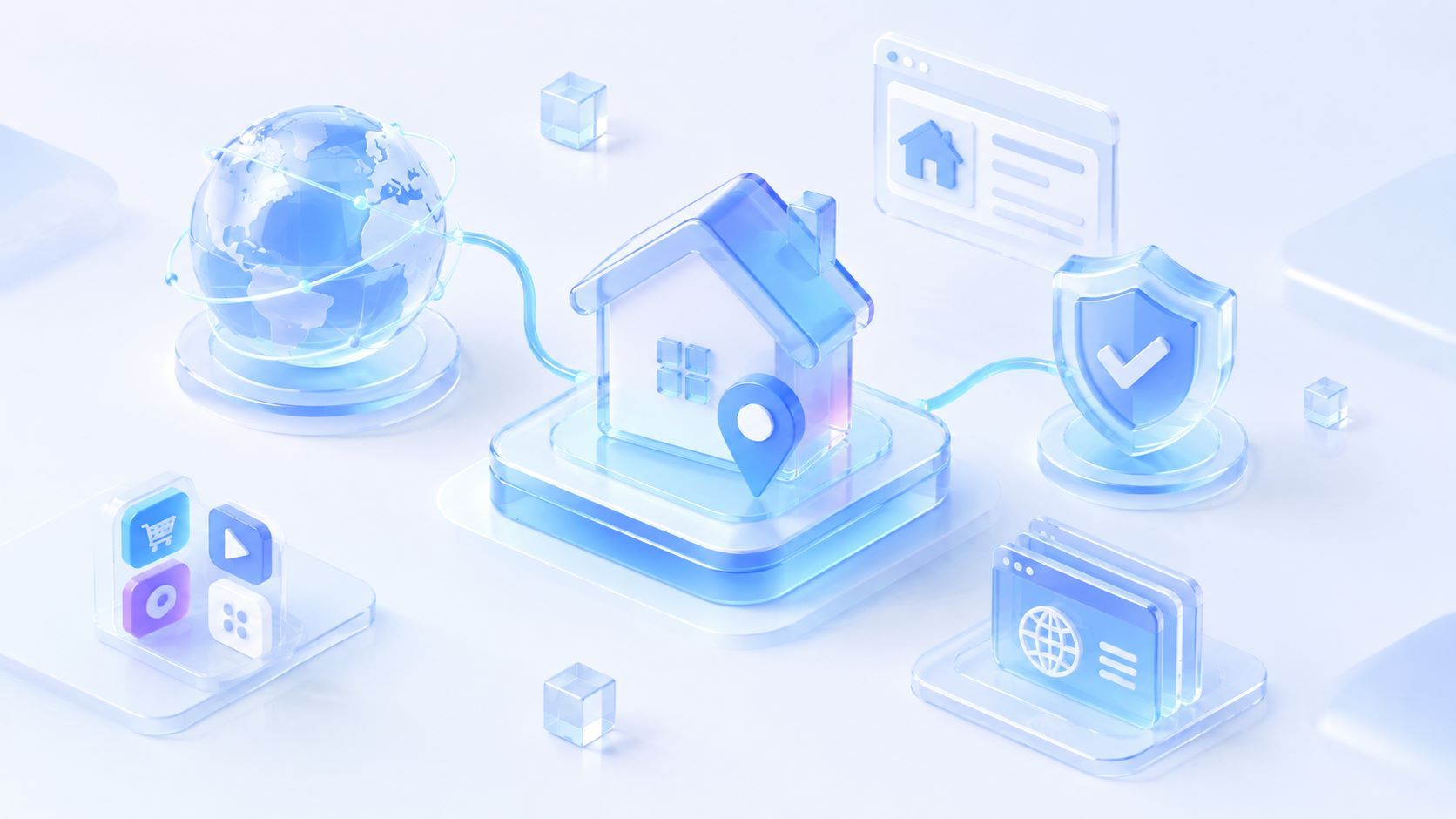
Static Residential IP = A network identity closer to a real user + a long-term fixed exit address. This combination provides a reliable network foundation for businesses that require stable login environments and continuous identity verification.
Key Advantages of Static Residential IP
Compared with data center proxies or dynamic residential proxies, Static Residential IPs offer significant advantages in several areas:
Improved Network Trust: Since the IP characteristics are closer to real user networks, Static Residential IPs can reduce the likelihood of triggering verification challenges or risk control measures compared with some data center IPs.
Stable Connection: The static nature ensures continuity of the exit address, helping prevent session interruptions or login issues caused by frequent IP changes.
Maintaining a Consistent Network Environment: Maintaining the same network environment over time can help reduce risk alerts caused by unexpected network changes.
Security and Access Control: High-quality providers usually offer strict access control, authentication mechanisms, and transparent data management policies to ensure reliable network services.
Main Application Scenarios
Static Residential IPs are commonly used in scenarios that require high network stability:
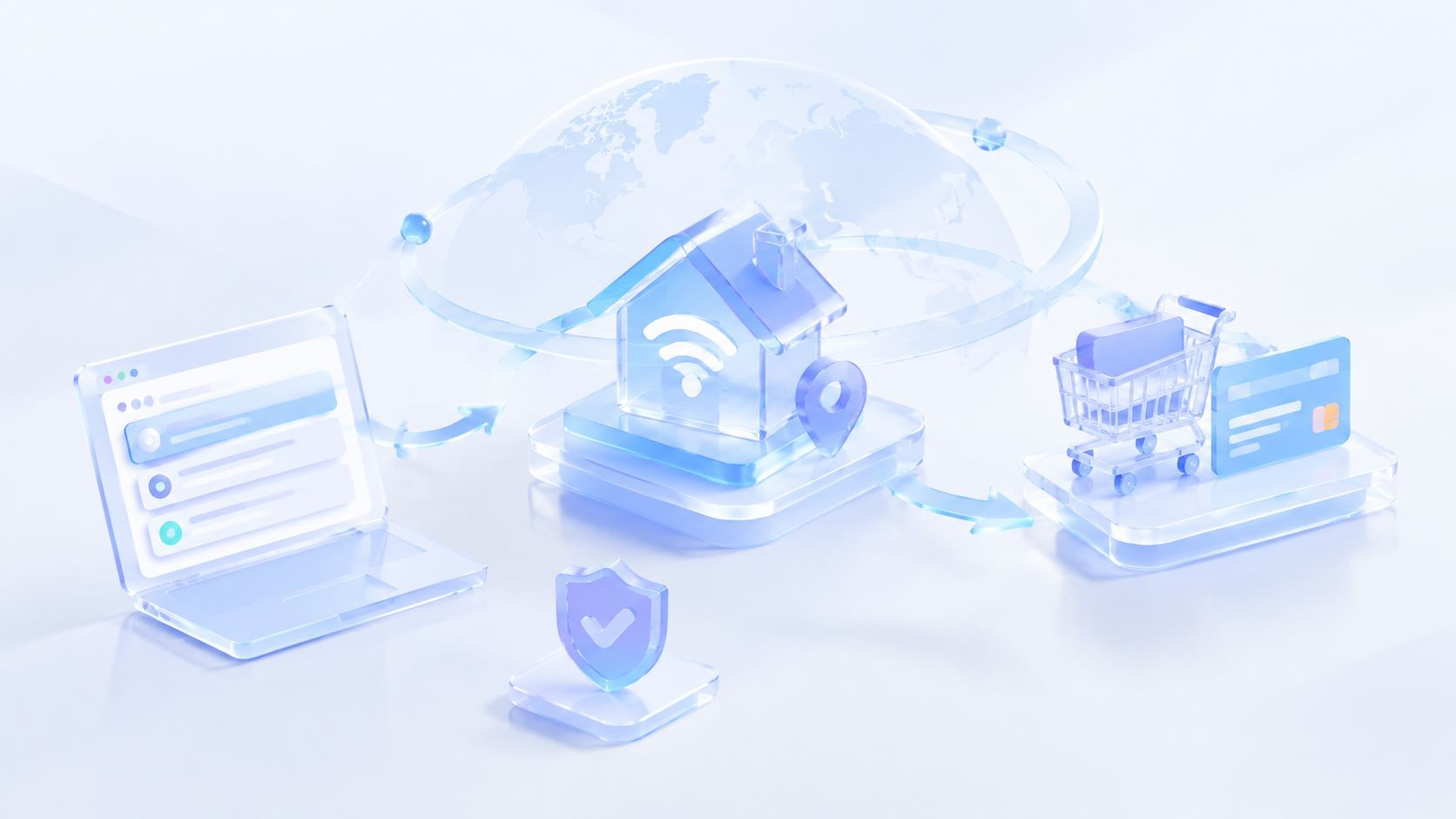
Cross-Border E-commerce Account Management: Used for long-term fixed IP access to manage stores on platforms such as Amazon, eBay, and Shopee, reducing risks caused by frequent changes in network exits.
Social Media Management: Helps maintain regular login and interaction activities for accounts on platforms such as Facebook, Instagram, TikTok, and LinkedIn, making it suitable for managing separate multi-account environments.
Payment and Financial Services: A stable IP environment can reduce some payment verification interruptions caused by sudden network environment changes (such as PayPal and Stripe).
Enterprise Remote Access: Combined with IP whitelisting, it helps secure employee access to internal company systems or specific resources.
AI Tool Access: Provides a more stable access environment and reduces access issues with AI services such as ChatGPT and Claude caused by frequent IP changes or poor-quality nodes.
Common Misconceptions: A Fixed IP Does Not Mean Complete Security, and Residential IPs Are Not a Universal Anti-Association Solution
Many beginners tend to rely too heavily on Static Residential IPs. In real-world applications, it is important to understand the following limitations:
Misconception 1: Using a Static Residential IP Means the Account Will Never Be Suspended.
Platform risk control systems evaluate multiple factors, including IP environment, account registration information, device fingerprints, user behavior patterns, and compliance.
An IP is only one part of the overall infrastructure.
Misconception 2: A Fixed IP Can Directly Improve Account Reputation.
Account reputation depends on factors such as transaction history, content quality, and compliance records.
A stable IP environment only helps maintain consistency and does not directly increase account authority.
Misconception 3: An IP Alone Can Completely Prevent Account Association.
Account isolation requires comprehensive management of hardware environments, browser fingerprints (Canvas, WebRTC, etc.), cookies, operating habits, and IP resources.
Fingerprint browsers and other tools should be combined with proper operational practices.
How to Choose a Quality Static Residential IP Provider
When selecting a Static Residential IP provider, consider the following technical factors:
Check ASN and Network Attributes: Use network analysis tools to review the IP’s ASN (Autonomous System Number) and organization information to determine whether it belongs to a genuine ISP network rather than a data center network.
Evaluate Risk Scores: Use IP reputation detection platforms to check risk scores. Generally, lower scores indicate better network reputation, but results should be evaluated using multiple data sources.
Node Coverage and Accuracy: Confirm whether the provider offers precise locations for your target markets (for example, IPDEEP provides global node resources across many countries and regions).
Use with Fingerprint Browsers: It is recommended to combine Static Residential IPs with professional fingerprint browsers for environment separation.
However, fingerprint browsers only reduce the risk of environment association and should always be used together with compliant operations.
Service Overview: IPDEEP provides global Static Residential IP resources with support for multiple regions and locations, offering reliable connectivity and stable network solutions for cross-border businesses. Visit the IPDEEP official website for more details.
Frequently Asked Questions (FAQ)
Q1: What Is the Difference Between Static Residential IP and Dynamic Residential IP?
Static IPs remain fixed during the rental period and are suitable for scenarios requiring consistent identities, such as account login and store management.
Dynamic IPs rotate periodically or based on requests and are more suitable for large-scale public data collection, crawling, and other tasks that do not require persistent login sessions.
Q2: Can Static Residential IP Completely Prevent Account Association?
No. IP is only one part of account isolation.
You also need to use fingerprint browsers to separate device fingerprints and maintain independence in registration details, payment information, and operating behaviors.
Q3: Why Is My Residential IP Marked as a Data Center IP by Some Detection Websites?
Possible reasons include: delayed updates in IP databases, data center hosting or routing of the IP range, or differences in classification standards between detection platforms.
In such cases, it is recommended to compare results from multiple authoritative IP databases or contact the provider to verify the ISP attributes of the IP.
Q4: How Are Static Residential IPs Usually Priced?
Static Residential IPs are typically priced based on the number of IPs and rental duration (such as monthly or quarterly plans).
Some providers may adjust pricing based on included traffic limits or bandwidth options.
Q5: Can One Static IP Be Used to Log In to Multiple Accounts?
For security considerations, platforms with strict risk control systems (such as Amazon and Facebook) generally recommend following the “one IP, one account” principle.
Sharing the same IP across multiple accounts may increase the risk of environment association.