




How to Enhance Cross-Border Account Security Using Static Residential IPs



Clean IP picks: Static IPs from $1.5 each, Dynamic IPs from $0.5/GB


In cross-border e-commerce and global social media management, account security remains a critical concern. Frequent account bans and risk control restrictions often cause headaches for many operators. Today, let’s explore how static residential IPs can enhance account security, enabling stable and long-term operation.
Static Residential IP
A static residential IP is an IP address assigned by an Internet Service Provider (ISP), coming from real household networks and remaining fixed over time. Unlike traditional data center IPs, these IPs reflect genuine user activity online, thus possessing higher credibility.
By purchasing residential proxy IPs through legitimate channels, you can obtain stable and clean IP resources covering multiple regions worldwide. High-quality proxy platforms strictly screen and monitor each residential IP in real time to ensure IP cleanliness, helping protect your cross-border accounts.
Key Advantages of Static Residential IPs for Account Security
Stable Identity Authentication
Because the IP remains fixed, all account access comes from the same address, making it easier for platforms to recognize activity as originating from a stable user. This reduces false flags from frequent IP changes and lowers risk of triggering security checks.
Reduced Ban Probability
Residential IPs originate from real home networks with more natural browsing behavior. High-quality, clean IPs provide safer access paths, effectively decreasing the chance of account bans.
Simplified Management and Whitelist Setup
Many cross-border businesses use IP whitelists. Fixed IPs are easier to manage and authorize. Enterprise-grade proxies also support diverse access methods, ensuring security and access control.
Improved Speed and Stability
Premium residential IPs supplied by reliable ISPs offer stable network connections and low latency, ensuring smooth account operations and better user experience.
How to Choose the Right Static Residential IP
Match Your Target Market
Static residential IPs should correspond to your business region. If your accounts primarily serve a specific country or area, selecting local residential IPs makes access more localized and easier to pass platform risk control.
Prefer Dedicated Over Shared IPs
When possible, prioritize dedicated static residential IPs to avoid risks associated with multiple accounts sharing the same IP, which can lead to account linkage and instability.
Pay Attention to IP Cleanliness
IP cleanliness is crucial. Quality static residential IPs typically have no history of abuse and are not blacklisted, making them less likely to trigger suspicious activity detection or bans.
Purchase from Reputable Sources
Always buy static residential IPs from professional and trustworthy proxy providers to ensure the IPs genuinely originate from home broadband networks, not disguised data center IPs. Reputable providers carefully screen and maintain their IP pools for long-term stability.
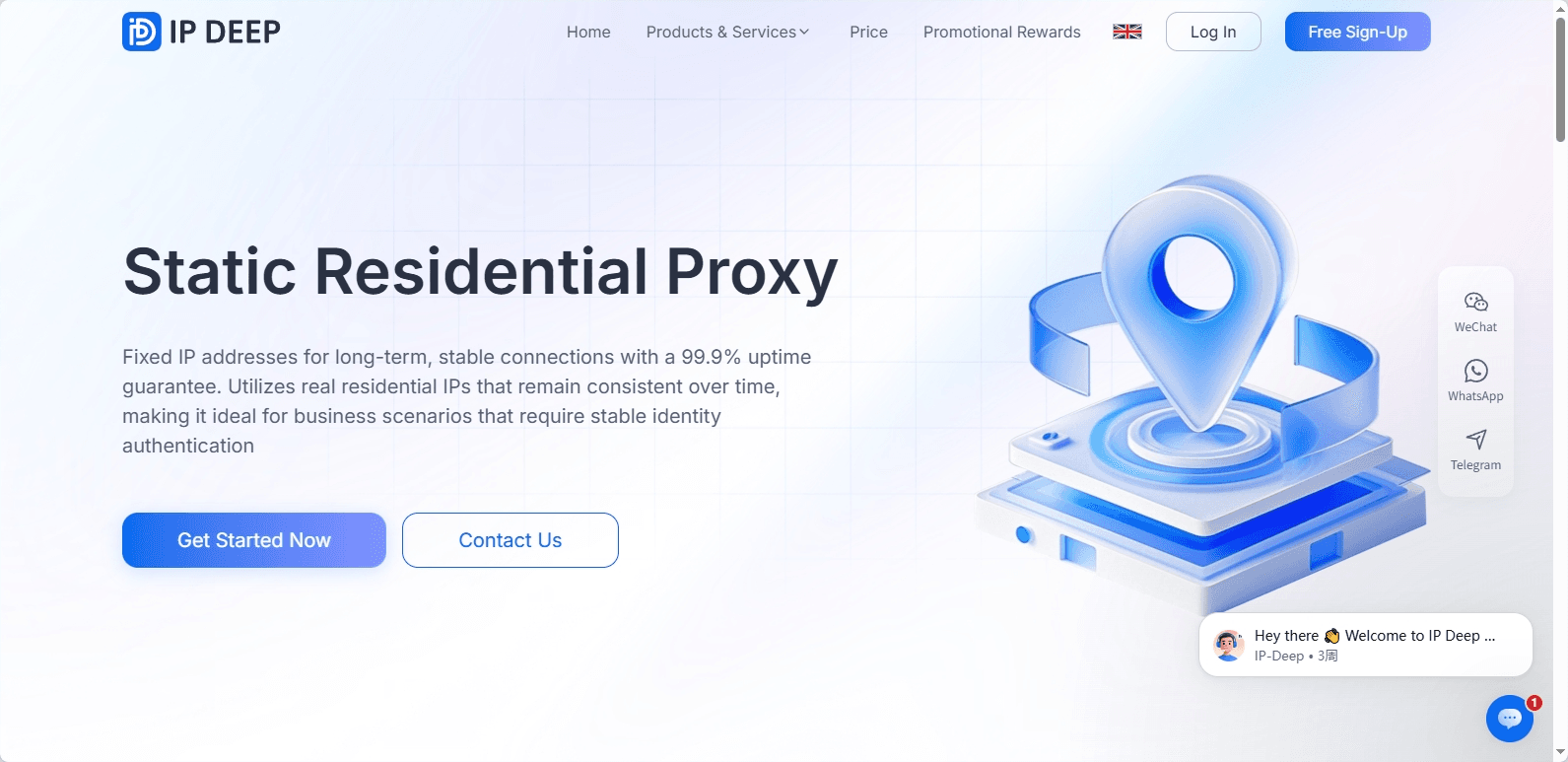
IPDEEP is a high-quality proxy provider with relatively transparent IP sources and ongoing maintenance, ideal for cross-border scenarios demanding high account stability, offering a hassle-free and sustainable solution.
Practical Tips
Assign different static residential IPs to multiple accounts to avoid linkage risks.
Regularly monitor IP quality and cleanliness; replace IPs promptly if issues arise.
Combine with device fingerprint management to optimize account usage habits and establish multi-layered security.
Conclusion
For teams managing long-term, multi-account deployments, static residential IPs are more than just a network tool—they are a foundational safeguard. Stabilizing your IP environment allows accounts to operate longer and more reliably, laying a solid groundwork for scalable growth.
FAQs
1. Can static residential IPs be banned by platforms?
Although static residential IPs reduce ban risks due to their real and fixed nature, any IP can be restricted due to abnormal behavior. It’s recommended to use them alongside proper account management and operational practices.
2. What cross-border business scenarios are static residential IPs suitable for?
They are ideal for cross-border e-commerce account management, social media operations, long-term data monitoring, remote logins, and scenarios requiring IP whitelist management.
3. Can static residential IPs support multi-region switching?
IPDEEP offers static residential IPs across multiple regions, allowing flexible switching to meet cross-regional operational needs.