




IP Planning for Multi-Store Operations: Static Residential IPs



Clean IP picks: Static IPs from $1.5 each, Dynamic IPs from $0.5/GB


In cross-border e-commerce and social media operations, managing multiple stores and accounts has become an important growth strategy for businesses.
In recent years, platforms such as Amazon, eBay, TikTok, and Stripe have strengthened their risk detection across accounts, devices, networks, and transaction activity.
For businesses managing multiple accounts and stores, relying solely on a standard network environment may no longer provide the consistency needed for stable operations.
This article explains how to plan IP resources effectively and explores the practical applications of static residential IPs for multi-store operations.
Why Does Multi-Store Operations Require IP Planning?
A key challenge of multi-store operations is reducing the risk of account associations. Platforms may analyze signals across multiple dimensions, including network, device, registration information, and user behavior.
Overlapping IP addresses: If multiple stores consistently share the same public IP, a platform may identify them as having a shared network environment.
Using low-reputation or previously abused proxy IPs may also increase the likelihood of additional security checks.
Uncertainty of dynamic IPs: Dynamic residential IPs typically rotate over time.
If the same account frequently appears from different regions or network exits within a short period, it may increase the likelihood of unusual login detection or raise concerns about changes in the operating environment.
As a result, dynamic IPs may not be ideal for back-office operations that require a consistent network environment.
IP type: Data center IPs generally have more identifiable Hosting/Datacenter network characteristics, and some platforms may determine their type through IP databases and ASN information.
Static residential IPs typically come from ISP-provided residential network resources.
Their network characteristics differ from those of data center IPs, making them suitable for business scenarios that require a stable residential network environment.
However, IP type alone does not determine account risk. Platforms typically consider multiple factors, including devices, accounts, and user behavior.
Key Benefits of Static Residential IPs
Static residential IPs combine the stability of a fixed IP address with the network characteristics of residential connections, making them one of the infrastructure options for managing multi-store environments.
Stability and consistency: A fixed IP address helps maintain a consistent login history and is well suited to store management scenarios that require a stable network exit.
Residential network characteristics: Static residential IPs typically come from ISP-provided residential network resources.
For businesses that require a stable residential network environment, they can more closely resemble residential network connections than some data center IPs.
Dedicated use: High-quality static residential IPs typically support dedicated use, meaning the IP is assigned to a single user during the rental period.
This can reduce the risk of associations caused by other users sharing the same IP, although it cannot completely eliminate platform risk controls.
Practical IP Planning for Multi-Store Operations
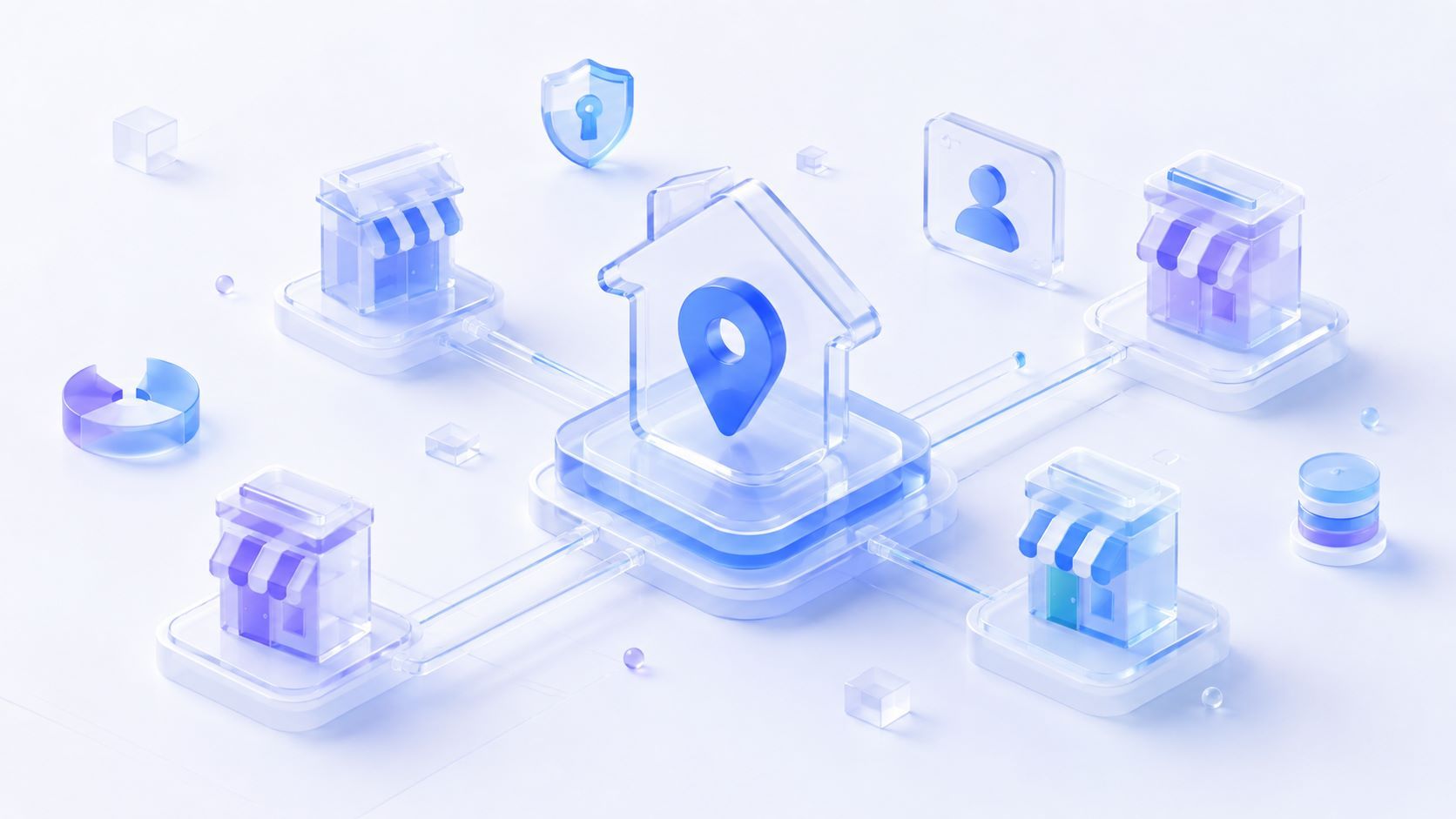
A practical approach is to follow a “one store, one IP, one environment” isolation strategy to reduce the possibility of network-level associations between different business environments.
Keep in mind that IP isolation only addresses part of the network environment and cannot replace platform requirements regarding account credentials, identity information, device environments, or compliant operations.
Each store should continue to follow the platform’s official policies on multi-account operations.
1. Matching Stores with IPs
Merchants can assign a dedicated static residential IP to each individual store.
For example, when operating a US eBay store, a merchant can choose a static ISP IP located in the United States, such as Los Angeles, so that the IP location is reasonably consistent with the account registration information and target market.
2. Isolating Browser and Device Environments
IP isolation alone is not enough. Some platforms and websites may use signals such as Canvas, WebGL, AudioContext, fonts, and browser configurations to identify device or browser environments.
Consider using browser profile isolation tools to create separate browser Profiles for different business environments.
Manage cookies, cache, and other browser data separately, while configuring time zones, languages, screen resolutions, and other settings appropriately for each operating environment.
3. Applying IPs to Different Business Scenarios
Back-office management and order processing: For back-office operations that require a consistent network environment, static residential IPs can be considered to reduce changes caused by frequently switching network exits.
Competitor research and public data access: For scenarios that involve accessing public pages from different regions or conducting large-scale data collection, choose an appropriate type of residential proxy based on the target website’s access policies.
Control request rates reasonably to reduce restrictions caused by repeated requests from a single IP.
Industry Use Cases
Cross-border e-commerce (Amazon/eBay/OZON): Using a fixed IP for long-term operations can reduce the likelihood of additional verification or account association assessments caused by frequent changes in the network environment.
Social media management (TikTok/FB/Instagram): Using a stable IP environment with residential network characteristics for account management and content operations can help reduce the impact of frequent network changes during the initial stages of account activity.
Financial services and back-office access (such as Stripe): For businesses that need long-term access to payment dashboards, a stable network environment can help reduce login environment changes caused by frequent IP switching.
However, IP type alone does not determine account reviews or account status. Payment platforms such as Stripe may also assess accounts based on identity, transactions, security information, and other factors.
For more information about global static residential IPs, configuration recommendations, and scenario-specific solutions, visit the IPDeep website for professional support.
Frequently Asked Questions (FAQ)
Q1: How Many Stores Can Use the Same Static Residential IP?
If multiple stores need to maintain separate operating environments, a “one store, one IP” approach can be considered.
For businesses where the platform explicitly requires accounts to be operated independently, merchants should follow the platform’s official policies rather than relying solely on IP isolation.
Q2: Do I Need to Clear Browser Cookies When Using a Static Residential IP?
When using isolated browser profiles for different environments, each profile can maintain separate cookies and browser data.
However, in specific situations such as account appeals or environment migration, browser data should still be managed according to appropriate operating procedures to maintain a clean and consistent browser environment.
Q3: Does IP Bandwidth Affect Store Operations?
For standard store back-office operations, extremely high bandwidth is usually unnecessary. Stability, latency, and packet loss are often more important.
For live streaming or large-scale video uploads, choose a higher-bandwidth connection based on the actual video bitrate and number of concurrent tasks.