




Are Free Static Residential IPs Reliable? Proxy Risks



Clean IP picks: Static IPs from $1.5 each, Dynamic IPs from $0.5/GB


With increasingly strict risk control measures across major platforms, many newcomers look for “free static residential IPs” or “free proxy pools” to reduce costs.
But are free static residential IPs really reliable? What hidden costs and security risks are behind these seemingly “zero-cost” proxy resources?
This article explores the issue from the perspectives of technology, business stability, and data security, while providing more reliable alternatives.
Availability and Performance of Free Static Residential IPs
From a practical business perspective, free proxy resources marketed as “static residential IPs” usually provide poor availability and connection performance:
Low availability and short lifespan: Many public free proxy lists contain IPs that become unavailable quickly. Their actual availability is usually far lower than commercial proxy services.
Some IPs remain active for only a few minutes or even seconds, with frequent disconnections that make them unsuitable for long-term stable operations.
Shared usage reduces IP reputation: The core value of static residential IPs lies in providing a dedicated environment that resembles a real household network.
However, free public IPs are often repeatedly used by many people.
Over time, heavy abuse can reduce their reputation, causing some websites to flag them as risky sources and increasing the chances of blocked requests or CAPTCHA challenges.
Limited bandwidth and slow performance: Free proxies are often operated by unknown individuals or organizations without reliable resource management.
In scenarios involving multi-threaded tasks or large-scale data collection, high latency and frequent errors can reduce efficiency and delay projects.
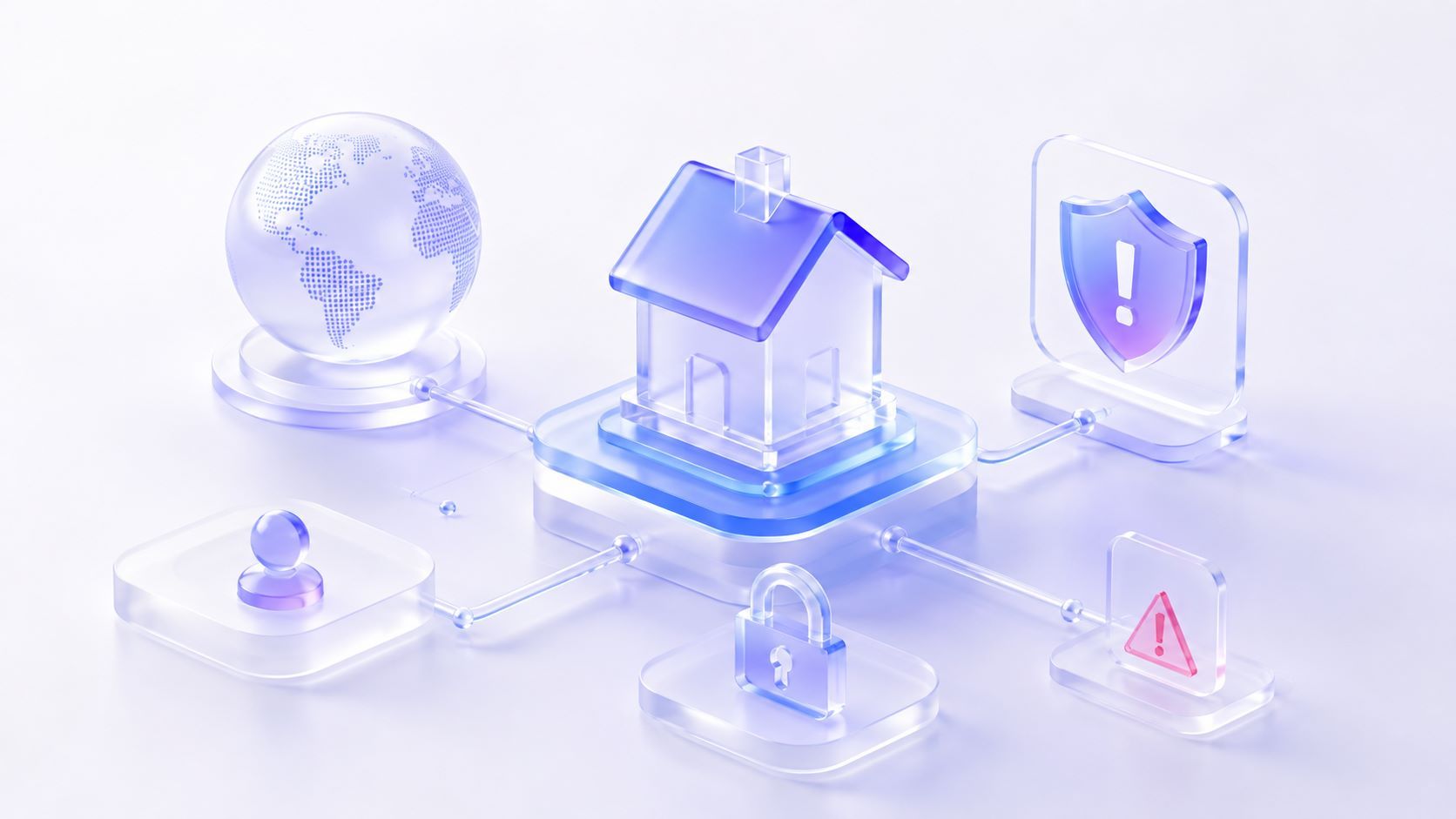
Key Security Risks of Free Proxies
Besides poor performance, using free proxies from unknown sources can expose personal privacy, business assets, and critical operations to serious risks:
1. Data Leakage and Privacy Risks
This is one of the biggest risks of free proxies. A proxy server acts as an intermediary between users and target websites.
When your traffic passes through the proxy server, all unencrypted HTTP data is transmitted through that unknown node, and the proxy operator may be able to view the plaintext information.
For HTTPS traffic, browsers verify SSL certificates and standard proxies cannot directly decrypt encrypted content. However, unreliable proxy providers may still create risks through methods such as:
· Analyzing traffic patterns to collect browsing habits and timing information;
· Collecting cookies or session information from requests;
· Injecting tracking scripts or advertisements into returned web pages;
· Tricking users into installing fake root certificates to perform man-in-the-middle attacks (MITM).
2. Malware Injection and Device Security
Some malicious actors may intentionally set up free proxies as bait to spread malware, viruses, or ransomware to connected devices.
While directly replacing files with malicious programs is not a common attack method, unknown free proxies may still pose risks through content manipulation and malicious injection.
Proxy nodes may insert malicious scripts, advertisements, or unsafe download links into web responses, potentially threatening personal devices and business networks.
3. Account Risk and Platform Security Issues
For cross-border e-commerce platforms such as Amazon, eBay, and Shopee, as well as social media platforms like TikTok, Facebook, and X, account security is a critical concern.
Since free IPs are often shared by many users, their reputation is usually harder to control and may be identified as abnormal traffic sources by platform risk systems.
For online stores and social media accounts, this may lead to additional verification, feature restrictions, or operational disruptions.
4. Potential Legal Risks
Free proxy IPs often come from unknown sources, making it difficult to know whether they were previously involved in fraud, spam activities, or other illegal operations.
If such an IP is investigated while you are using it, your business activities may face unnecessary inquiries or compliance issues.
How to Choose a Secure and Cost-Effective Proxy IP Service
When choosing a proxy solution, businesses and professional users should prioritize security, stability, and IP quality:
Data protection: Reliable proxy providers usually offer stronger security management, including account protection, access control, and stable connections to reduce data security risks.
Authentic residential IP ownership: High-quality static residential IPs should have real ISP attribution and transparent, compliant sources, helping businesses create a more natural user-like network environment.
Technical support: Professional providers usually offer API access and technical assistance to ensure stable operations.
If you are looking for a reliable global proxy solution for stable cross-border operations, visit the IPDeep official website.
IPDeep provides high-quality static residential IPs across multiple countries and regions, supporting use cases such as cross-border e-commerce operations, social media management, and public data collection that require stable network environments.
Frequently Asked Questions (FAQ)
Q1: Do free static residential IPs really exist?
Truly free static residential IPs are rare. Many free IP resources have limitations in stability, exclusivity, and IP reputation, making them unsuitable for long-term business use.
Q2: Are there security risks when using a free proxy just for browsing?
Yes. Even simple browsing can involve privacy risks if the proxy modifies web content, injects tracking scripts, or collects browsing data and cookies.
Q3: How can I check whether a static residential IP is reliable?
You can use professional IP detection tools to check whether the IP belongs to a real ISP, verify its registration information (Whois), and review risk indicators such as Fraud Score.