





Difference between dedicated static residential IP & shared static residential IP



Clean IP picks: Static IPs from $1.5 each, Dynamic IPs from $0.5/GB


Static residential IP has become an important resource for many businesses to build a stable regional network access environment due to its origin from real ISP network environments and high network credibility.
However, in actual procurement, users often face the choice between the "dedicated" and "shared" models.
This article will analyze the core differences between the two from the dimensions of resource exclusivity, network stability, environmental independence, and cost, helping you make rational decisions based on business needs.

What is a static residential IP?
Static residential IP refers to a fixed residential network address provided by an ISP. Unlike data center IPs, this type of IP has a higher network credibility.
When accessing platforms with strict risk control mechanisms, using static residential IPs helps provide a more stable network environment, reducing access anomalies caused by drastic changes in IP quality or network environment.
Core Differences Comparison
1. Resource Exclusivity and Usage Mode
Dedicated static residential IP: During a specific usage period, this IP address is allocated exclusively for a single user, with clear single-user usage rights and no third-party interference.
Shared static residential IP: Typically refers to multiple users sharing the IP resource pool provided by the service provider, with the specific allocation method depending on the provider's scheduling strategy (such as time division multiplexing or resource pool rotation).
2. Network Stability and Speed
Dedicated mode: Since this IP is not concurrently used by other users, its connection performance is more stable, suitable for business scenarios requiring long-term online presence, account management, and localized testing.
Shared mode: Performance is more susceptible to the impact of other users within the resource pool. If other users in the same resource pool are performing high-energy data tasks, it may cause fluctuations in your connection speed or increased latency.
3. Environmental Independence and Potential Risks
Dedicated mode: Provides higher network environment independence. Users can better manage the network environment corresponding to this IP.
In scenarios requiring fixed identity login, dedicated IP can ensure the purity of the network environment, reducing the possibility of network credibility decline due to shared IP's historical records or others' violations.
Shared mode: There is a certain degree of "mutual influence risk." If other users in the resource pool perform improper operations on the target platform leading to the IP being flagged, it may affect the subsequent success rate of accessing the IP.
4. Cost Investment
Dedicated mode: Resources are relatively scarce and operational maintenance costs are high, so the unit price is usually higher than shared products.
Shared mode: Costs are shared through the resource pool, making the price highly competitive, suitable for low-risk tasks with limited budgets or lower requirements for IP environmental independence.
Recommended Scenarios
How to choose the right service provider?
When choosing a static residential IP service provider, one should not only look at the price but also comprehensively evaluate the native degree of the IP, geographical coverage, network availability, and technical support capabilities.
Professional proxy IP service providers can usually offer higher online rate guarantees and quality network throughput support.
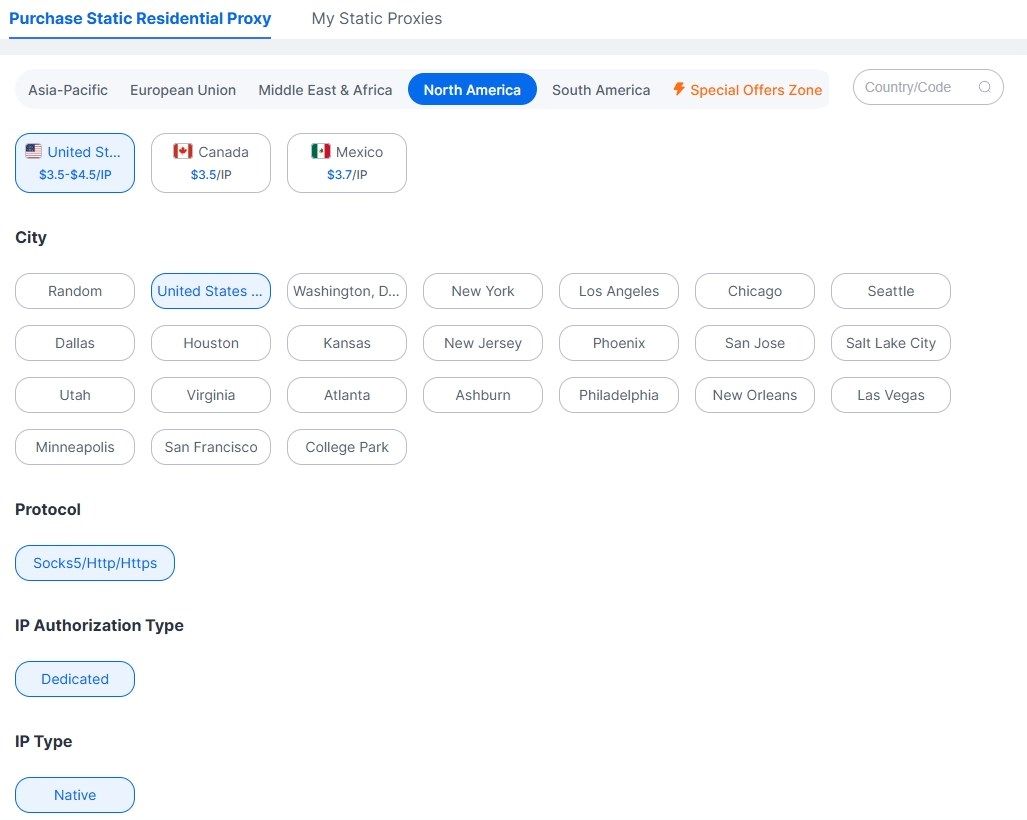
For more information on stable, high-quality dedicated static residential IP technical support and customized solutions, it is recommended to visit IPDeep official website for further information.
Frequently Asked Questions (FAQ)
Q1: Will a shared IP definitely be used by others at the same time?
Not necessarily. The shared mode usually means that users extract resources from the same IP resource pool. Whether there are others using the same IP as you at a specific moment depends on the provider's specific allocation mechanism and reuse rules.
Q2: Will dedicated static residential IP change?
During the validity period of the package, dedicated static IP usually remains fixed. If there are link failures due to force majeure such as operator network maintenance, some quality service providers will offer replacement support based on the actual situation.
Q3: Why is the probability of encountering access restrictions higher when using shared IP?
Because you cannot control the behavior of other users within the resource pool.
If others use the IP within the shared pool to perform improper operations or high-frequency requests, the target website may flag that IP as high risk, thus restricting your normal access.
Q4: Is it suitable for individual users to purchase a dedicated IP?
If you are only browsing the web or performing non-sensitive tasks, choosing a shared IP is more cost-effective;
But if you need to operate a personal foreign trade store or conduct in-depth localized business operations, to ensure the stability of the network environment, a dedicated IP is a more robust choice.