




Static Datacenter IP vs. Broadband IP: What's the difference?



Clean IP picks: Static IPs from $1.5 each, Dynamic IPs from $0.5/GB


Beginners who are new to proxy IP often encounter various terms, such as static datacenter IP, broadband IP, residential IP, etc. They all seem similar, but their actual uses differ greatly.
The most discussed ones are often static datacenter IP and broadband IP. Some say datacenter IP is cheap and stable, while others feel that broadband IP resembles a real user network environment more.
Today, let me explain what static datacenter IP is, how it differs from broadband IP, and the main scenarios they are suitable for.
1. What isStatic Datacenter IP?
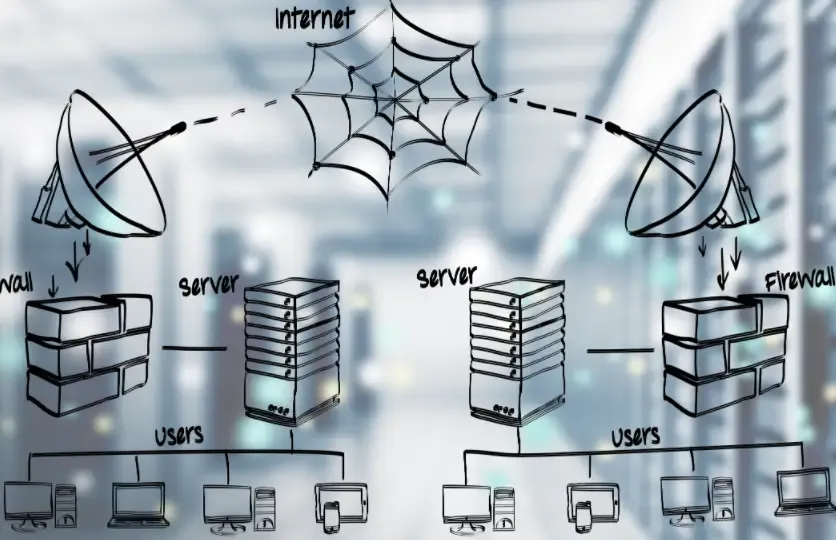
Static Datacenter IP (Static Datacenter IP) is a fixed IP address provided by server rooms. This type of IP is usually deployed in professional datacenters, such as cloud server rooms, IDC rooms, etc.
It has two obvious characteristics:
1. The IP is fixed (static)
It does not change like many home broadband IPs when the router is restarted. As long as the server is not changed, this IP remains basically unchanged.
2. Comes from datacenter servers
It is not an IP generated by a home network but is directly assigned by cloud servers or datacenter networks.
So from a technical source perspective, static datacenter IP is essentially server IP, and many businesses use this type of IP when building proxy pools or conducting automated tasks.
2. What is Broadband IP?
Broadband IP is actually the IP address assigned when we use broadband networks at home or in the office.
Its main characteristics are:
1. The IP source is home or enterprise broadband networks
That is, the operator's network, such as telecom broadband, mobile broadband, etc.
2. In many cases, it is a dynamic IP
Some broadband IPs change every time the optical modem or router is restarted.
3. Real user environment characteristics are obvious
Because it comes from a real network environment, many platforms consider it to be more "like a real user."
This is also why many strictly anti-cheating platforms prefer broadband IP or residential IP.
3. Core differences between Static Datacenter IP and Broadband IP
Comparison table of Static Datacenter IP vs Broadband IP
To understand the differences between the two more intuitively, you can quickly compare the core characteristics of Static Datacenter IP and Broadband IP in the table below:
| Comparison Dimension | Static Datacenter IP | Broadband IP |
|---|---|---|
| IP Source | IDC Datacenter Server Network | Home or Enterprise Operator Broadband Network |
| IP Type | Fixed IP, long-term unchanged | Mostly dynamic IP, may change periodically |
| Network Environment | Server Room Environment | Real User Network Environment |
| Stability | Very stable, suitable for long-term tasks | Stability depends on broadband line |
| Cost | Relatively low, suitable for bulk deployment | Higher cost |
| IP Scale | Easy to expand large-scale IP pool | Higher expansion cost |
| Typical Applications | Data collection, SEO monitoring, automation scripts | Social media operations, e-commerce accounts, advertising |
| Acquisition Method | Purchased through professional IP proxy providers, such as IPDEEP | Through operator broadband or broadband IP proxy |
| Enterprise Usage Scenarios | Large-scale data business, server proxy network | Businesses that need to simulate real user access |
This table clearly shows that: Static Datacenter IP leans towards "efficiency and scale," while Broadband IP leans towards "real user environment."
To summarize a few key differences:
1. Different IP Sources
• Static Datacenter IP: Comes from IDC rooms or cloud servers
• Broadband IP: Comes from home or enterprise operator networks
In other words, one is a "server environment," and the other is a "real user network."
2. Different Stability
From a stability perspective: Static Datacenter IP is usually more stable.
Because server networks are designed for stable operation, they rarely drop connections and do not frequently change IPs.
Many broadband IPs are dynamically assigned, which may:
• Change IP when devices are restarted
• Operators change them periodically
• Reassigned after disconnection
Therefore, in businesses that require long-term fixed IPs, many people prefer static datacenter IP proxies.
3. Cost Differences
Generally, static datacenter IPs are cheaper. The reason is simple:
• Datacenters can deploy IPs in bulk
• Server resources are centrally managed
• Costs are easier to scale
Broadband IPs require a real network environment, such as:
• Home broadband devices
• Router management
• Operator resources
So prices are usually higher.
4. Why do many enterprises prefer Static Datacenter IP?
1. Easy Deployment
Datacenter IPs are usually deployed directly on servers, such as:
• Cloud servers
• VPS
• IDC rooms
No complex device environment is needed; they can be used right after activation.
2. High IP Stability
When performing automated tasks, stability is very important. For example:
• Long-running crawlers
• Bulk API requests
• Continuous website data scraping
If the IP changes frequently, the system maintenance cost will be very high.
Static datacenter IPs rarely change, making them very suitable for long-running businesses.
3. Controllable Costs
If it's just a few dozen IPs, it's fine, but many enterprises often need:
• Hundreds of IPs
• Thousands of IPs
• Even tens of thousands of IP pools
At this point, price becomes very critical. Datacenter IP pools are usually easier to scale than broadband IP pools.
5. What to pay attention to when choosingStatic Datacenter IP Providers?
Whether buying static datacenter IP or broadband IP proxies, choosing the right service provider is very important.
1. IP Purity
Whether the IP has been abused extensively.
2. Connection Stability
Whether it is prone to disconnections or high latency.
3. IP Pool Scale
Whether the number of available IPs is sufficient.
4. Regional Coverage
Whether it supports IPs from multiple countries and cities. Established IP proxy providers like IPDEEP typically offer:
• Global datacenter IP resources
• Stable proxy nodes
• API call support
• Large-scale IP pools
For enterprises that need to use IP proxies for a long time, this can save a lot of trouble.
Overall
There is no absolute good or bad between static datacenter IP and broadband IP; it mainly depends on your business needs.
Of course, different business needs vary, and a reasonable combination of datacenter IP, broadband IP, and even residential IP is often a more mature solution.
If you are building your own IP proxy environment or planning to choose a service platform like IPDEEP, it is recommended to clarify your business scenarios first before deciding which type of IP resources to use.