




How to Use Shopee Proxy IPs for Cross-Border Sellers



Clean IP picks: Static IPs from $1.5 each, Dynamic IPs from $0.5/GB


In the increasingly competitive cross-border e-commerce market, single-account operations can no longer meet the needs of detailed strategic planning, especially in areas like multi-site store management, store cluster models, and data collection. Common issues such as frequent verification, login abnormalities, and sudden drops in store traffic are often closely related to the "IP environment."
One of the key solutions to these problems is the use of proxy IPs. This article will systematically explain how to correctly use Shopee proxy IPs, including principles, setup methods, selection criteria, and practical suggestions.
Why Shopee Sellers Should Pay Attention to IP Issues?
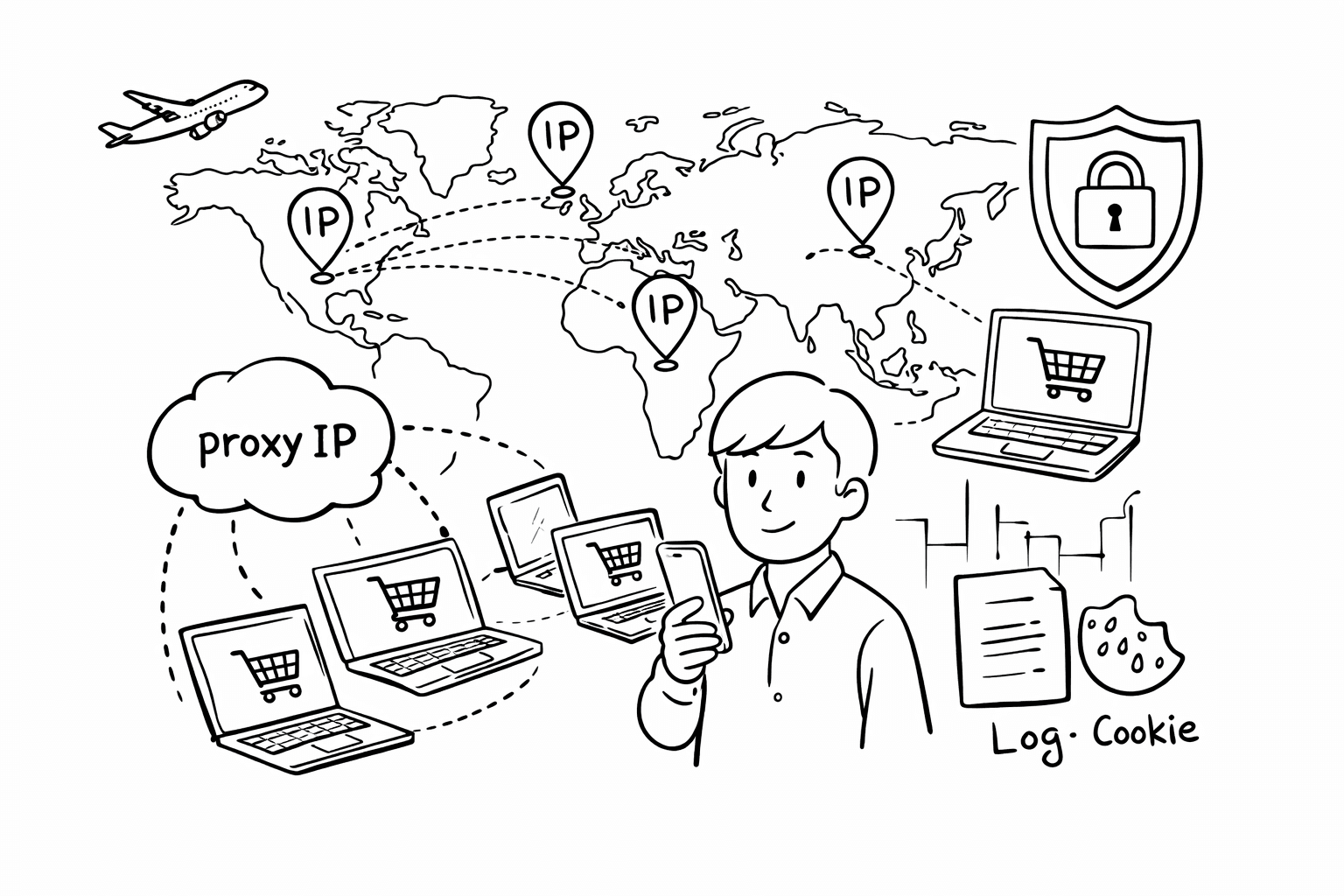
Shopee, as a cross-border e-commerce platform, has a sophisticated risk control system. The platform identifies account environments through multiple dimensions, including IP address, browser fingerprint, login devices, cookie information, and network location. If multiple accounts log in using the same IP, or if the IP changes frequently, it can easily trigger the platform's risk control mechanism.
Simply put:
Multiple accounts sharing one IP = High association risk
Frequent IP fluctuations = High anomaly risk
Therefore, a stable and independent proxy IP environment is the fundamental infrastructure that cross-border sellers must establish.
What is a Shopee Proxy IP?
A Shopee proxy IP is essentially a proxy server that intermediates your network requests, so the platform sees the "access IP" as the proxy server's IP address rather than your real IP address.
Common proxy types include:
Comes from real home broadband, has high anonymity, and is risk control-friendly.
2. ISP IP
Fixed and unchanged, suitable for long-term account binding.
Comes from server rooms, fast speed, but some platforms recognize it more easily, suitable for data collection.
Key Points When Using Proxy IPs
1. One Account Bound to One IP
Do not frequently change IPs, and definitely avoid sharing IPs between multiple accounts.
2. Maintain IP Stability
Frequent IP changes are considered abnormal logins.
3. Match IP Region with Site
For example:
Malaysia site → Use Malaysia IP
Philippines site → Use Philippines IP
4. Control Operation Frequency
Even when using proxy IPs, avoid making a large number of product changes, frequent logins and logouts, and batch data collection within a short period.
Such operations may be identified as abnormal behavior by the platform, increasing the risk of your account being flagged. Simulating normal seller behavior and maintaining natural account operations is key to ensuring long-term stable operations.
What Scenarios Are Shopee Proxy IPs Suitable For?
Multi-account Matrix Operations: IP isolation is a must for store group models
Price Monitoring and Competitor Analysis: Prevent being restricted by the platform
Data Scraping and Product Selection: Avoid IP blocking that affects collection efficiency.
Overseas Warehouses or Localization Operations: Simulate real local network environments.
Frequently Asked Questions
1. Can I use free proxy IPs?
Not recommended. Free IPs are unstable and often used by multiple people, posing high risks.
2. Can I use dynamic IPs?
Yes, but they should not be used for long-term account binding.
3. Do I need to change IPs every day?
No. Stability is safer than frequent changes.
Conclusion
In Shopee operations, product selection, ad optimization, and logistics management are crucial. However, if the IP environment is insecure, all your efforts may go to waste.
IPDeep offers high-quality proxy IPs, including:
And many other types of proxies, with over 10 million high-quality IP resources covering 200+ countries and regions worldwide. Create an account now and try our high-quality proxies for free!