




Talking About Amazon's Anti-Association: Is Dynamic Residential IP a Tax on Intelligence?



Clean IP picks: Static IPs from $1.5 each, Dynamic IPs from $0.5/GB


The peak season is approaching, with Black Friday and Cyber Monday just around the corner. For Amazon sellers, this is the time to boost sales, but also when platform risk control is the strictest and account bans are most frequent.
Especially for those who manage multiple stores, the two words they fear the most during this time are "association." Once Amazon determines that multiple stores are associated, the consequences can range from limited traffic to account suspension, rendering all previous efforts futile.
Today, let's discuss how to use dynamic residential IPs to add a layer of "anti-association protection" to your stores during this critical peak season, allowing us to make money safely while avoiding the platform's risk control measures.
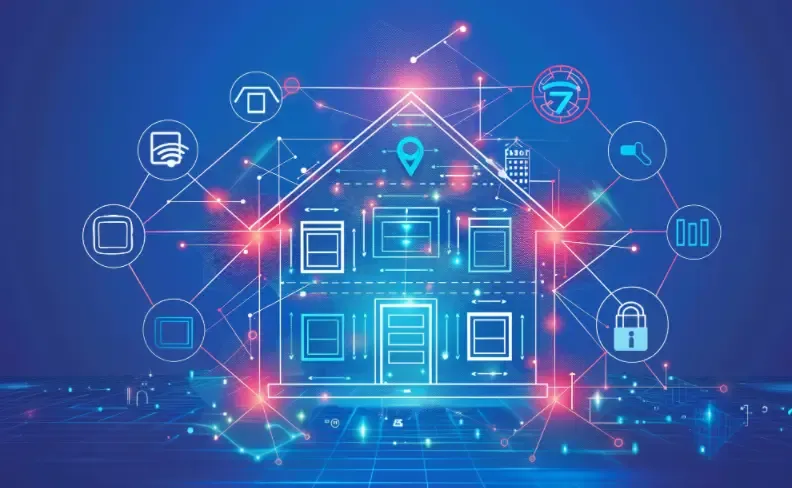
1. Why is it more important to focus on IP anti-association during peak seasons?
Amazon detects account associations primarily through IP addresses, which is the first line of defense and the easiest to expose.
• If you have two stores and accidentally logged in from the same network environment or used addresses from the same IP pool.
• Amazon's backend system will quietly label these two stores as "potentially associated" upon comparison.
• Especially during peak seasons, Amazon's algorithm bots are more active than usual and are particularly sensitive to abnormal logins and IP changes.
• Some users are still using free or shared IPs, resulting in messy IP records.
• Even one IP address linked to dozens of accounts is seen as "self-explosive" behavior by Amazon. Therefore, addressing IP issues is a top priority for a stable peak season.
2. What isdynamic residential IP? How does it prevent association?
1. In simple terms, dynamic residential IPs are real IP addresses assigned to actual home users by telecom operators (like AT&T in the US or Deutsche Telekom in Germany).
2. By using technical means to obtain the rights to use these IPs, when you log into your Amazon store, it appears to the platform that you are just an ordinary user working remotely from home.
3. Its biggest advantage is its strong "real person" attribute. Unlike data center IPs (server IPs), which can be easily identified as bulk proxies, residential IPs can effectively disguise themselves, significantly reducing the chances of being flagged by risk control systems.
4. Moreover, residential IPs have high purity, allowing them to blend in perfectly, greatly lowering the probability of being marked by risk control systems.
5. Additionally, they possess a "dynamic" attribute. Current cross-border e-commerce dynamic IP technology is quite mature, allowing you to set the frequency of IP switching according to your needs.
Of course, for logging into the main Amazon store, frequent switching is generally not recommended. However, if you are driving traffic from outside or need to conduct advertising data research, this dynamic switching capability allows you to operate "without a trace" online, efficiently and safely.
3. During peak promotions, how to use dynamic IPs to layout your stores?
Assuming you are an experienced operator with five or six accounts ready to launch simultaneously, how should you use dynamic IPs for protection?
• For those main accounts that generate significant sales, you can choose static residential IPs to ensure long-term stability and exclusivity, making Amazon believe that a reliable and honest person is managing it.
• However, for auxiliary accounts used for testing products, stocking, or competitive analysis, we can operate with dynamic residential IPs.
• For example, if you want to use a smaller account to check your competitors' listings and see their flash sale progress.
• If you use your main account, you might accidentally click something or leave a browsing trace, making it easy for competitors to catch you for malicious clicks.
• Using a smaller account with dynamic IPs, changing to a real home address each time you log in, is both safe and effective.
• Here, it's important to mention reliable service providers. Many companies offer proxy IPs, but few can provide clean IPs, fast speeds, and consistent regions.
• A well-established provider in the industry is IPDEEP, whose services have a good reputation in the cross-border community.
• IPDEEP has a large resource pool covering many countries, and most importantly, they focus on real residential IPs, which is crucial for Amazon sellers.
• Many experienced sellers seek out IPDEEP for their high anonymity and availability of IPs.
4. Choose the right tools, and combine with fingerprint browsers for doubled effectiveness
• Is having dynamic residential IPs enough? Not quite. Anti-association is a systematic project; IPs are at the network layer, while our device environment is at the base layer.
• The current approach is to combine cross-border e-commerce dynamic IPs with fingerprint browsers. Fingerprint browsers can generate an independent browser fingerprint environment for each store, including different time zones, languages, resolutions, and fonts.
• This is akin to providing each store with its own independent house (browser environment) and independent house number (dynamic residential IP).
• Even the most skilled Amazon auditors cannot detect any connections between these stores. This "double insurance" approach is the key to operating multiple stores during peak seasons.
5. Amazon StoreDynamic Residential IPPitfall Guide
• Don't be tempted by cheap free IPs: Free options are often the most expensive. Those public IPs have been overused and are blacklisted, using them to log into stores is equivalent to signing your death warrant.
• Don't let your IP jump around: Although we use dynamic IPs, be cautious when setting switching strategies for the main account.
• Don't jump from the West Coast to the East Coast in just two hours; such time-space traversal behaviors easily trigger reviews.
• Find reliable providers: Always choose service providers like IPDEEP that have proper qualifications, clean IP pools, and adequate technical support. If you experience lag or connection issues while logging in, it could delay critical operations.
In summary
What I want to convey is this: during peak seasons, making money safely is paramount. Don't wait until your account is suspended to regret not taking IP issues seriously.
If you haven't figured out how to protect your store during peak seasons, consider taking some time to learn about IPDEEP. Spending a little money for peace of mind is much more cost-effective than facing a platform ban during the peak season.
I hope today's sharing is useful to you. If you are currently struggling with store IP issues, consider reaching out to a reliable IPDEEP provider to try out some clean IPs! Wishing everyone great sales and overflowing orders during the peak season!