




How to Use Rotating Residential Proxy Safely? Working Principles and Applications



Clean IP picks: Static IPs from $1.5 each, Dynamic IPs from $0.5/GB


In cross-border e-commerce, overseas social media operations, advertising, and data collection, issues such as IP bans, account linkages, and access restrictions are unavoidable. More and more operators are using rotating residential IPs, but few use them safely and correctly. This article explains from working principles and core benefits to safe usage methods and real-world applications, showing you how to use rotating residential proxies properly to minimize risk.
What is a Rotating Residential IP? How Does it Work?
Rotating residential IPs originate from real home broadband connections and automatically rotate according to preset rules.
Unlike data center servers, these IPs are assigned by real ISPs to ordinary household users, so platforms see the traffic as genuine user behavior.
The working principle of rotating residential proxies can be summarized as:
Real source: IPs belong to residential networks, not data centers
Proxy forwarding: User requests route through proxy nodes before reaching target sites
Dynamic rotation: IP changes automatically per request or after a set time
Why Are Rotating Residential IPs Safer?
Platforms mainly judge: Are you a bot? Are you performing bulk operations?
Rotating residential IPs help address both:
High authenticity: Residential IP + ISP data match normal user profiles
Reduced linkage risk: IPs automatically rotate, preventing multiple accounts from sharing one IP too long
Fewer flags: Avoid typical data center IP traits like high frequency and concentration
More natural access patterns: Combined with reasonable rotation, behavior looks like real users
Simply put, platforms detect if you behave like a real user, not just if you use proxies.
How to Use Rotating Residential IPs Safely?
Many get banned despite using rotating residential proxies because of improper usage:
1. Avoid blind rapid switching
Faster IP rotation isn’t always better; frequent switches in short time may trigger flags. Set session durations or request rates based on your scenario.
2. One account ≠ unlimited IPs
Keep logical consistency across account, IP, and device environment. Control geographic scope of IP changes (country, city) even with rotating IPs.
3. Use with isolated browser environments
Changing only IP but not browser fingerprint is a common pitfall. Use fingerprint isolation or anti-detect browsers alongside rotating IPs.
4. Choose clean, controllable proxy services
IP abuse history, support for geo-targeting, and customizable rotation strategies directly affect safety.
Application Scenarios
Cross-border e-commerce multi-account management
For platforms like Amazon, eBay, Shopee, TikTok Shop: login, account nurturing, daily operations with reduced linkage and risk.
Overseas social media matrix management
For multi-account publishing, interaction, and management on Facebook, Instagram, X, Reddit, etc.
Advertising and verification
Simulate real users from different regions to verify ad delivery and compliance.
Data collection and SEO monitoring
Price tracking, search result scraping, rank analysis—improve success rates and reduce bans.
Conclusion
Rotating residential IPs are among the closest network solutions to real user behavior in high-risk environments. Choosing a professional provider like IPDeep, which focuses on genuine residential IPs and smart dynamic rotation, is the first step to long-term stable account operation.
FAQs
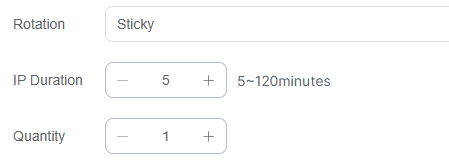
1. What rotation modes do rotating residential proxies support? Can rotation duration be adjusted?
IPDeep offers two modes:
Sticky mode: Users set fixed IP duration; rotation frequency adjustable to maintain session continuity.
One-time switch: IP changes after each request, suitable for high-frequency or maximum risk dispersion.
2. Can I purchase IPs from specific countries individually?
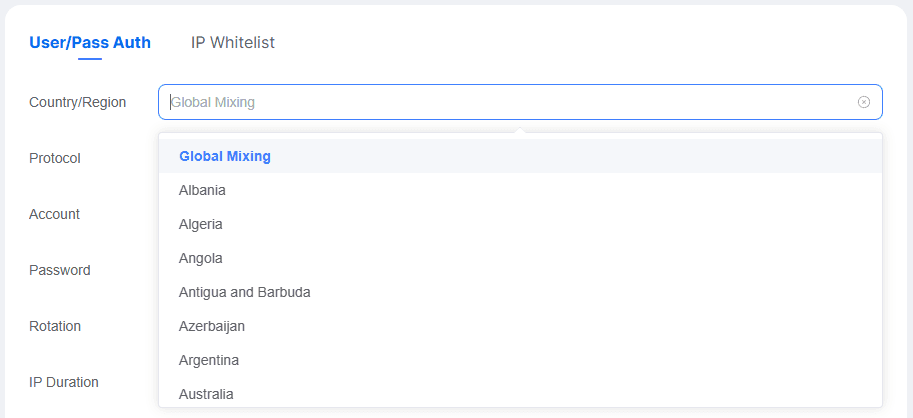
Yes. IPDeep provides IP pools by country/region, letting users choose rotating residential IPs targeting specific markets for precise operations.