
Mobile devices are not supported temporarilyPlease go to the PC terminal to use it


 EN
EN IP Deep
 2026-01-07 10:30
 Dynamic Data Center
In the modern internet data scraping process, proxy servers play a crucial role. Whether it's for e-commerce price monitoring, social media analysis, or large-scale web scraping tasks, proxies help users bypass geographic restrictions, avoid IP bans, and deal with anti-scraping mechanisms. However, with so many types of proxies available in the market, how do you choose the one that best suits your needs? This article will compare rotating datacenter proxies and rotating residential proxies in detail to help you make the most suitable choice.
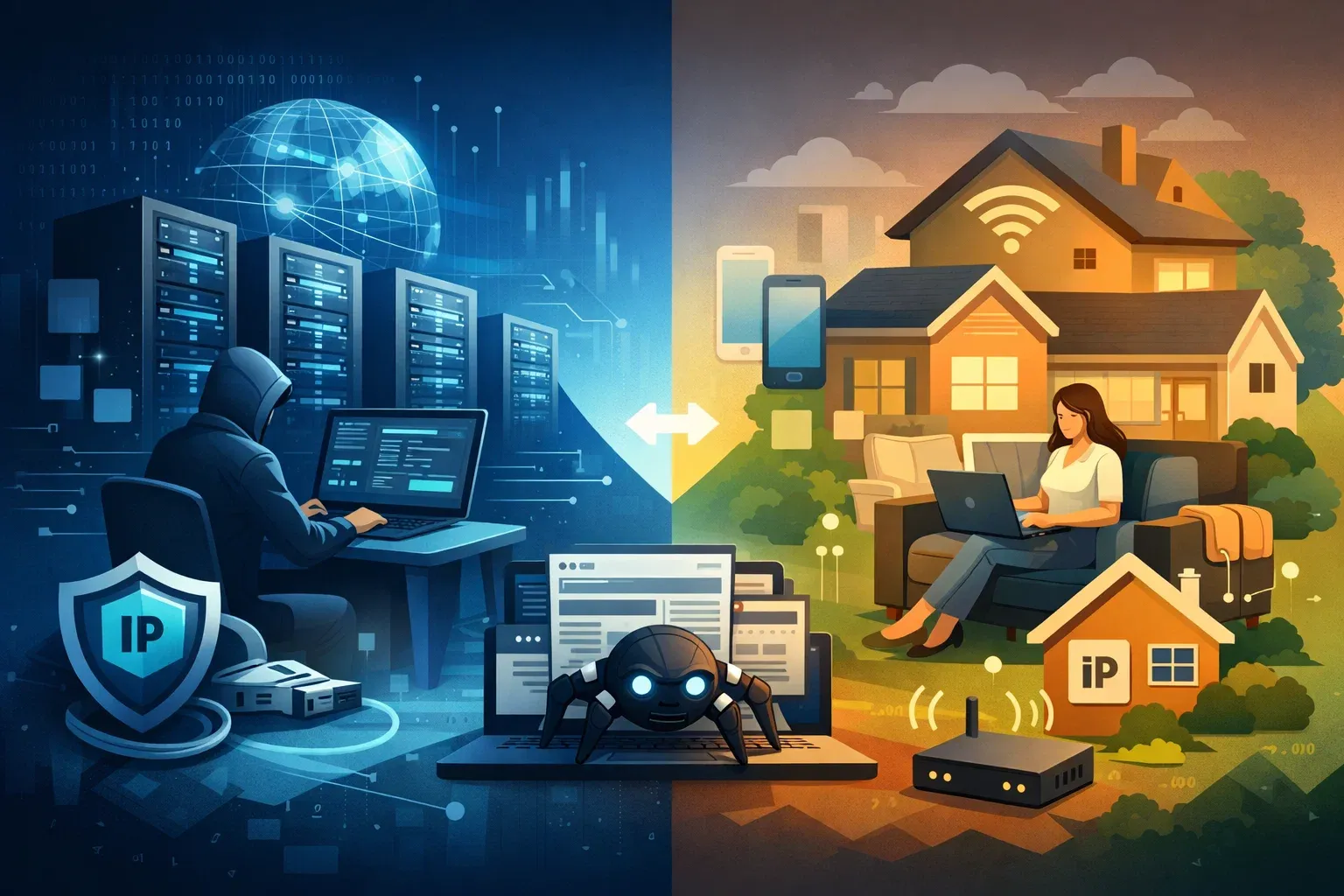
A rotating data center proxy refers to IP addresses provided by data centers. These IP addresses come from centralized data centers and can provide a large number of IP resources. Unlike static data center proxies, rotating data center proxies can automatically change IPs as needed, ensuring that high-frequency data scraping does not lead to bans from using a single IP address.
A rotating residential proxy refers to IP addresses from real residential users. These IP addresses are typically provided by residential broadband users and distributed through proxy service providers. Unlike rotating datacenter proxies, residential proxies have more natural and authentic-looking IPs because they belong to regular users on household networks.
1. IP Source and Anonymity
Rotating Datacenter Proxy: The IPs come from professional data centers. While these proxies offer high speed and stability, their authenticity is lower. Many websites can identify and block these IPs, especially during high-frequency scraping tasks.
Rotating Residential Proxy: The IPs come from home broadband users, offering high anonymity and authenticity. These IPs are less likely to be detected as proxies by target websites, making them suitable for tasks that need to avoid bans and bypass strict anti-scraping mechanisms.
2. Scraping Speed and Stability
Rotating Datacenter Proxy: These proxies, located in data centers, typically offer higher bandwidth and lower latency, providing faster data scraping speeds.
Rotating Residential Proxy: While dynamic residential proxies have the advantage of anonymity, they are usually slower than data center proxies. Residential IPs have relatively lower bandwidth, which may result in some delays during large-scale scraping.
3. Cost
Rotating Datacenter Proxy: These proxies are usually cheaper than dynamic residential proxies. Due to the large IP pool and concentrated resources in data centers, the cost is relatively low.
Rotating Residential Proxy: These proxies tend to be more expensive because the IPs come from real household users, and they require higher levels of anonymity and privacy.
4. Suitable Use Cases
Rotating Datacenter Proxy: Suitable for large-scale and high-frequency scraping tasks, such as e-commerce data monitoring, SEO analysis, etc.
Rotating Residential Proxy: Suitable for tasks requiring high anonymity and bypassing complex anti-scraping mechanisms. For example, social media data scraping, search engine ranking monitoring, and scraping high-security websites.
Summary Table
| Comparison Dimension | Rotating Data Center Proxy | Rotating Residential Proxy |
|---|---|---|
| IP Source and Anonymity | Data center IPs, stable performance but higher detection rate | Residential broadband IPs, more natural and harder to detect |
| Scraping Speed and Stability | High bandwidth, low latency, suitable for high concurrency | Speed drops under high concurrency |
| Cost | Low cost, high cost-performance ratio | Higher cost |
| Suitable Use Cases | E-commerce, advertising, SEO | Social platforms, high-security websites |
Scale and Frequency of Scraping Tasks
If your scraping tasks involve large-scale data collection and require high speed, a rotating data center proxy might be a better choice. Its high bandwidth and low latency make it suitable for large volumes and high-frequency data scraping.
Anonymity Requirements
If your scraping tasks require high anonymity, especially when the target website has strict detection mechanisms for proxies, a dynamic residential proxy is the ideal choice. Residential IPs' natural appearance can help bypass anti-scraping measures and avoid bans.
Budget
For small-scale scraping tasks with a limited budget, dynamic data center proxies may be more suitable because of their higher cost-effectiveness. For high-value, long-term sensitive tasks, you might consider rotating residential proxies, although they are more expensive.
Target Website
If your target website has specific bans on datacenter IPs, using dynamic residential proxies might be more effective, as residential IPs can better avoid these bans.
In the process of data scraping, choosing the right proxy depends on the specific task requirements. Rotating datacenter proxies are suitable for high-frequency and large-scale scraping, providing high speed and stability. Rotating residential proxies are ideal for tasks that require higher anonymity and are effective at bypassing anti-scraping technology. IPDeep offers both dynamic data center proxies and dynamic residential proxies with high-quality IP pools to meet different scraping needs. Based on task requirements, budget, and privacy protection needs, choosing the most suitable proxy type can improve scraping efficiency and reduce the risk of bans.